

Florida congressional map faces new legal challenges centered around the state's Fair Districts Amendment
Florida redistricting lawsuits
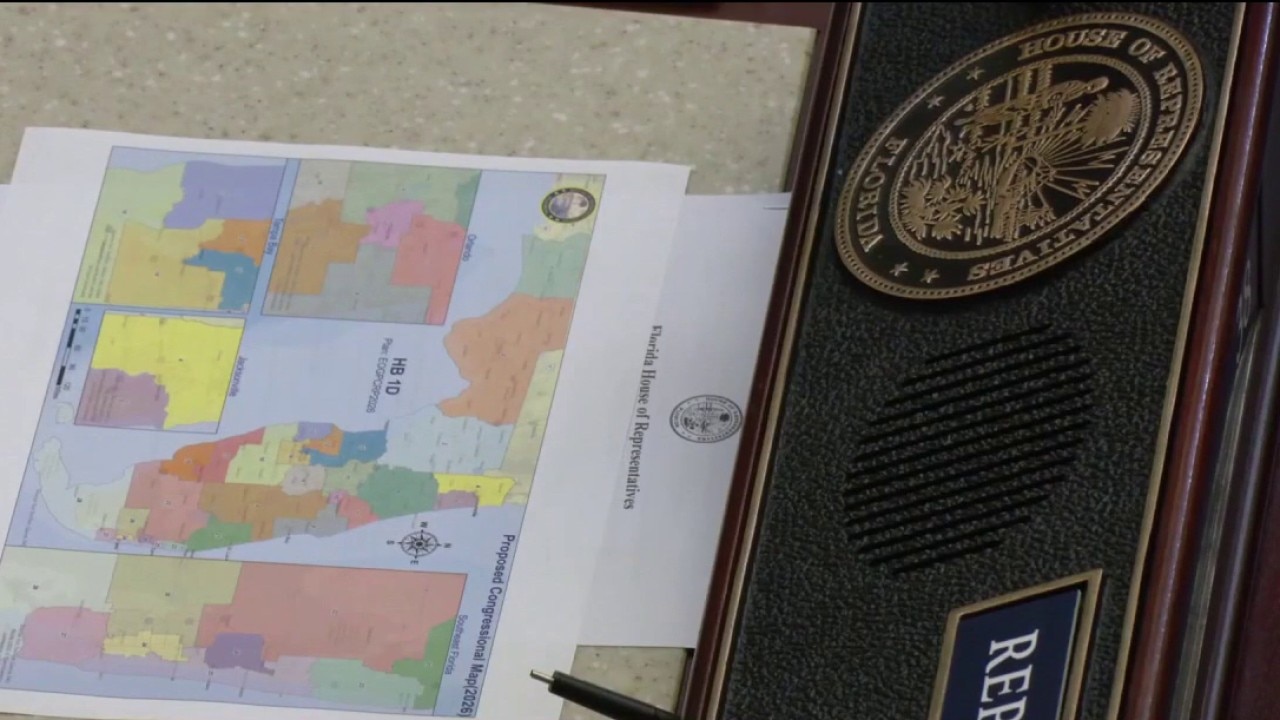
The legal fight against Florida's new congressional map is ramping up, with a new effort filed Wednesday morning to immediately block the map from taking effect. FOX 13's Evan Axelbank reports.
TALLAHASSEE, Fla. - The legal fight against Florida's new congressional map is ramping up, with a new effort filed Wednesday morning to immediately block the map from taking effect.
The state is already facing several lawsuits on the grounds that the map was drawn with partisan intent.
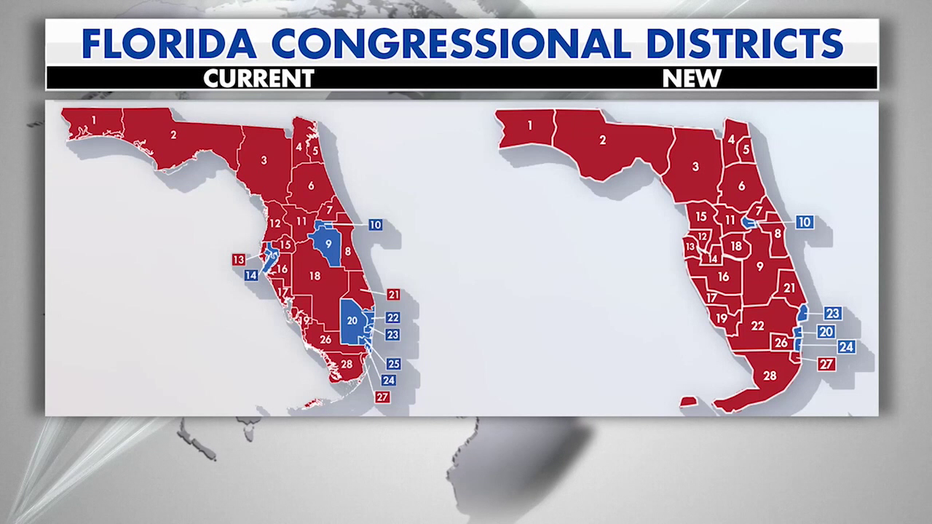
If 2024 voting patterns hold, the districts are considered friendly to Republicans, with those seats growing from 20 to 24, and Democratic seats dropping from 8 to 4.
Legal challenge
The legal cases center on a map that was colored in red and blue and released to FOX News Channel by the governor's office before any oversight was made by the legislative branch.
Congressional map changes
That map shows how much more Republican representation the state would have, which opponents say illustrates that state officials were aware of the impact of their changes.
Because the person who drew the map said it was drawn while taking into account partisan data, they argue this was an open and shut case.
The group filing the suit is called Equal Ground, and is joined by groups called Common Cause and the UCLA Voting Rights Project.
By the numbers:
They all say that Florida's anti-gerrymandering amendment, which was approved by 63% of voters in 2010, makes these kinds of district lines illegal.
"We have also seen it unfold after the President of the United States asked Republican-led states to draw maps in order to benefit the Republican Party in the midterm elections, which may be legal in other states and federally, but, of course, is illegal here in Florida," Amy Keith of Common Cause said.
Forty-three percent of Floridians voted for the most recent Democratic nominee, but under the new maps, only 14% of seats would be held by Democrats if those voting patterns hold.
"Courts have found that the primary purpose in enacting that by Florida voters was to ban partisan gerrymandering and to create a congressional district map that fairly represented the voters without consideration of political preference," Bernadette Reyes of the UCLA Voting Rights Project said.
The other side:
Lawmakers who passed the map have followed the governor's lead, in saying that a recent Supreme Court decision bans them from drawing any lines using racial considerations.
Redistricting impacts
Gov. DeSantis has argued that the old districts, like the ones in Tampa and St. Pete, were drawn to put Black voters into certain districts.
Further, DeSantis has said that the entire Fair Districts Amendment should be thrown out because parts of it that deal with race have been overturned by certain state courts.
Dig deeper:
The new lines are also coming under fire because they don't use natural boundaries, like city and county borders, to establish the new districts.
The plaintiffs say that's further proof that the lines are being drawn to put more Republicans into previously Democratic districts.
The Source: This story was put together based on interviews with the Hillsborough County Supervisor of Elections, Amy Keith from Common Cause and statewide data on the new redistricting maps, as well as previous FOX 13 News reporting.