

Why hundreds wake before dawn for Sarasota’s annual Good Friday march
Stations of the Cross Pilgrimage
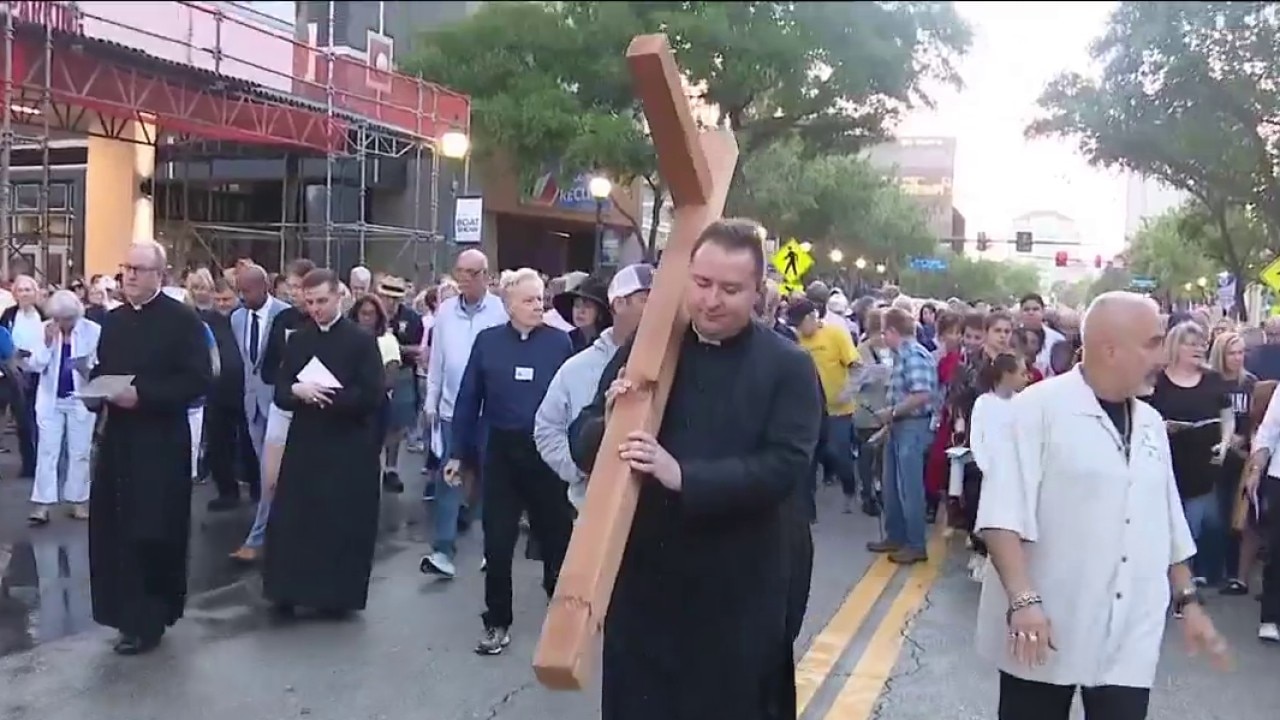
Hundreds of people are reflecting, after making a Good Friday pilgrimage through Downtown Sarasota. FOX 13's Matthew McClellan shows us the importance of the pilgrimage to local churches.
SARASOTA, Fla. - By the time most of Sarasota is starting its morning, the city’s annual Good Friday procession has already come and gone.
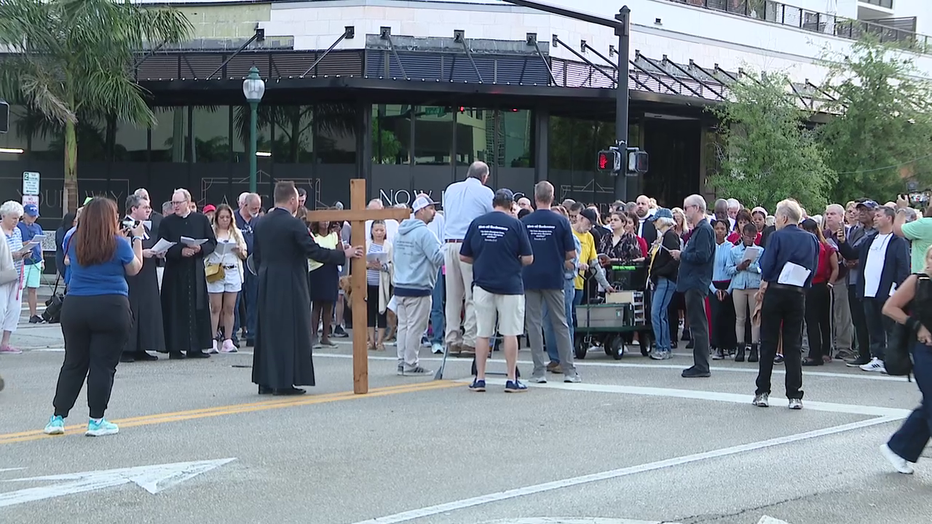
Before sunrise, more than 1,000 people gathered downtown, walking Main Street in silence and prayer as part of the long-standing Stations of the Cross tradition. Led by 27 clergy from 14 denominations, the early-morning pilgrimage traces the final hours of Jesus Christ through 14 stops, ending back at Church of the Redeemer.
But for many who participated and even those who simply passed by, the significance of the event isn’t confined to those two hours.
It’s part of a much larger tradition that continues to carry meaning well beyond Good Friday morning.
What it Represents
At its core, the procession reflects one of the oldest practices in Christianity: physically retracing the story of Jesus’ crucifixion.
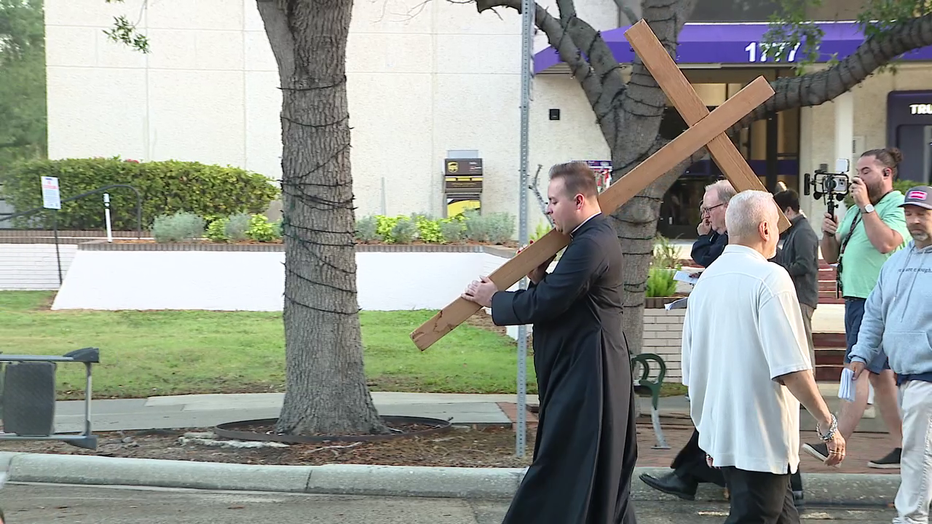
For centuries, believers around the world have marked the day not just with church services, but by taking that story into public streets. The tradition turns faith into something visible, shared and lived.
That’s what unfolded in Sarasota.
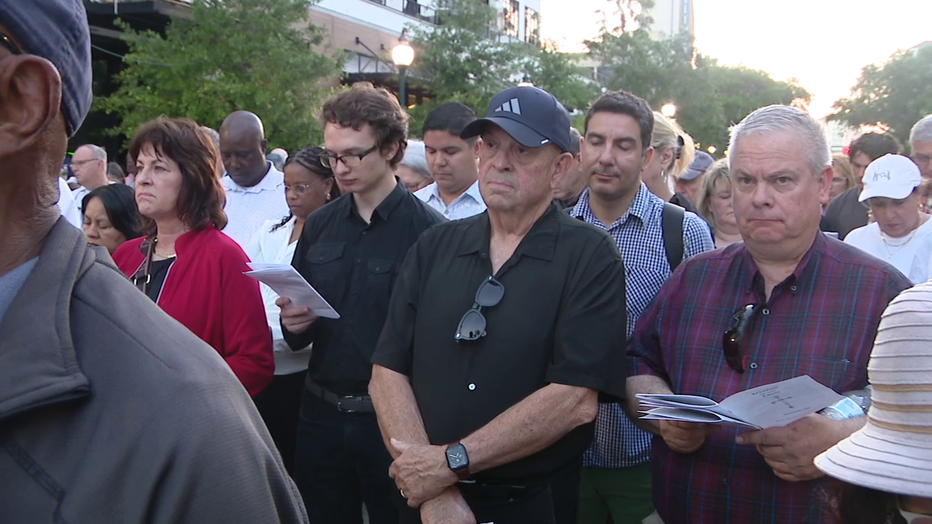
The 14 stations, spaced along Main Street, represent key moments from the Gospel accounts, from condemnation to crucifixion and burial. Walking that path is meant to transform a familiar story into something more immediate, giving participants time and space to reflect on sacrifice, suffering and faith in a tangible way.
Why you should care:
That emphasis on experience helps explain why events like this continue to draw crowds, even on a workday and even as religious participation shifts nationwide.
Good Friday itself stands apart from most other days in the Christian calendar. Observances are intentionally solemn and stripped down, focusing on reflection rather than celebration.
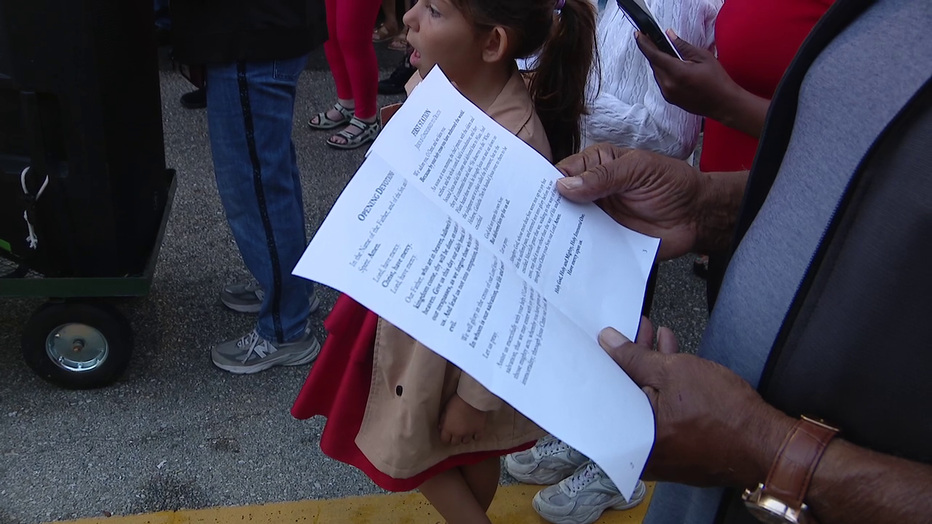
In many traditions, it’s the only day of the year without a full Mass or Eucharist, a pause that underscores the weight of the moment being remembered.
What's next:
And yet, the message doesn’t end there.
For Christians, Good Friday is inseparable from what follows. The procession through Sarasota’s streets is not only about marking death, but about pointing ahead to Easter — a movement from grief to hope that sits at the center of the faith.
That contrast is part of what gives the event lasting relevance.
What they're saying:
Even after the streets reopen and the crowds disperse, the themes of sacrifice, reflection, unity and renewal continue to resonate.
The rare coming together of 14 denominations also highlights something increasingly uncommon: a shared public expression of faith across theological lines.
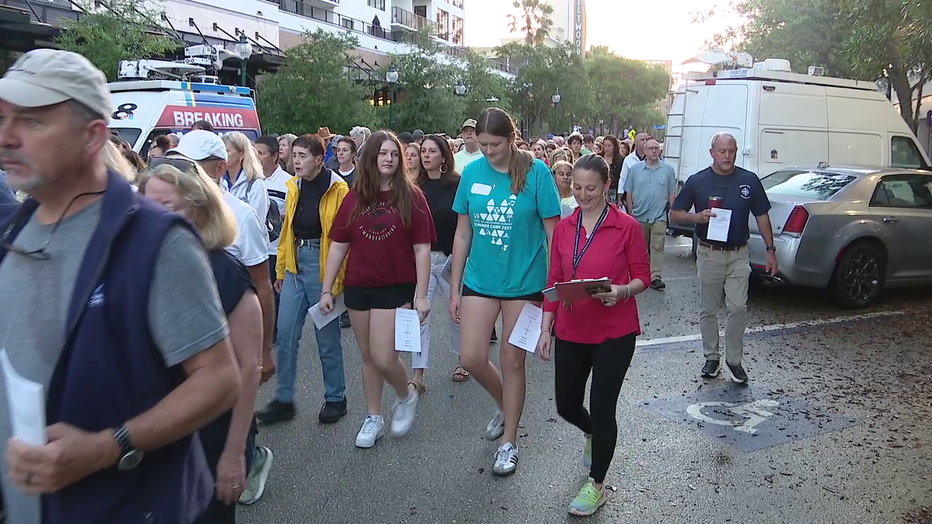
"Most people associate Good Friday with Catholicism, but it's really for all religions," said Irma Sanders, who walked among the hundreds. "And that's what I like about walking to the stations is that you stop at every church. I couldn't possibly name them all, but it's every denomination."
For Sarasota, the annual march is both a local tradition and a reflection of something global, echoing similar observances in cities around the world.
And for those who witnessed it, whether walking in the procession or watching from the sidewalk, its impact often lingers longer than the morning itself.
The Source: This story is based on direct observation of the Good Friday procession in downtown Sarasota and background information on the Christian "Stations of the Cross" tradition.