

Bay Area first responders graduate from mental health program aimed at helping their own: 'It's a new tool'
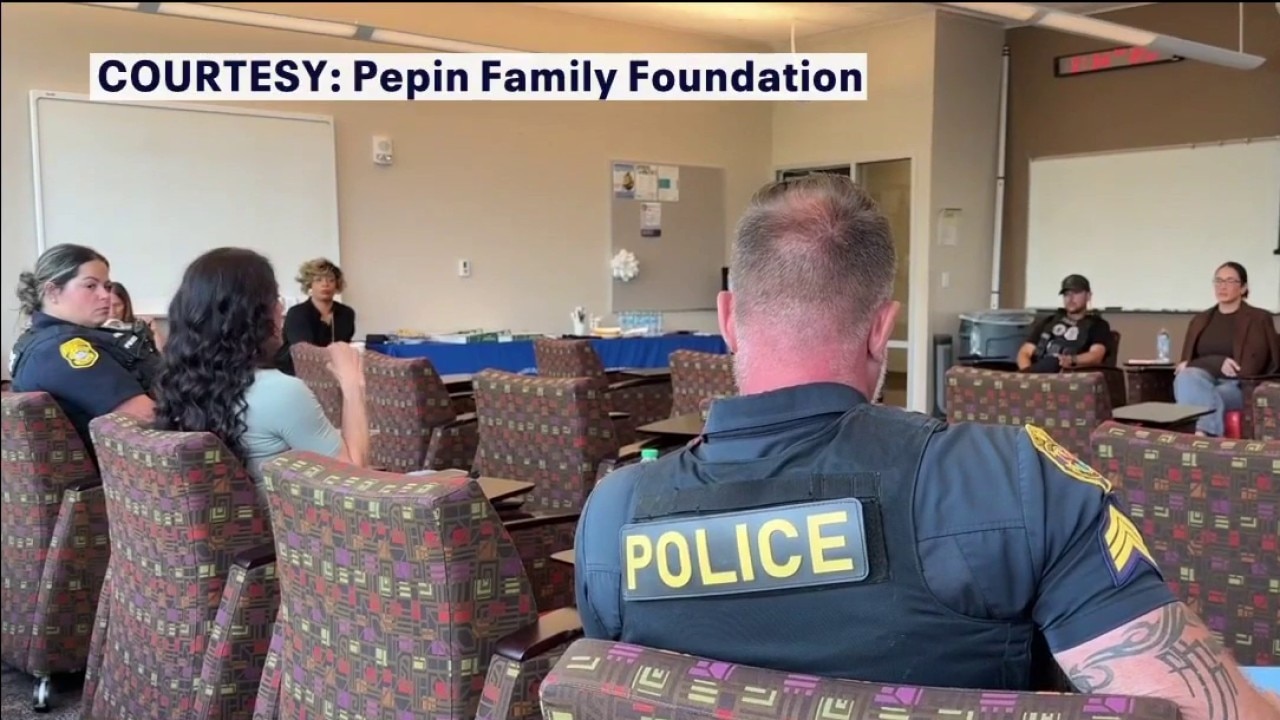
First responders graduate from mental health program
A first-of-its-kind mental health and resiliency program at St. Petersburg College graduated its latest class this week in Clearwater, bringing together officers, deputies and emergency personnel from agencies across the region. FOX 13's Genevieve Curtis reports.
CLEARWATER, Fla. - Law enforcement officers across the country are facing a growing mental health crisis, with suicides continuing to outpace line-of-duty deaths in many years.
Now, a group of Bay Area first responders is hoping to change that.
A first-of-its-kind mental health and resiliency program at St. Petersburg College graduated its latest class this week in Clearwater, bringing together officers, deputies and emergency personnel from agencies across the region.
First responder mental health crisis
Why you should care:
For many graduates, the certificate represented far more than another training course.
"It’s a new tool to help save lives behind the badge," Sgt. Corey Lenczden with the Clearwater Police Department said. "We’ve seen such a dramatic increase in law enforcement officers taking their lives. That’s a staggering amount, and we’re trying to figure out ways to combat that."
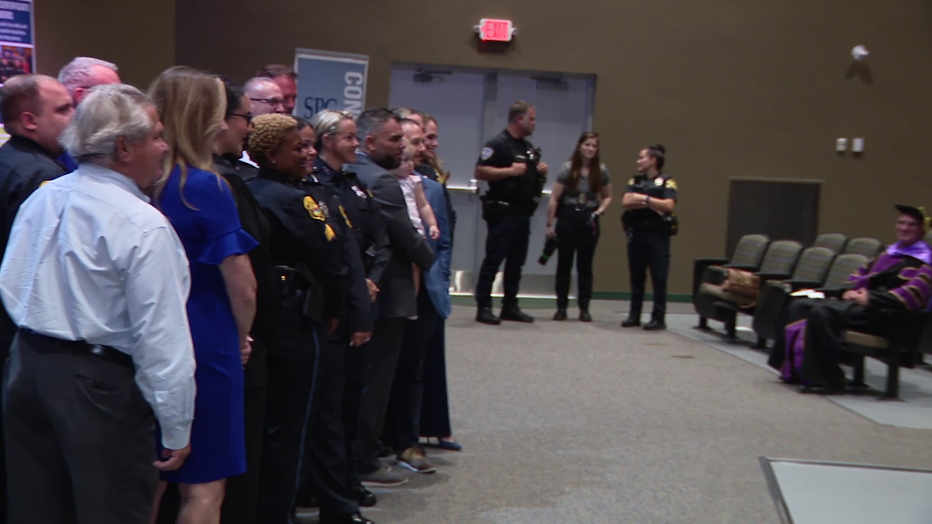
The nine-month program, developed by the Sun Coast Police Benevolent Association and St. Petersburg College, and fully funded by the Pepin Family Foundation and Tampa Bay Area Chiefs of Police Foundation, is focused on helping first responders recognize trauma, process stress and support one another through the mental weight of the job.
Higher officer suicide risk
Research shows law enforcement officers face a significantly higher risk of suicide than the general public.
"We’re expected to see anywhere from 400 to 600 to 800 traumatic events over our 20-year career," Lenczden said. "If you don’t have the proper tools to deal with that, it’s going to lead down the road where we’re ending up with the statistics that we are seeing."
What they're saying:
For Lenczden, the issue became deeply personal after losing a close friend and fellow officer to suicide.
"I worked with him for many years," Lenczden said. "Things were tragic with him, and unfortunately, he took his own life, which is one of the main impetuses of me taking this class."
Recovery struggles
For Hillsborough County Sheriff's Office forensic analyst and former corporal Carlos Brito, the course also became part of his own recovery journey.
More than two years ago, Brito was intentionally hit by a car in the line of duty. He has endured 17 surgeries and multiple infections since the crash.
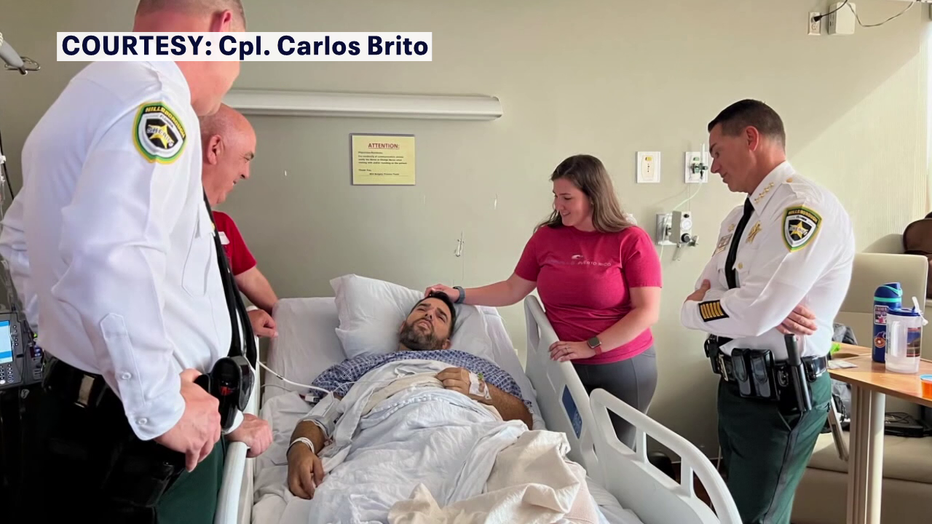
Courtesy: Cpl. Carlos Brito
"Seventeen surgeries later and a couple infections, and I’m here standing," Brito said. "I started walking off my cane four weeks ago, and I’m not giving up."
Brito says the physical recovery also came with depression and emotional struggles — something many first responders are reluctant to discuss.
"We’re so quick to jump and help others," Brito said. "But when it comes to helping ourselves and our first responders, we pause."
Mental health training
What's next:
As part of their final class project, the graduates are now preparing a two-day, 16-hour peer-to-peer mental health training for law enforcement agencies across the Bay Area.
The goal is to bring the tools they learned back to their departments and help break the stigma surrounding mental health in first responder culture.
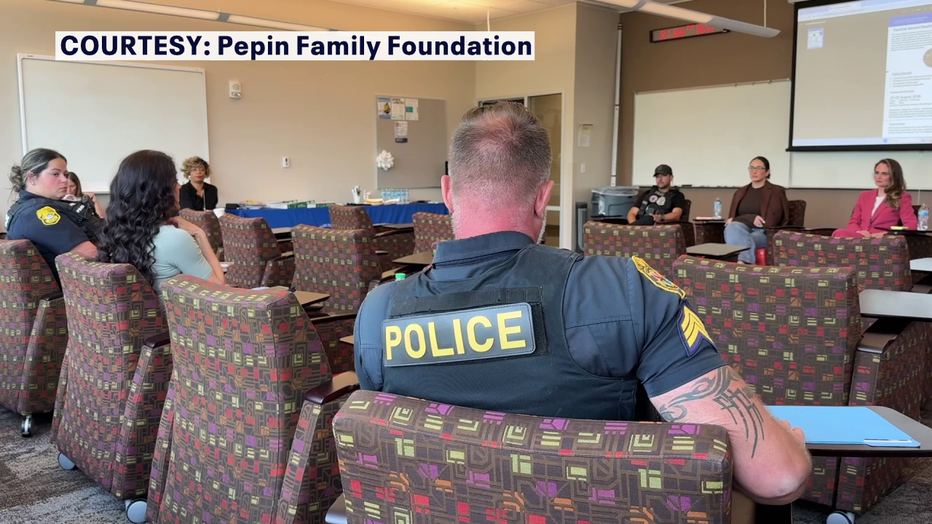
Courtesy: Pepin Family Foundation
"If I can help one cop, one firefighter, one dispatcher," Lenczden said, "it would have definitely been worth it."
The Source: Information for this story was gathered from interviews with a sergeant with the Clearwater Police Department, interviews with a Hillsborough County Sheriff’s Office forensic analyst and former corporal, St. Petersburg College and Suncoast PBA program information, as well as previous FOX 13 News coverage.