

Charlie Kirk's death highlights rise in political violence: 'It's affecting Americans'

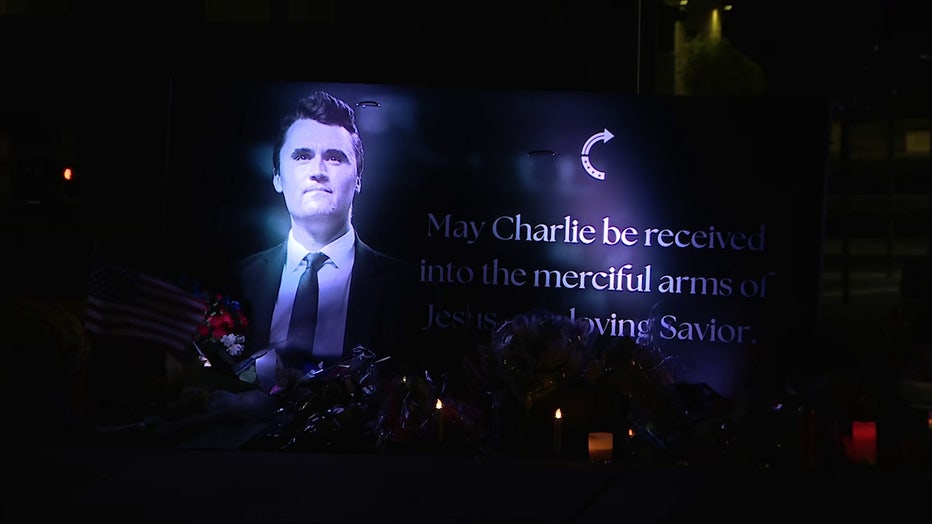
TAMPA, Fla. - National, state and local leaders condemned the shooting death of conservative political activist Charlie Kirk on a Utah college campus Wednesday, and data shows political violence is rising.
The backstory:
Historians say the past can tell a person a lot about the present.
RELATED: Charlie Kirk's casket flown back to Arizona by Air Force Two
"I think that part of what we're seeing in the United States parallels a few other moments in the U.S. past in which a growing set of Americans began to identify each other as the main enemies that they would face in nearly any context," said Kyle Burke, an assistant professor of history at the University of South Florida. "As that happened, violence both as an actuality but also as a set of kind of imaginations or fantasies that people might enact, created a feedback loop in which individuals and organizations found themselves caught in an escalating set of violent acts and violent rhetoric that over time produced large-scale change and large-scaled disruption."
University of South Florida history professor Kyle Burke shared some of those major inflection points.
"The 1850s in the United States with debates that ultimately culminated in the Civil War, were marked by escalating violent rhetoric and violent actions on the part of Americans against each other who increasingly imagined that they could not share the same kind of society," said Burke.
PREVIOUS: Charlie Kirk to receive posthumous Presidential Medal of Freedom
And in the 1960s and 1970s, events included the assassinations of Dr. Martin Luther King Jr., Malcolm X and President John F. Kennedy, along with the Vietnam War.
"There are violent groups such as the Klan engaged in vigilante and extra-legal violence. There are groups such as the Students for a Democratic Society who formed the Weatherman Organization, which conceived of a kind of revolutionary violence," said Burke.
By the numbers:
Fast forward to the 2020s, the Bridging Divides Initiative at Princeton University tracks acts of political violence, including those against local officials.
"Just this year, we've tracked 250 incidents of threats and harassment, and that's a 9% increase from last year," said Shannon Hiller, the executive director of the Bridging Divides Initiative at Princeton University. "We are seeing some less offline conflict since the height in 2020, but that's complemented by this increase in overall hostility in our political environment, driven by a lot of threats and harassment but also punctuated by these high-profile attacks."
MORE: Charlie Kirk assassination latest in string of US political violence
Hiller said Kirk’s shooting death follows other targeted shootings.
"I think what's most concerning for us in the very near-term trend is that this shooting of Charlie Kirk follows so quickly after other types of targeted shootings taken by individuals who were, we'll find out more about the particular case yesterday, but in other cases were motivated by the normalization of the use of violence in the political climate whether Targeting the CDC headquarters just recently or the assassinations in Minnesota just before that," said Hiller. "When we see these types of incidents happening one right after the other, we're particularly worried about the ways they further increase the risk dynamics."
She said the acts further normalize violence.
"We see more and more people willing to use violence as a tool in politics when they disagree and as when others see that happen, they increasingly think that it's acceptable and that lowers the bar for others using those same tactics," said Hiller.
What's next:
As for solutions, Hiller said it starts with rejecting political violence without calls for retribution.
READ: What is Turning Point USA? Charlie Kirk's nonprofit
"The data just doesn't support that this is exclusively a left-wing problem or even exclusively right-wing problem. It's affecting Americans in different ways, but across the board," said Hiller.
The Bridging Divides Initiative at Princeton also found that local officials they talk to point to social media dehumanizing other people, the pandemic and false claims of a stolen election as indicators that added to increased political violence.
The Source: The information in this story was gathered by FOX 13’s Briona Arradondo.