

FGCU researchers using 1,500 clams and pink nail polish to help restore coastal ecosystems
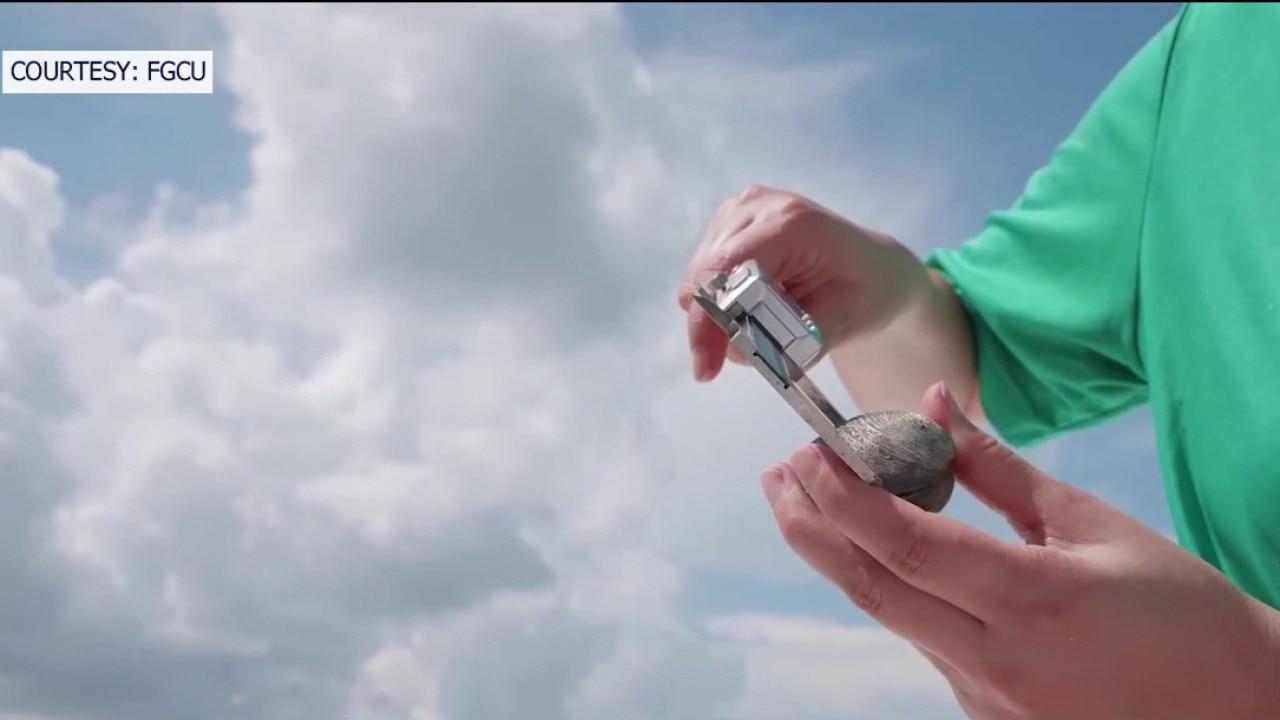
How clams and seagrass could save Florida waters
They've been declining across the state, but can clams and seagrass work together to help each other survive? That's what Florida Gulf Coast University researchers and students are teaming up to answer. FOX 13's Ariel Plasencia reports.
FORT MYERS, Fla. - As part of a statewide initiative, Florida Gulf Coast University (FGCU) researchers, students, and alumni are pairing clams and seagrass together to see if they can help each other survive.
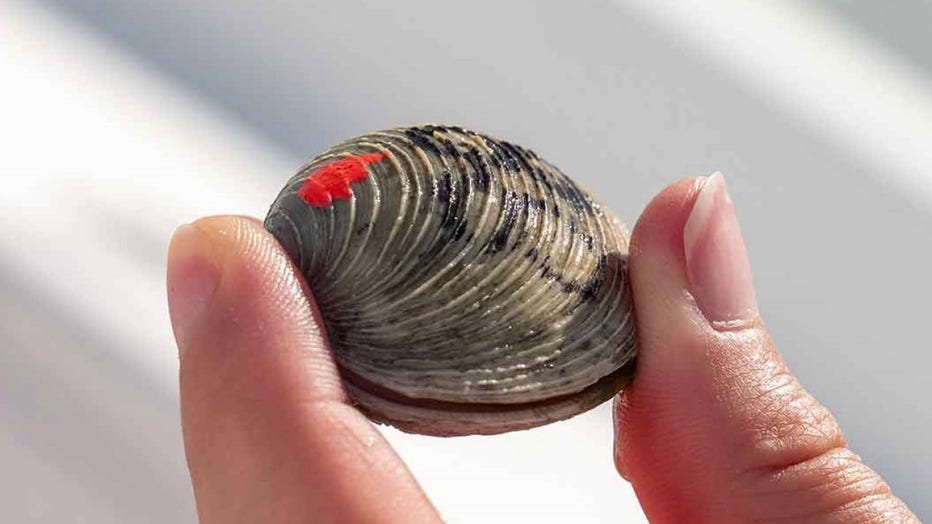
Part of that includes keeping track of all their clams — and they’re using bright pink and orange nail polish to do it.
The clam and seagrass relationship
What we know:
With both populations declining across the state, FGCU researchers believe clams and seagrass could hold the secret to each other's success.
"Seagrass need really clear water to be able to grow and fertilized sediments. And clams provide filtration so they help clean the water, and they help deposit nutrients into the sediments," explained Melissa May, an associate professor of marine biology at FGCU. "There's this idea that they can work together to improve conditions so that restoration of both of them is more successful."
In return, the seagrass provides a much-needed hiding spot for the clams. May notes that predators include crabs and snails. But seagrass is also important for fish nurseries and serves as food for sea turtles.
The study
Timeline:
To put this mutually beneficial relationship to the test, the team placed 1,500 clams across several underwater sites in Estero Bay in May. The team is conducting monthly checks and plans to pull the clams out in November.
They are measuring the canopy height of the seagrass, testing the nutrient levels in the sediment, and checking the survival rates of the clams.
Nail polish as an important tool
What they're saying:
But keeping track of 1,500 clams underwater can be tricky. That’s where the bright pink and orange nail polish comes in.
"Nail polish is actually something that's used in ecology quite often. Especially when you're putting stuff in the field, you want to have ways of marking it," May said. "Sharpie is good, but sometimes, it can come off."
The researchers chose bright pink and orange because those colors are easier to spot underwater.
"If [the nail polish] got inside where the clam tissue is, it could be problematic, but they are closed up and sealed. And we put it basically on like the farthest part away from their shell. So there's really no chance of it getting in," May added. "So it's no different than painting your fingernails, really."
Looking ahead
What's next:
Ultimately, researchers hope this study will unlock better methods for saving Florida's waterways. May also hopes to learn more about the predators that prey on clams.
"We do have restorations of seagrass and clams in similar areas that will be starting in the spring," May said. "So doing this on a much larger scale and hoping that what we learn from these experiments will help improve success of those efforts."
The Source: The information in this story was gathered from Melissa May, an associate professor of marine biology at FGCU, as well as a report detailing the university's marine study in Estero Bay.