

First Artemis III engine arrives at Kennedy Space Center as NASA prepares for next moon mission
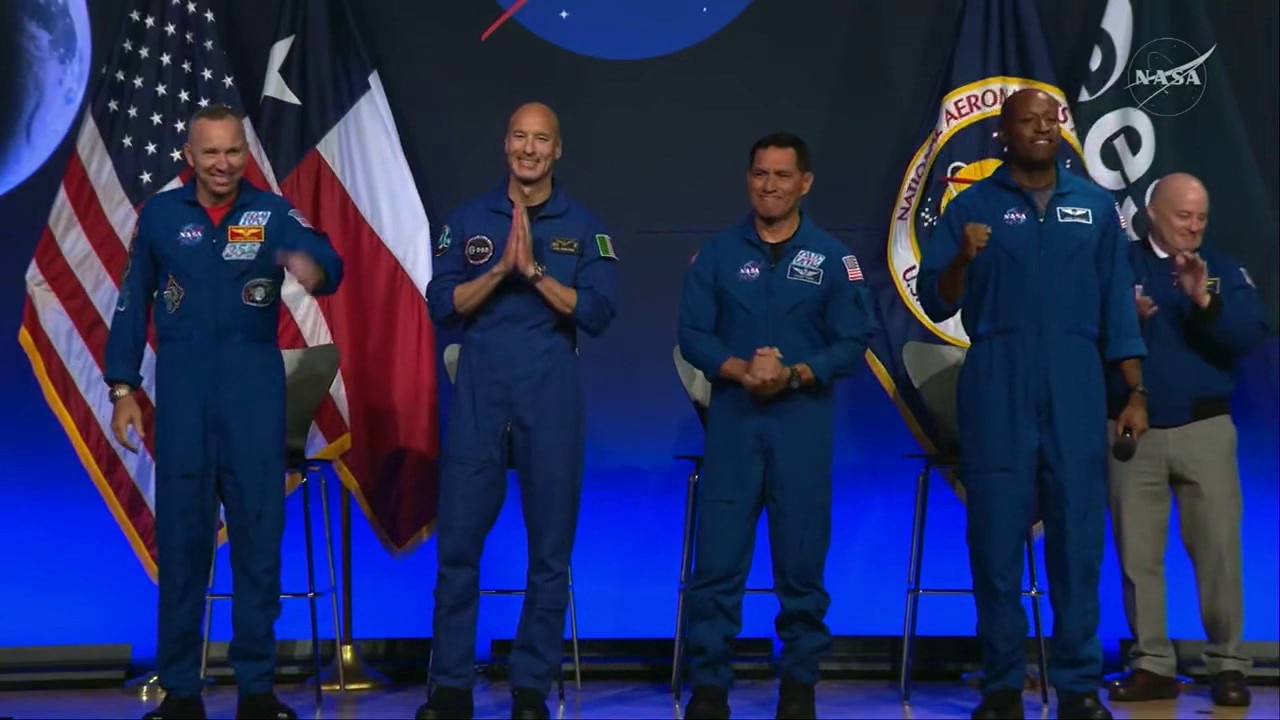
Meet the Artemis III crew
NASA on Tuesday revealed the four astronauts who will be part of the Artemis III crew and mission – the next step in NASA's goal of landing humans and to build a moon base on the lunar surface. NASA made the announcement at Johnson Space Center in Houston. NASA astronaut Randy Bresnik, Commander ESA (European Space Agency) astronaut Luca Parmitano, Pilot NASA astronaut Andre Douglas, Mission specialist NASA astronaut Frank Rubio, Mission specialist Artemis III's mission is expected to happen in 2027.
ORLANDO, Fla. - The first of four RS-25 engines that will power NASA’s Artemis III mission has arrived at the Vehicle Assembly Building at Kennedy Space Center in Florida, the agency announced Thursday.
The engines will be installed on the core stage of NASA’s Space Launch System, or SLS, rocket, which will launch astronauts aboard the Orion spacecraft on a mission aimed at advancing human exploration of the moon.
Together with the rocket’s twin solid rocket boosters, the four RS-25 engines on the rocket's core stage will generate more than 8.8 million pounds of thrust at liftoff.
What is the Space Launch System?
Dig deeper:
The Space Launch System is NASA’s super heavy-lift rocket designed to send astronauts, spacecraft and cargo beyond Earth’s orbit.
NASA says SLS is the only rocket capable of launching Orion, its crew and large cargo directly toward the moon in a single mission. The rocket is designed to support future human missions to the moon and Mars, as well as robotic missions throughout the solar system.
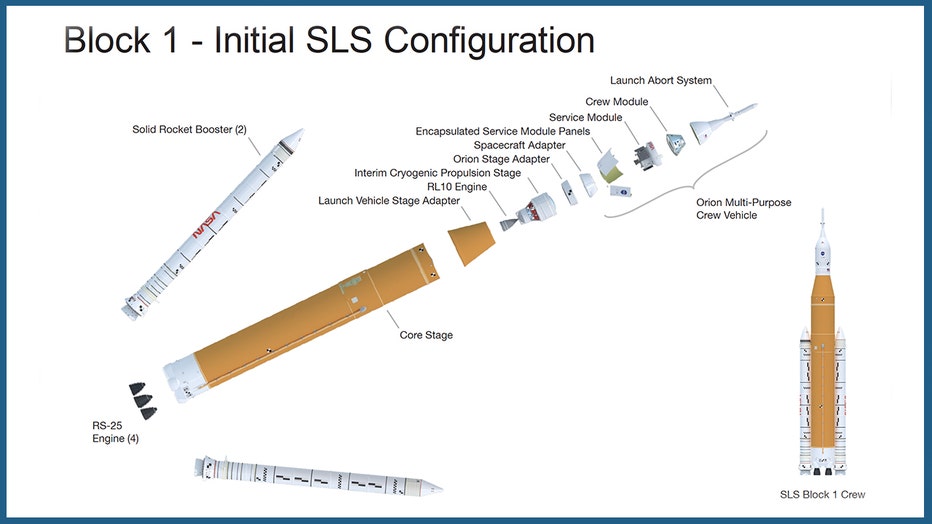
The Block 1 configuration stands 322 feet, taller than the Statue of Liberty, and weighs 5.75 million lbs. During launch and ascent, SLS will produce 8.8 million lbs. of maximum thrust, 15 percent more thrust than the Saturn V rocket. [Source: NASA]
The vehicle can carry more mass and larger payloads into deep space than any other operational rocket. Future versions are expected to support increasingly ambitious exploration missions.
Built for deep-space travel
SLS is designed to carry astronauts and cargo far beyond low-Earth orbit. Orion must reach speeds of about 24,500 mph to travel to the moon, and SLS provides the power needed to achieve that velocity.
Every version of the rocket uses a core stage powered by four RS-25 engines.
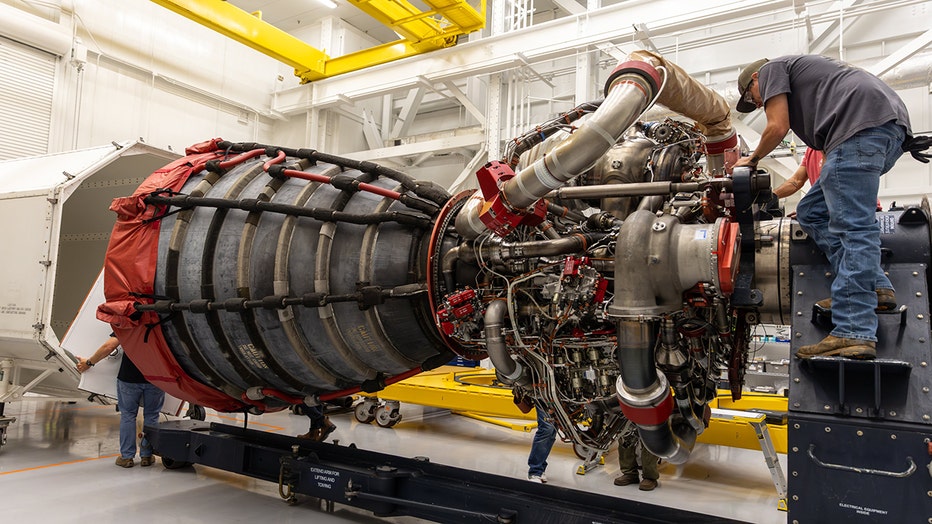
The first of four RS-25 engines for the Artemis III core stage arrived at the Vehicle Assembly Building at Kennedy. [Source: NASA]
The first Artemis missions used the Block 1 configuration, or some variation of the Block 1 configuration, which could send more than 27 metric tons, or about 59,500 pounds, beyond the moon. After launch, an Interim Cryogenic Propulsion Stage helps push Orion toward lunar orbit.
CLICK TO DOWNLOAD THE FOX LOCAL APP
NASA also is developing more powerful versions of the rocket.
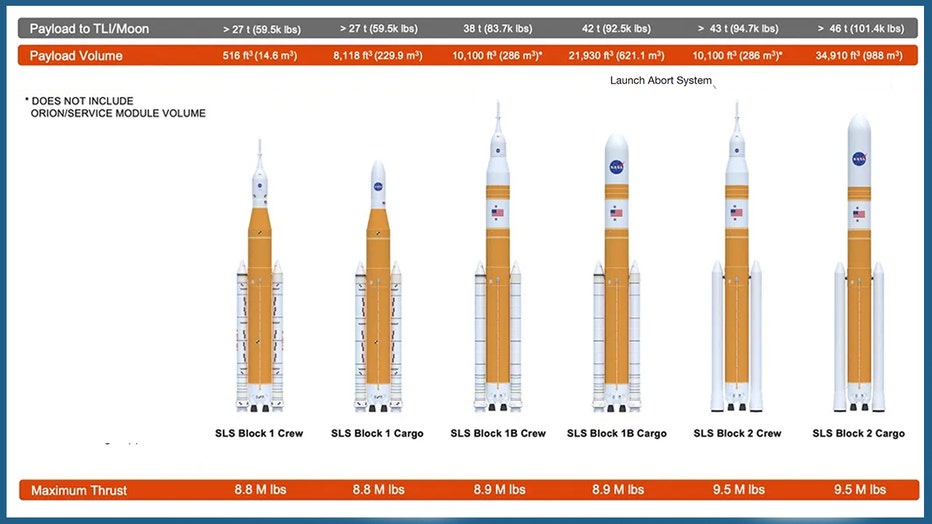
NASA has designed the Space Launch System as the foundation for a generation of human exploration missions to deep space, including missions to the Moon and Mars. SLS will leave low-Earth orbit and send the Orion spacecraft, its astronaut crew, and c
The Block 1B variant will feature a new Exploration Upper Stage and will be capable of carrying both Orion and large cargo needed to support a sustained human presence on the moon.
The future Block 2 version is expected to generate 9.5 million pounds of thrust and carry more than 46 metric tons, or about 101,400 pounds, into deep space.
Artemis missions pave the way for lunar exploration
Artemis I, the first integrated test flight of SLS and Orion, launched without a crew and sent the spacecraft thousands of miles beyond the moon before returning to Earth.
The mission demonstrated the performance of NASA’s exploration systems ahead of crewed flights.
Artemis II, the first crewed Artemis mission, sent astronauts around the moon.
Artemis III is intended to build on those achievements by testing systems needed to support future lunar landings and long-term exploration.
Building the rocket
NASA is using a combination of new technology and upgraded hardware from the space shuttle program to reduce costs and shorten development timelines.
The rocket’s core stage is built by Boeing at NASA’s Michoud Assembly Facility in New Orleans. Standing more than 212 feet tall, the stage holds about 730,000 gallons of liquid hydrogen and liquid oxygen to fuel the RS-25 engines.
RS-25 engines provide the rocket’s power
Four RS-25 engines power the SLS core stage.
The engines are upgraded versions of those used on the space shuttle and have been modified to meet the demands of deep-space missions. During flight, the engines generate about 2 million pounds of thrust combined.
SIGN-UP FOR FOX 35'S BREAKING NEWS, DAILY NEWS NEWSLETTERS
The engines underwent extensive testing during NASA’s "Green Run" campaign, which culminated in a full-duration, 500-second hot-fire test at Stennis Space Center in Mississippi.
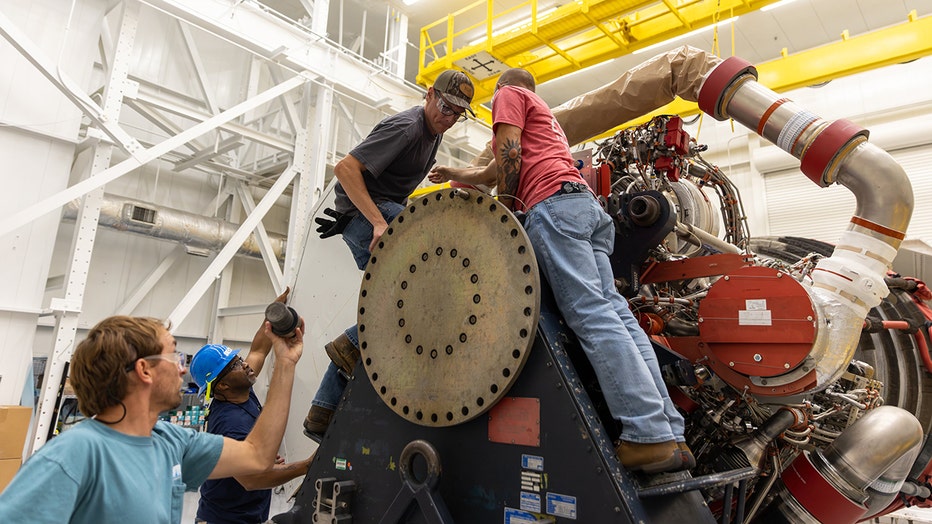
The first of four RS-25 engines for the Artemis III core stage arrived at the Vehicle Assembly Building at Kennedy. [Source: NASA]
NASA and industry partners also are producing new RS-25 engines and components designed to improve affordability and performance for future missions.
Boosters deliver most of the thrust at liftoff
Two five-segment solid rocket boosters provide more than 75% of the rocket’s thrust during the first two minutes of flight.
Built by Northrop Grumman, the boosters are based on the space shuttle design but include a fifth propellant segment, updated avionics and other modifications to increase performance.
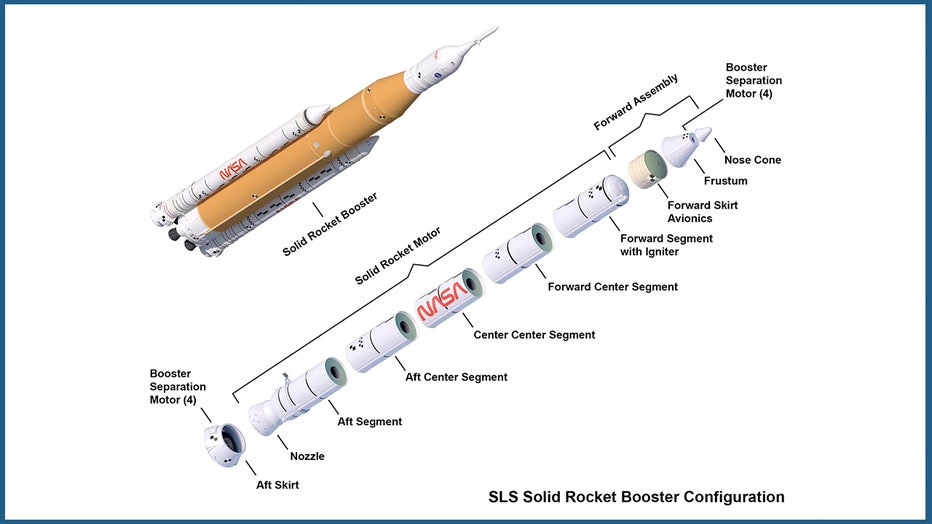
The SLS booster is the largest, most powerful solid propellant booster to ever fly. Standing 17 stories tall and burning approximately six tons of propellant every second, each booster generates more thrust than 14 four-engine jumbo commercial airlin
Each booster stands about 17 stories tall and burns roughly six tons of propellant per second. Together, the boosters produce the majority of the rocket’s thrust during launch.
The booster segments are manufactured in Utah and transported by train to Kennedy Space Center, where they are assembled and integrated with the rocket.
After launch, the boosters separate from the core stage approximately two minutes into flight and fall into the Atlantic Ocean.
Artemis III to launch in 2027
What's next:
NASA plans to launch Artemis III in 2027, carrying four astronauts from Florida aboard Orion. The mission will test key rendezvous and docking technologies between Orion and commercial lunar landers that will be needed to return astronauts to the moon’s surface and support future lunar missions.
The Source: This story was written based on information shared by NASA.