

Gov. DeSantis signs Missy’s Law as he calls for House to impeach judge who let her accused killer out on bond
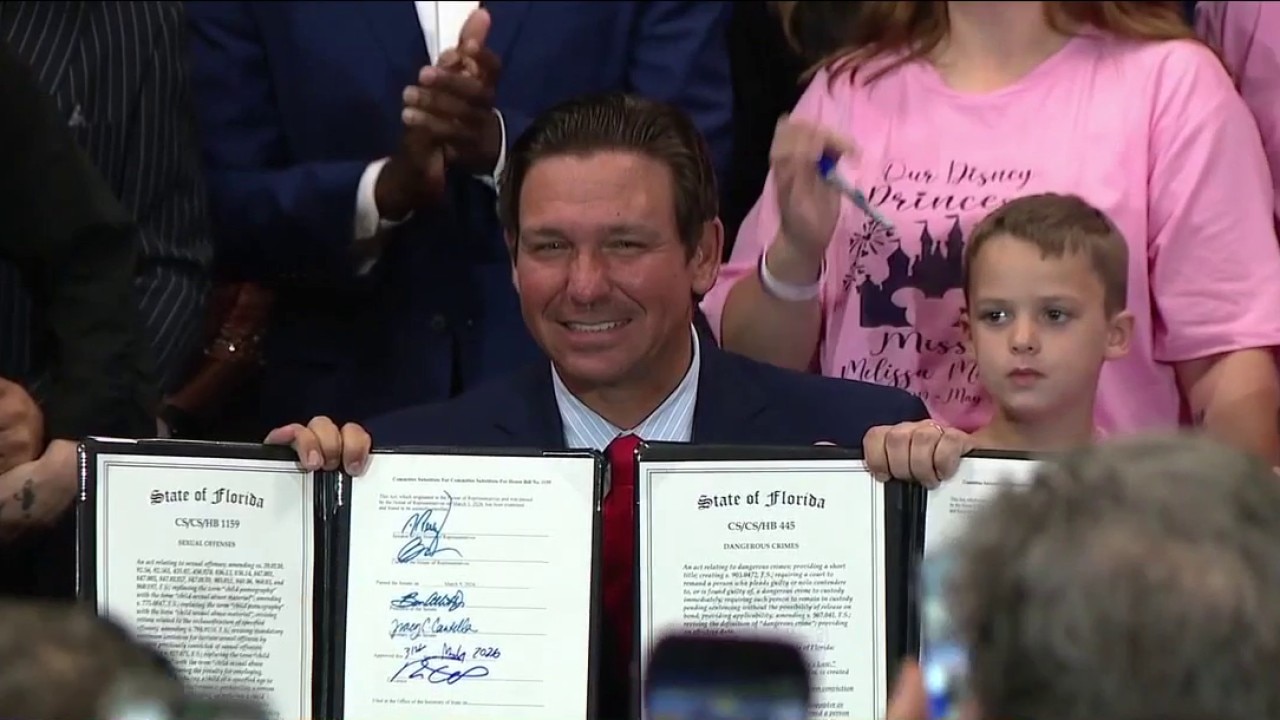
Gov. DeSantis signs 'Missy’s Law' in Tampa
Governor Ron DeSantis signed two bills, including Missy’s Law, while in Tampa on Tuesday morning. FOX 13's Evan Axelbank reports.
TAMPA, Fla. - Florida’s Governor Ron DeSantis signed two bills into law while in Tampa on Tuesday morning.
What is Missy’s Law?
The backstory:
The first bill the governor signed was Missy’s Law, named in honor of 5-year-old Missy Mogel, whose stepfather, Daniel Spencer, is accused of torturing and killing her while he was waiting to be sentenced after being convicted of traveling to meet a 15-year-old for sex.
DeSantis said that prosecutors asked for the judge to revoke Spencer’s bail while he was awaiting sentencing, but the judge refused.
"She put him out on bail pending sentence," DeSantis said. "And what happened between that decision and when he was sentenced? He murdered Missy. Totally preventable. A miscarriage of justice."
Missy’s Law requires a court to remand to custody immediately a person who pleads guilty, pleads nolo contendere or is found guilty of a dangerous crime, requiring that person to remain in custody pending a sentencing without the possibility of being released on bond.
What they're saying:
"Once one of these guys is convicted, you’ve got to pull out all the stops to protect these kids and this judge refused to do it," DeSantis shared. "Now, you will be remanded to custody and have your sentence. That will count toward your sentence. Obviously, it will. But you won’t be able to harm other children. If we had this bill in place, then Missy would be alive today."
"This was an outrage," the governor added. "This was such an easy call to make sure that this guy was put behind bars and this judge refused to do it, knowing the risks and the result has obviously been a tragedy."
While talking about Missy’s Law, DeSantis called for the Florida House of Representatives to impeach Judge Tiffani Baker-Carper, noting that it just takes two-thirds of the House to do it.
"Until you start holding these judges accountable, they are going to continue to find ways to benefit the criminal element," DeSantis shared.
Missy's family stood behind the governor as he signed Missy's Law.
"I'm just thankful that justice is being served right now for my granddaughter, Melissa," said grandmother Pepper Mogle. "She did not deserve it."
Dig deeper:
The second bill the governor signed on Tuesday was HB 1159, which DeSantis said protects Floridians from sexual predators by expanding criminal offenses and enhancing penalties relating to child sexual abuse material.
"This bill increases penalties for using a child, which some of these people do, and it’s really disgusting, in a sexual performance, possessing and distributing abusive material and in creating and generating sexual abuse material," the governor explained.
The bill establishes minimum mandatory prison terms for specified offenders who are 18 years old or older. It also creates a life felony for the aggravated exploitation of a child under the age of 12 and addresses emerging threats by criminalizing new forms of exploitation, including computer-generated sexual abuse materials.
"The only way to stop it is to put these people in prison for a really long time and that’s what this bill does," DeSantis said.
By the numbers:
The governor was joined by Florida’s Attorney General James Uthmeier on Tuesday.
Uthmeier said that since he took office there have been more than 1400 child predator arrests, which is three-fold more than the prior year.
He said that more than 300 missing children were rescued and thousands of years of sentences have been handed down.
"Stay away from our kids," Uthmeier warned. "If you want to lay a finger on one of our kids. If you want to exploit them, photograph them, molest and abuse them, we will come after you in Florida with everything that we’ve got."
What's next:
FOX 13 requested comment from the house speaker as to whether an impeachment proceeding against the judge is a possibility, but we have not yet heard back.
The Source: This article was written using information gathered during a press conference with Governor Ron DeSantis on Tuesday morning in Tampa as well as interviews FOX 13's Evan Axelbank conducted with the Mogle family.