

Possible weight loss treatment that doesn’t require eating less shows promise, study finds
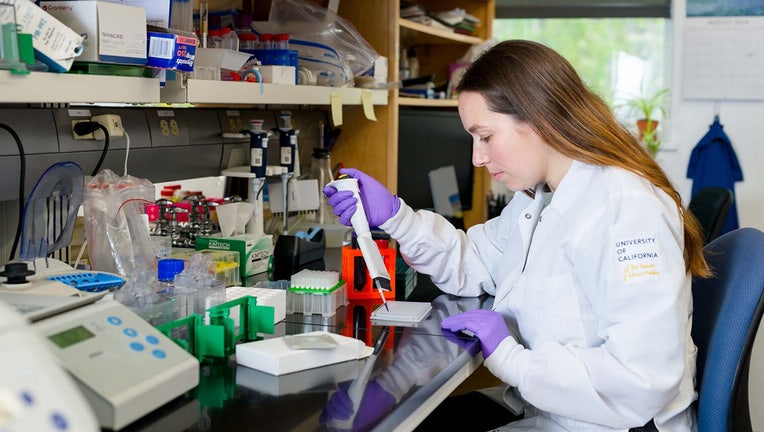
Rachelle Stark, a Ph.D. student and co-author of the new study, in the Anders Näär lab at Berkeley.(Mathew Burciaga/UC Berkeley)
A new potential weight loss treatment could provide many of the benefits of GLP-1 medications while avoiding some of the potential risks that come with eating less. In a study from the University of California-Berkeley, researchers took the opposite approach of drugs like Ozempic, Wegovy, and Mounjaro and claim it is showing promising results.
What they're saying:
"Body weight responds to two levers: taking in fewer calories, or spending more energy," said Anders Näär, a professor of metabolic biology and nutrition at UC Berkeley and senior author of the study. "GLP-1s work almost entirely on the first, so we went after the second."
Big picture view:
Rather than suppressing appetite, researchers targeted the body’s metabolic rate and aimed to increase an individual’s energy expenditure by triggering genes that help cells burn fat and produce energy. They also prevent the body from producing lipids like cholesterol and triglycerides.
RELATED: 7 new dementia risk factors revealed — including one millions struggle with
Why you should care:
A statement announcing the study’s results gave GLP-1s credit for their impact in treating obesity, diabetes, features of fatty liver disease, among other metabolic disorders. However, it noted potential drawbacks that include nausea and other gastrointestinal side effects, nutritional deficiencies, and muscle loss.
By the numbers:
The study examined the effects of the compound 5-tetradecyloxy-2-furoic acid (TOFA) in mice and found that when obese ones took it they lost fat, but did experience a significant muscle mass. The mice’s cells burned up to 18% more energy without them doing anything extra and without their body temperatures rising.
Dig deeper:
Researchers indicated that they do not necessarily see TOFA as a potential replacement for GLP-1s, and they even tested using both together. They gave mice both products at the same time and produced even better results when it came to body weight, glucose control, insulin, and triglycerides than either treatment would produce alone, according to the statement.
RELATED: Recalled weight loss products are tainted with toxic substance, FDA says
"In our combination experiments, TOFA worked additively or synergistically with the GLP-1 appetite-suppressing drugs, so we view it as complementary rather than as a replacement," Näär said.
What's next:
The study, which was published last month in the journal "Science Advances," only involved mice. Researchers have yet to determine if TOFA is safe or effective in humans. To do so, they teamed with other members of the university’s life sciences departments to found a company to handle that part.
The Source: Information for this article was taken from a statement from the University of California statement on the TOFA treatment as well as the study that was published in "Science Advances." This story was reported from Orlando.