

Cancer patient beats odds on rare disease that Moffitt Cancer Center will study with new $22.4M grant

TAMPA, Fla. - A new federal grant is allowing Moffitt Cancer Center to study a rare and aggressive disease that affects cancer patients, and doctors hope the results will give them the chance for a longer life.
The backstory:
Every day is a gift for Heather Curley, and Thursday marked a special milestone for her. She is able to share smiles with her doctor at Moffitt Cancer Center after she was diagnosed with an extremely rare disease that only affects 3-5% of women like her.
READ: Legacy Lane photography exhibit honors cancer survivors
"When I googled it, it said two weeks not treated and four months if you’re going to do treatment. Today is, actually to the date, 26 months," said Curley.
It’s 26 months of life thanks to a clinical trial. Curley’s journey began after she was diagnosed with metastatic stage four breast cancer in 2022. The 35-year-old mom’s outlook changed six months into treatment.
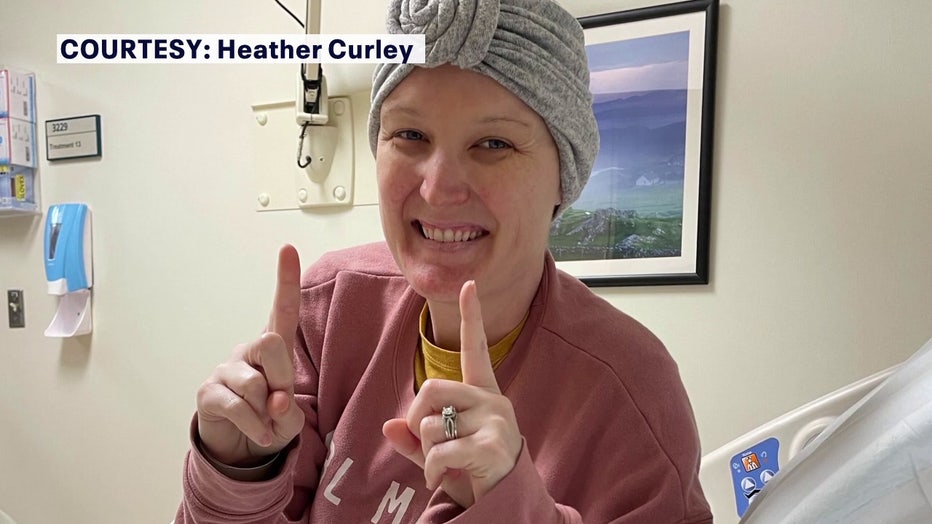
"When I had the routine brain MRI, we found out that I had leptomeningeal disease, and that is when your primary cancer spreads to the spinal cord fluid that bathes your brain," said Curley.
MORE: Florida invests millions in pediatric cancer research through Cancer Connect Collaborative
She said yes to enrolling in a clinical trial as just the second patient ever for an innovative treatment for leptomeningeal disease or LMD. It worked for her, and now her doctors said there is no evidence of the disease.
What we know:
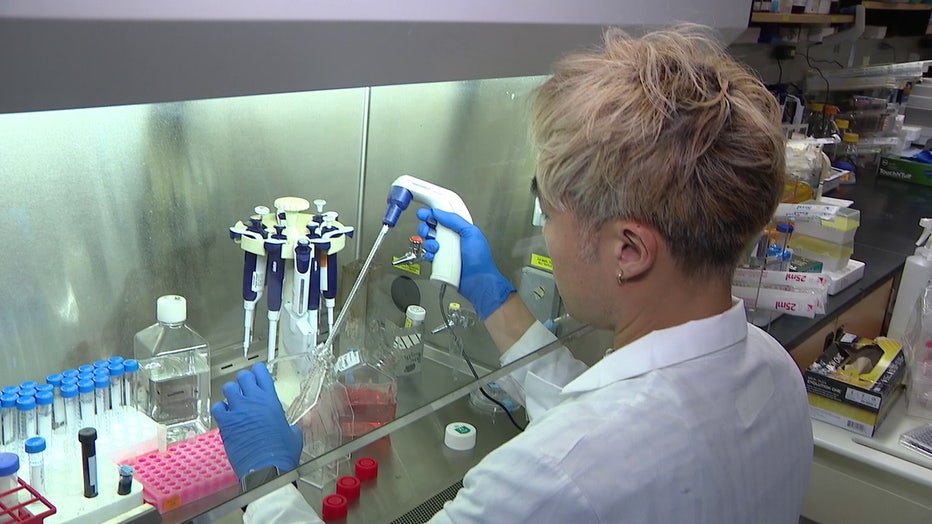
Dr. Peter Forsyth is leading research into leptomeningeal disease through a new $22.4 million federal grant to study the disease. The disease occurs when cancer cells spread to the brain and spinal cord, entering the spinal fluid. In women with breast cancer, he said it primarily affects patients who are in their 20s and 30s.
"All the patients, for reasons we don’t understand who have leptomeningeal disease, they’re all pretty young," said Forsyth, the chair of neuro-oncology at Moffitt Cancer Center. "We need to figure it out, and we’re one of the biggest centers who do this kind of work."
Forsyth’s lab will lead the research and two clinical trials over the next four to six years, working out what he calls a solvable problem. Moffitt will receive $18.7 million from the grant and Kent State University will receive $3.7 million.
READ: Merck cancer shot gets FDA approval: What to know
"It’s a solvable problem. We just need time and money and be curious and the most important thing is to believe," said Forsyth. "Know and believe you’re going to cure it. Start out with that as an assumption and you’re going to do something. If you assume you’re going to fail at something, you’re going to be right."
Dig deeper:
The gift of time Curley received from the clinical trial treatment drives her as she watches her 5-year-old daughter, Palmer, grow up.
"Originally when I was first diagnosed, I wrote her birthday cards for every year, thinking that I wasn’t going to be here. And every year I take a picture of throwing it in the garbage can, and I get to do one again at the end of this month," said Curley.
She spends her time now raising awareness about LMD and breast cancer. She wants others with her condition to know there’s hope.
"I love that my daughter is able to see just generations of women just beating the odds and doing something, having a thought in your head and just putting it into motion," said Curley.
The Source: The information in this story was gathered by FOX13’s Briona Arradondo.