

Florida reports 2nd 'flesh-eating' bacteria death of 2026 as cases reach 14
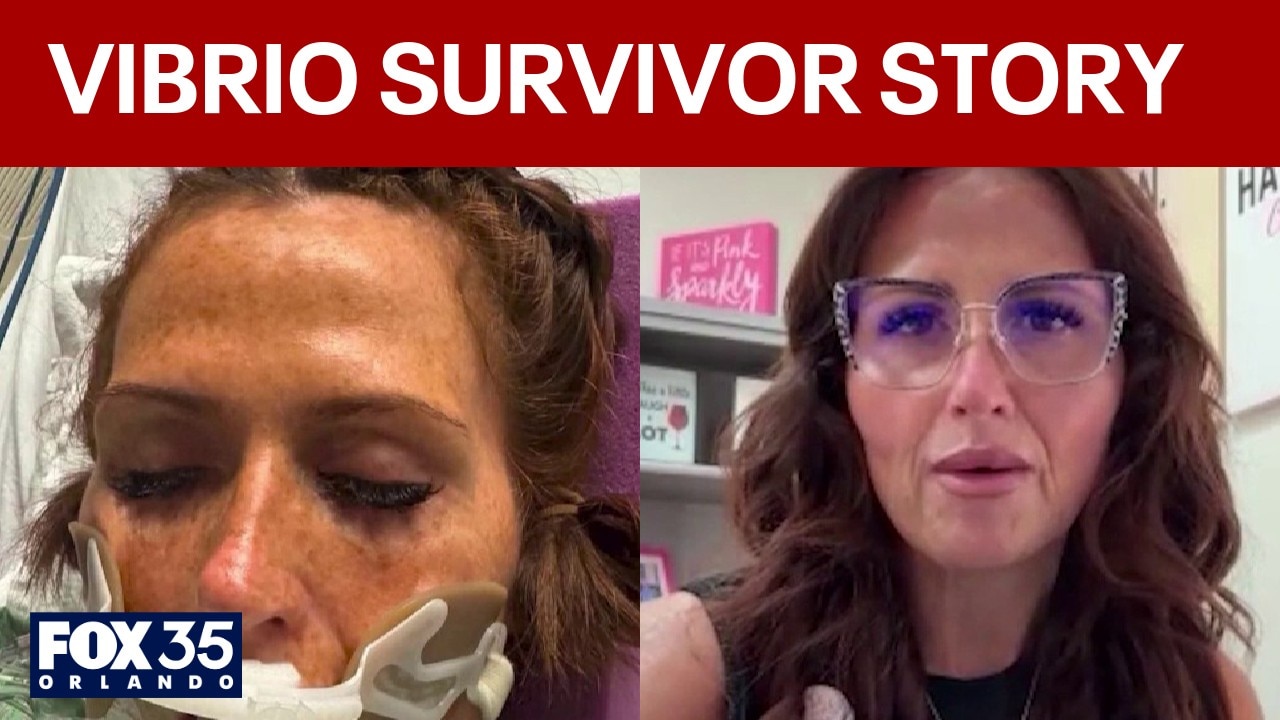
'Flesh-eating' bacteria survivor issues warning after 14 cases in Florida in 2026
A Marion County resident between the ages of 60 and 74 has died after contracting a severe infection from Vibrio vulnificus—a rare, naturally occurring bacteria often referred to as "flesh-eating." Survivor Genevieve Gallagher is now using her experience to warn others about how easily the bacteria can strike.
MARION COUNTY, Fla. - A Marion County resident between the ages of 60 and 74 has died after contracting a severe infection from Vibrio—a rare, naturally occurring bacteria often referred to as "flesh-eating." The victim's death is the second death in 14 reported cases of Vibrio vulnificus across the state this year.
Vibrio bacteria thrive in warm, brackish, or salt water and typically enter the body through an open wound. While cases are relatively rare, they can escalate rapidly. The state reported 33 cases and 5 deaths linked to Vibrio infections last year.
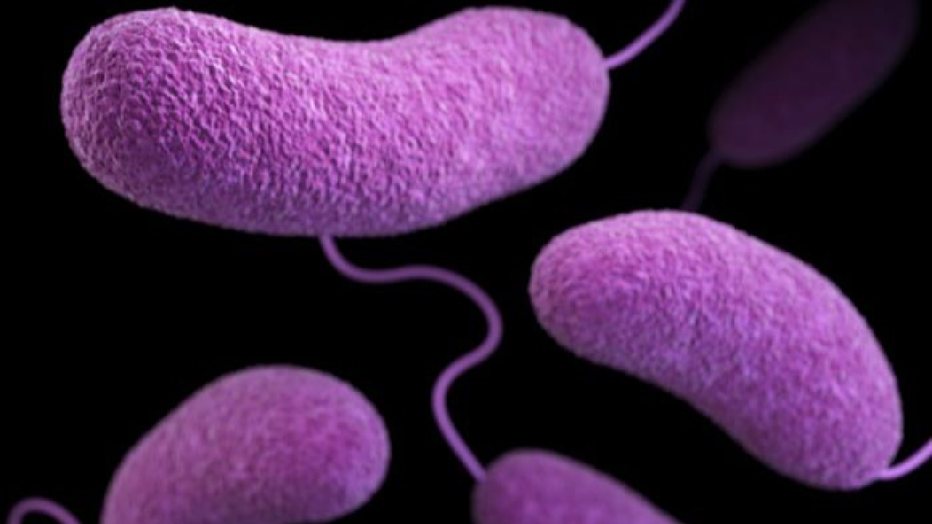
Vibrio are bacteria that naturally live in coastal waters. (Source: CDC)
Vibrio survivor shares her story
For survivors, the onset of the infection is fast, violent, and life-altering. Genevieve Gallagher thought she was simply enjoying a relaxing boat day with her family. After entering the water with a cut, her life took a dangerous turn within just a few days.
Gallagher is now using her near-death experience to warn others about how easily the bacteria can strike.
"If you have any open cuts at all—like mosquito bites that are open that you've scratched—do not shave the night before you go in. It's so serious... Do not take that chance. Your life is not worth it," she said.
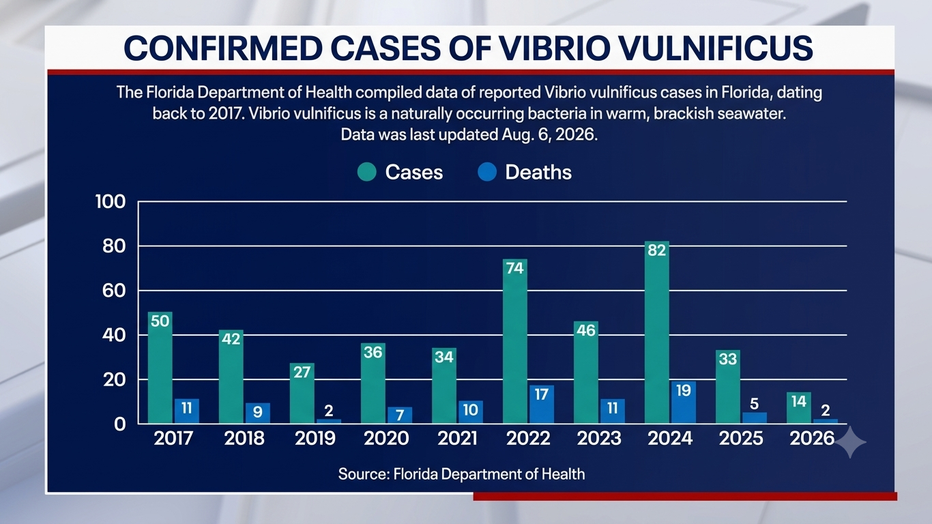
Vibrio Vulnificus cases from 2017-2026. (Source: Florida Department of Health)
Researchers work to stop the spread
With infections trending upward, experts are turning to cutting-edge technology to stop the spread. Researchers at the University of Florida (UF) are currently developing AI-enabled forecasting tools designed to predict where these waterborne pathogens will proliferate next.
Dr. Antarpreet Jutla, a professor of environmental engineering sciences at UF, is leading an initiative funded by the National Institutes of Health (NIH) that utilizes satellite data to protect coastal communities.
"What we have been doing is using NASA satellite sensing systems to get datasets... so that we can basically track the movement of these pathogens across the seasons and across spaces in the coastal waters of the eastern U.S.," Jutla said.
What's next:
The ultimate goal is to launch an early-warning forecast system for public health agencies within the next year to 18 months.
Under the proposed model, local health departments and environmental agencies informed by the AI forecasts will collect water samples and send them directly to UF labs for testing. This proactive loop will allow officials to warn the public before dangerous outbreaks occur—potentially saving lives across the Sunshine State.
The Source: Information in this story was gathered by reporting by FOX 35's Stephanie Buffamonte.