

Looking ahead to Artemis II: The second space race
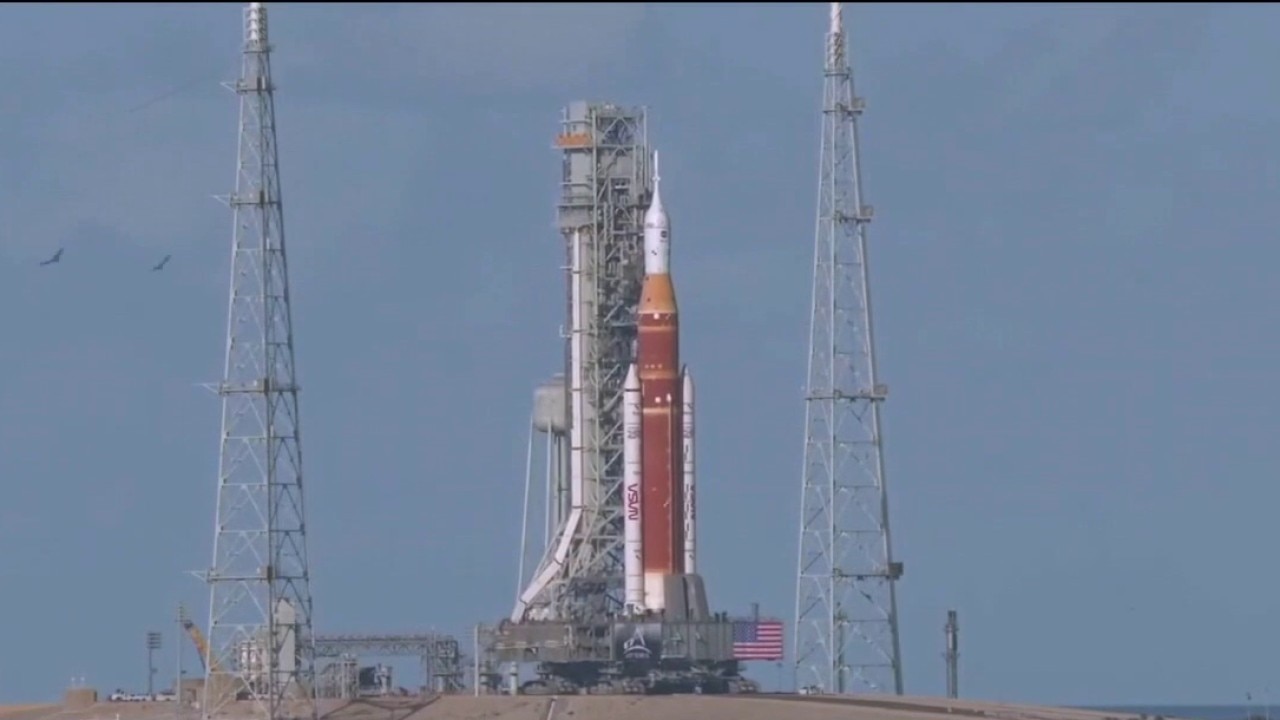
Artemis II: The second space race
NASA’s Artemis II will send four astronauts around the Moon, the first crewed deep-space mission in more than 50 years. FOX 13's Craig Patrick reports.
CAPE CANAVERAL, Fla. - NASA is preparing for Artemis II, which will carry astronauts on a trip around the Moon.
What we know:
Unlike the Apollo missions, this mission is part of a sustained lunar program rather than a one-off race.
It is designed to test crewed operations in deep space, paving the way for Artemis III, which will return humans to the Moon’s surface.
The backstory:
The story of Artemis begins with the end of World War II.
Nazi Germany developed the world’s first supersonic rockets, known as the V-2.
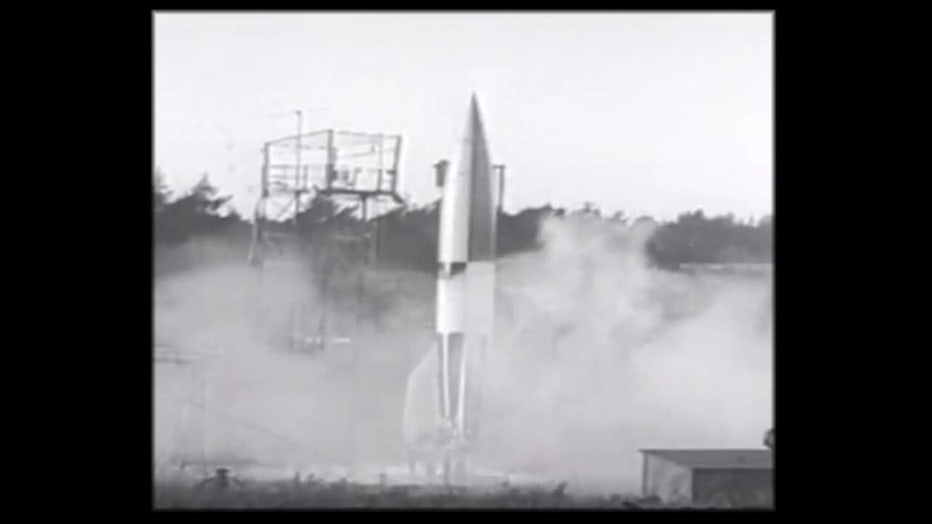
After the war, Allied forces captured German scientists, some of whom joined the United States while others went to the Soviet Union. These captured scientists helped the U.S. launch its first space rockets and laid the groundwork for the space race.
Dig deeper:
By 1957, the Soviets had taken an early lead by launching Sputnik, the first artificial satellite.

This spurred the U.S. to build a spaceport in Cape Canaveral, Florida — a location ideal for rocket launches due to its proximity to the equator and sparse population at the time.
President Eisenhower created NASA in 1958 to coordinate space exploration, leading to the Mercury, Gemini, and ultimately Apollo programs.
Apollo To Artemis:
The Apollo program achieved humanity’s first Moon landing in 1969, with Neil Armstrong declaring: "One giant leap for mankind."
Apollo 8 demonstrated deep-space crewed travel around the Moon, essentially mirroring the mission profile of Artemis II.
NASA experienced tragedies along the way, including the Apollo 1 fire, but also technological breakthroughs that shaped modern spaceflight.
Dr. Charlie Blackwell-Thompson, NASA Launch Director for Artemis, recalls, "I remember, as a first-grader, them bringing in the black-and-white TV in my classroom. We all gathered around. Now, I get to help lead this next chapter."
The Apollo program ended in the 1970s, primarily to demonstrate technological supremacy over the Soviet Union. Decades later, discoveries of water ice on the lunar surface reignited interest in sustainable lunar exploration.
Why you should care:
Artemis II is more than a historic journey — it’s part of a program aiming for long-term lunar colonization.
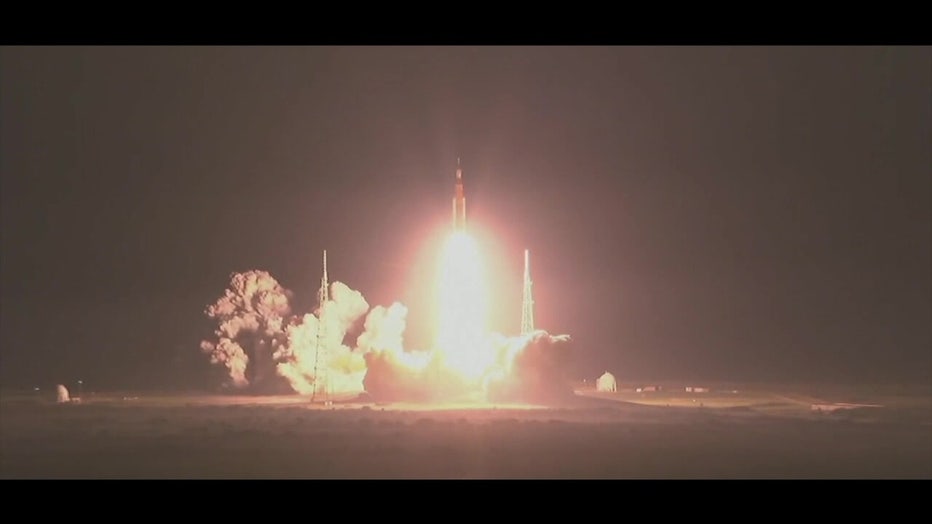
Lunar ice can be mined to produce rocket fuel, enabling humans to use the Moon as a base for deep-space exploration, including crewed missions to Mars.
By the numbers:
- More than 50 years have passed since the last crewed lunar mission.
- Apollo 11 carried three astronauts; Artemis II will carry four.
- Artemis II will test systems in lunar orbit, including guidance, navigation, and communications, crucial for Artemis III.
What's next:
Artemis II will validate spacecraft systems and astronaut procedures in lunar orbit.
Insights from this mission will guide Artemis III’s lunar landing and subsequent long-term lunar operations, including establishing infrastructure for sustained human presence.
The Source: This reporting is based on interviews and archival footage from NASA and FOX 13 coverage, historical newsreels and government records of Mercury, Gemini, and Apollo programs, and statements from NASA officials, including Launch Director Charlie Blackwell-Thompson.