

Thousands of giant lion's mane jellyfish sightings trigger public safety alerts for New England beachgoers
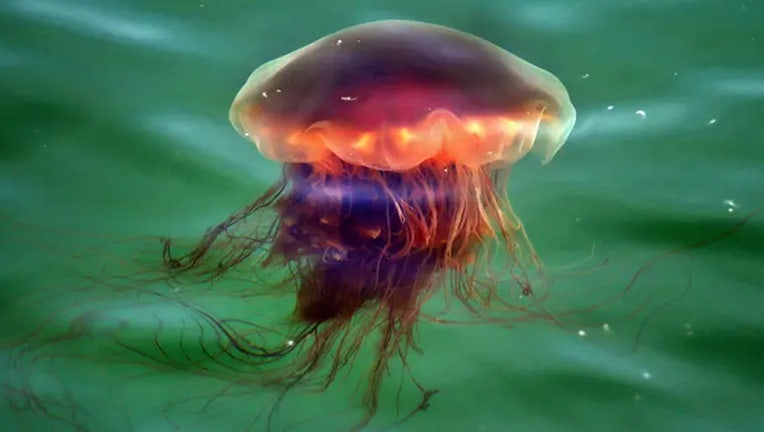
An invasion of lIon's mane jellyfish has occurred in recent weeks along the South Shore, even spotted as far north as Maine and south to Cape Cod. (John Tlumacki/The Boston Globe via Getty Images / Getty Images)
Officials across New England are warning residents about a sea creature that can pose a serious threat to beachgoers.
Large numbers of massive lion’s mane jellyfish have been spotted along the coast, including areas such as Nantucket and Cape Cod.
Many residents have taken to social media to voice their concerns.
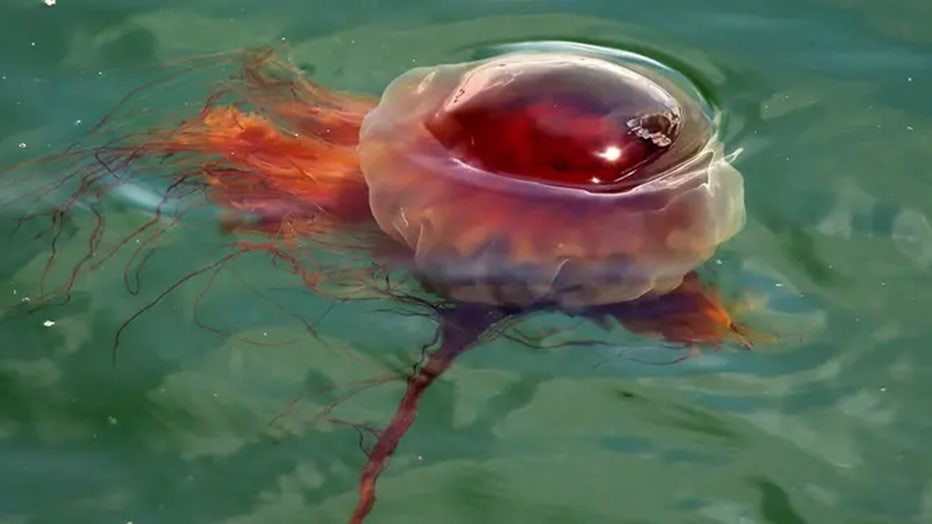
A foot-wide Lion's Mane jellyfish floats in the water of Scituate Harbor as it passed in the current of high tide at Veteran's Memorial Bridge in Scituate, MA. (John Tlumacki/The Boston Globe via Getty Images / Getty Images)
One user wrote in a local Massachusetts beach community group, "Just washed up ashore here on the beach by the Parrot, the biggest lion’s mane jellyfish I've ever seen at the beach. If you run into this one, you’re in a world of hurt."
Another user posted, "Spent a quiet birthday weekend down the Cape hitting beaches, watching seals, and encountering a Lion’s Mane jellyfish that genuinely looked like a crime scene."
SPRING STING: PORTUGUESE MAN O' WAR RETURNS TO GULF COAST BEACHES
In response, officials across Massachusetts have issued public safety alerts as thousands of the giant jellyfish have been spotted along beaches stretching from the North Shore to Cape Cod.
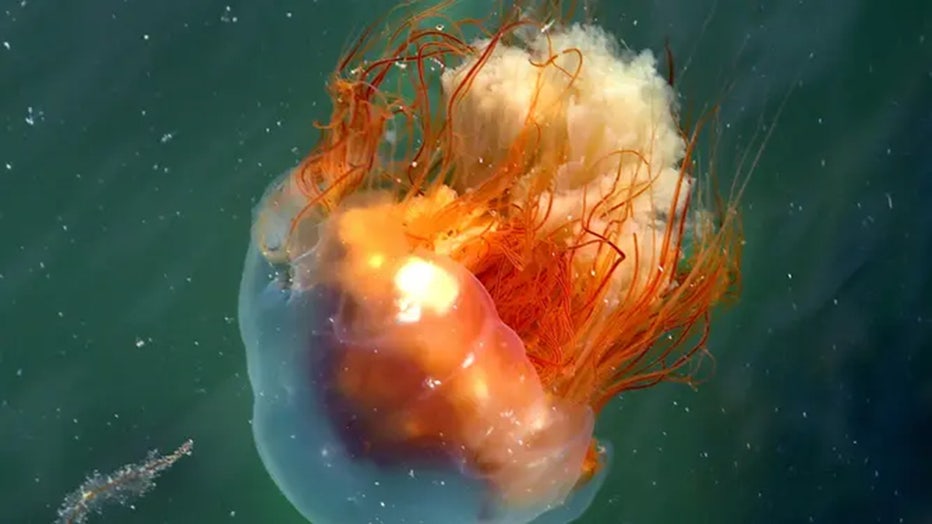
A 6-inch wide Lion's Mane jellyfish floats in the water of Plymouth Harbor in Plymouth, MA. (John Tlumacki/The Boston Globe via Getty Images / Getty Images)
According to the Smithsonian, the lion’s mane jellyfish, also known as Cyanea capillata, is the largest species of jellyfish.
In some cases, it can grow up to 120 feet from the top of its body to the bottom of its tentacles.
Experts say the jellyfish’s tentacles contain large amounts of neurotoxins that can cause a range of reactions when humans come into contact with them. Effects can range from skin rashes to impacts on respiratory function and, in rare cases, can be fatal.
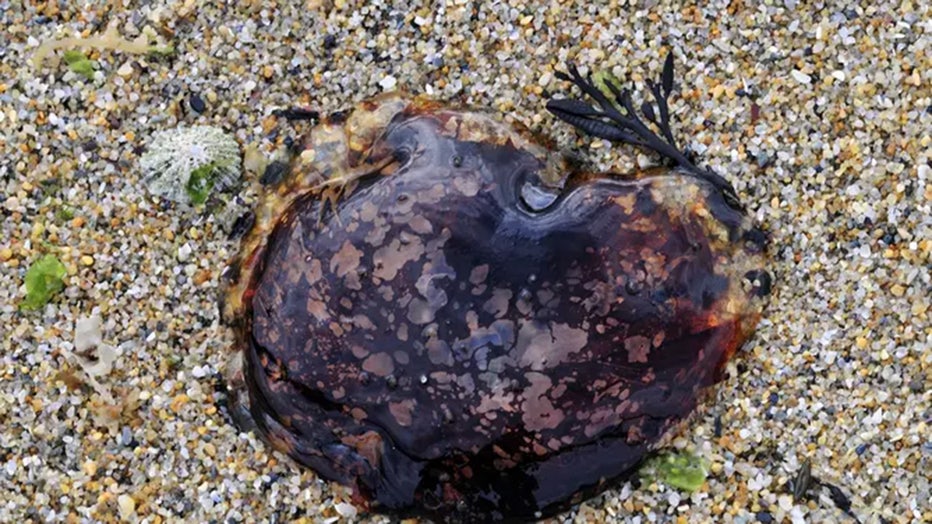
Lion's mane jellyfish washed ashore on beach. (Arterra/Universal Images Group via Getty Images / Getty Images)
Even after the sea animal dies, its tentacles can remain active for up to 25 days.
However, most people who encounter lion’s mane jellyfish recover without serious complications.
LOOK OUT: POWERFUL WINDS SEND BOUNCE HOUSE TUMBLING THROUGH YARD AND INTO SUV IN FLORIDA
Lion’s mane jellyfish are typically found in the open ocean, but in recent years, record numbers have been discovered along the Massachusetts coastline, raising concerns among residents and beachgoers.
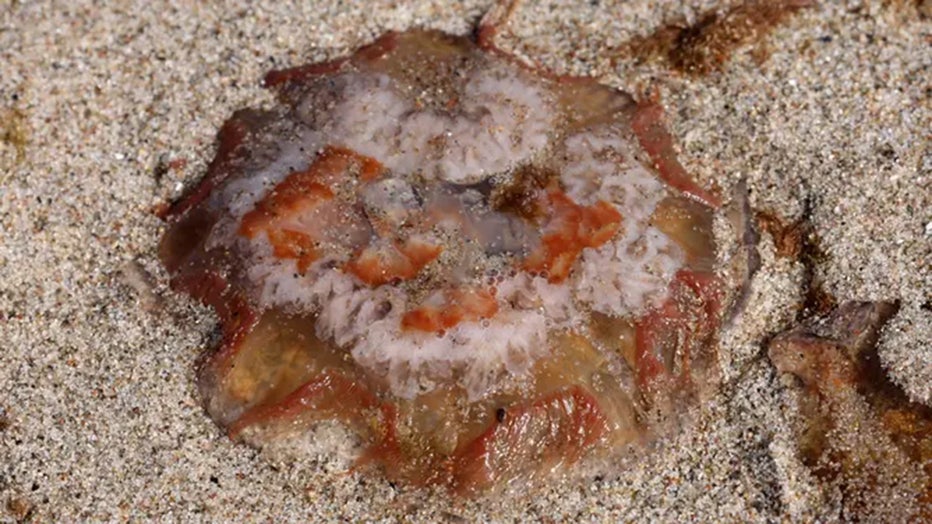
Lion's mane jellyfish are among the largest jellyfish species in the world. (Bernd Wüstneck/picture alliance via Getty Images / Getty Images)
According to the Mayo Clinic, if you come into contact with a lion’s mane jellyfish or are stung, they recommend carefully removing any visible tentacles using fine tweezers. Then, soak the affected skin in hot water between 110 and 113 degrees Fahrenheit. Keep the area immersed or under a hot shower until the pain eases. This can take 20 to 45 minutes.
Afterward, apply hydrocortisone cream or ointment twice a day to the affected skin.
It is important to seek medical attention if symptoms are severe or concerning.
For now, officials advise residents to remain alert, avoid handling stranded jellyfish, and follow local beach advisories.
Find more information on this story on FoxWeather.com.