

USF researchers develop AI robot tech that could save lives in emergencies
Using AI and robots after disasters
Students at USF are pairing AI with robots to communicate in a new way when disaster strikes. FOX 13’s Jennifer Kveglis reports.
TAMPA, Fla. - Researchers at the University of South Florida are teaching robots to "speak" visually, a breakthrough that could change how emergency crews communicate when traditional systems fail.
What we know:
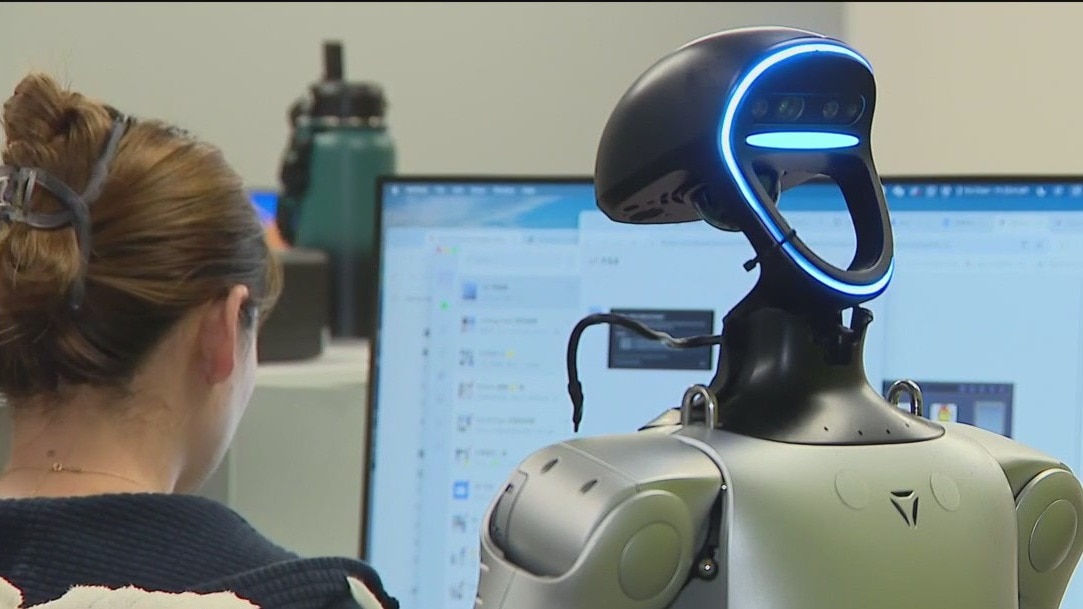
Inside the Bellini College’s RARE lab, students and faculty are creating a "Unified Augmented Reality" model that allows robots to project visual signals or images onto their surroundings.
READ: USF expands 4-year nursing program to St. Pete campus to help statewide shortage
Assistant Professor Dr. Zhao Han, who leads the project, says the system is designed for situations where noise, debris, or signal loss makes normal communication impossible. "If you speak loudly, people still can’t hear you," Dr. Han explained, "If you use wireless signals, those connections may be blocked."
The backstory:
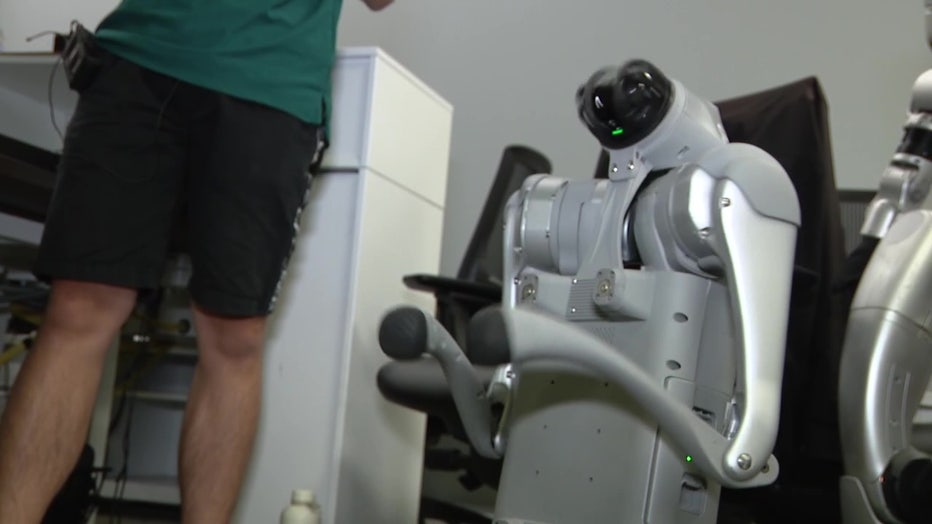
The RARE lab team is programming four robots, including a drone, to scan surfaces, detect textures and lighting, and project customized images that can relay messages to rescuers.
In one scenario, a drone could project an illuminated symbol to show the location of a trapped survivor. Other robots are being trained to navigate rough terrain and signal what they find to responders nearby.
MORE: Feed-A-Bull Pantry reopens at USF after major expansion
Sophomore Bao Dinh, demonstrated a robot nicknamed "BN BN," which can move at a 45-degree angle and even perform a quick shuffle, but its true purpose is maneuvering into dangerous, hard-to-reach spaces.

The technology can also be applied in settings like lecture halls or in a messy home. Dr. Han said, "We can't really assume everybody's home has a wall that has nothing. They may have a lot of photo frames."
What's next:
The team aims to commercialize the technology, a step they believe could make rescue operations faster and safer. "The work that I’m putting in here feels very significant," Dinh said, "this project has the potential to be applied in the world. It's not just your typical personal project where you just do it and you learn, and then the work that I put into it may someday help somebody."
To learn more, click here.
The Source: This story is based on FOX 13 News reporting by Jennifer Kveglis, including interviews with Dr. Zhao Han and USF students inside the Bellini College’s RARE Lab.