

Alligator trapped in soccer net rescued by Manatee County deputies after Gators' loss
Courtesy: Manatee County Sheriff's Office
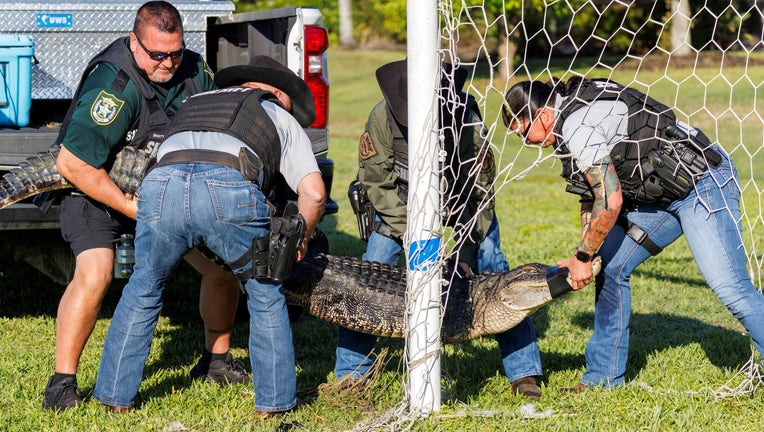
BRADENTON, Fla. - An alligator in Manatee County is back in a pond where it belongs after getting trapped in a soccer net.
The backstory:
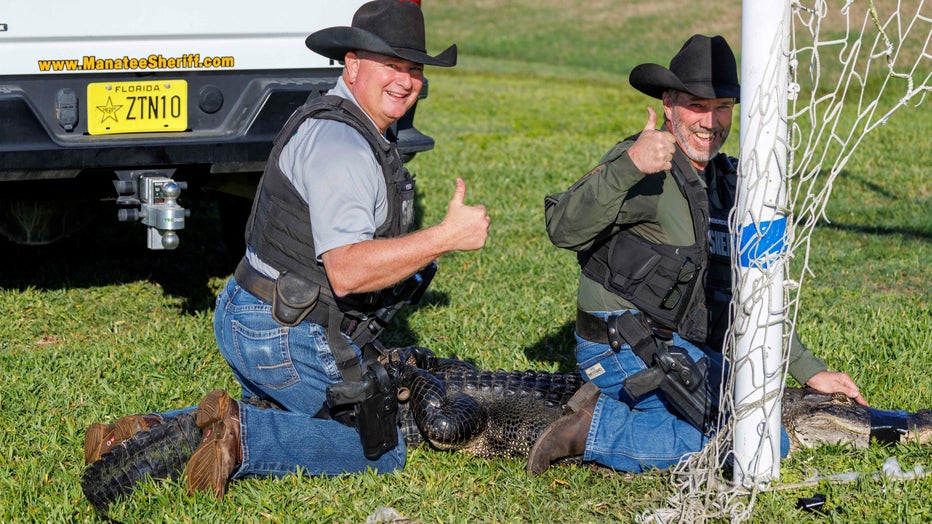
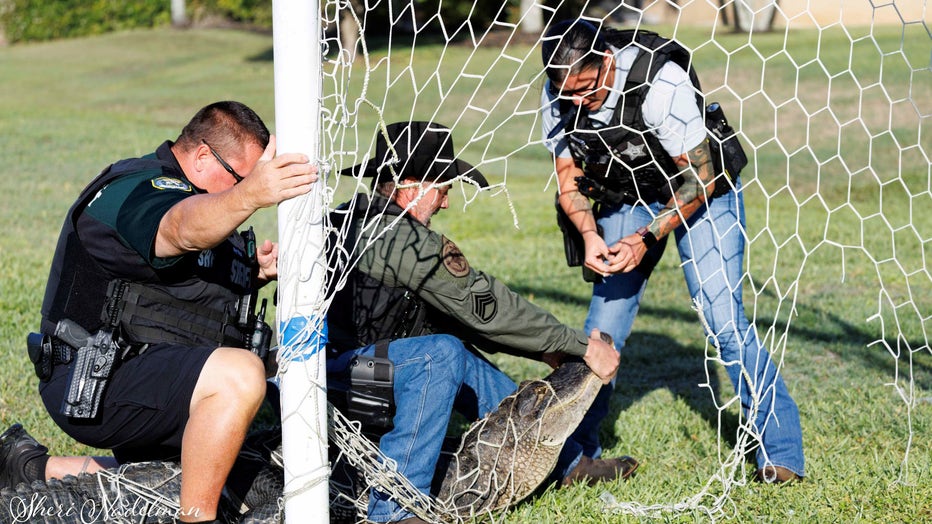
A social media post by the Manatee County Sheriff’s Office showed crews helping free the reptile from the net in the Greyhawk Landing neighborhood.
The post joked that the alligator was disappointed by the Florida Gators' loss in the NCAA basketball tournament and decided to take on a new sport – soccer.
Courtesy: Manatee County Sheriff's Office
Officials said a passerby called for help and the MCSO COPS Rural Unit stepped in to free the gator and release it into a pond.
What they're saying:
The post stated, "We suggest that he stick to swimming as a sport in the future!"
Courtesy: Manatee County Sheriff's Office
Dig deeper:
Gator mating season is right around the corner.
According to the Florida Fish and Wildlife Conservation Commission, courtship begins in April, and mating occurs in May or June.
FWC tips to stay safe around alligators
- If you encounter an alligator that is believed to pose a threat to people, pets, or property, call the FWC’s Nuisance Alligator Hotline, toll‐free at 1‐866‐FWC‐GATOR (392‐4286). The FWC’s Statewide Nuisance Alligator Program (SNAP) uses contracted nuisance alligator trappers throughout the state to remove alligators 4 feet in length or greater that are believed to pose a threat.
- Be aware of the possible presence of alligators when in or near fresh or brackish water. Negative alligator encounters may occur when people do not pay close attention to their surroundings when working or recreating near water.
- Closely supervise children when they are playing in or around water.
- Never swim outside of posted swimming areas.
- Swim only during daylight hours. Alligators are most active between dusk and dawn.
- Do not allow pets to swim, exercise, or drink in or near waters that may contain alligators or in designated swimming areas with humans. Dogs are more susceptible to being bitten than humans because dogs resemble the natural prey of alligators. The sound of dogs barking and playing may draw an alligator to the area.
- Never feed or entice alligators – it is dangerous and illegal. When fed, alligators overcome their natural wariness and associate people with food.
- Inform others that feeding alligators is illegal and creates problems for others who want to recreate in or near the water.
- Dispose of fish scraps in garbage cans at boat ramps and fish camps – do not throw them in the water. Although you are not intentionally feeding alligators when you do this, the result can be the same.
- Observe and photograph alligators only from a safe distance. Remember, they are an important part of Florida’s natural history as well as an integral component of freshwater ecosystems.
- Leave alligators alone. State law prohibits killing, harassing, or possessing alligators except under a permit.
- Never remove an alligator from its natural habitat or accept one as a pet. It is illegal and dangerous to do so. Handling even small alligators can result in injury.
- If an alligator bites you, the best thing to do is fight back, providing as much noise and resistance as possible. Hitting or kicking the alligator or poking it in its eyes may cause it to release its grip.
- When alligators seize prey they cannot easily overpower, they will often let go and retreat.
- Seek immediate medical attention if bitten by an alligator. Alligator bites often result in serious infection.
The Source: This article was written with information posted on social media by the FWC and previous FOX 13 News reports.