

BayCare partners with Rovex to test robots tasked with moving equipment at Clearwater hospital
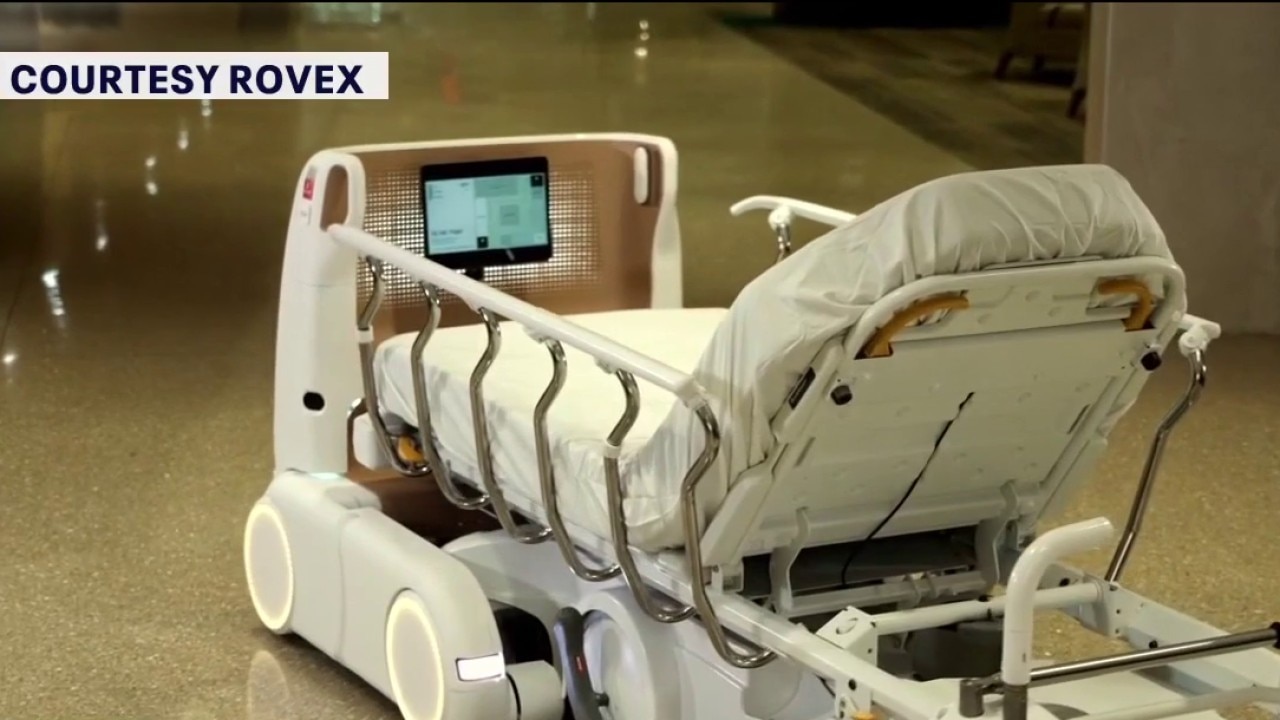
Clearwater hospital tests new transport robots
Healthcare workers are often tasked with the physical labor of moving equipment and patients across sprawling hospital campuses, but a new pilot program in Clearwater hopes to offload that on to robots. FOX 13's Kailey Tracy reports.
CLEARWATER, Fla. - Healthcare workers are often tasked with the physical labor of moving equipment and patients across sprawling hospital campuses, but a new pilot program in Clearwater hopes to offload that on to robots.
Dr. David Crabb, an emergency room physician and founder of Rovex, compares hospitals to miniature cities that require the movement of goods and materials 24 hours a day.
However, unlike the outside world, which utilizes services like Amazon, FedEx and Uber, hospitals rely on healthcare workers.
"We task our healthcare workers with trying to figure that out on top of already trying to take care of the healthcare needs of all their patients," Crabb said.
By the numbers:
According to Crabb, a single hospital can facilitate between 20,000 and 30,000 patient transports every month. To address this volume, Rovex has partnered with BayCare Health System to test robots designed to grab and tow stretchers and wheelchairs.
What they're saying:
Craig Anderson, BayCare’s vice president of innovation, emphasized that the robots are intended to assist the team, not replace them.
"We can free up a lot of time for our staff when the robot can go get the empty stretchers and the empty wheelchairs, and bring them back," Anderson said. "We want our humans right there with our patients at all times."
By automating the "muscle work," Crabb hopes to return providers to the bedside so they can focus on the emotional and medical needs of their patients.
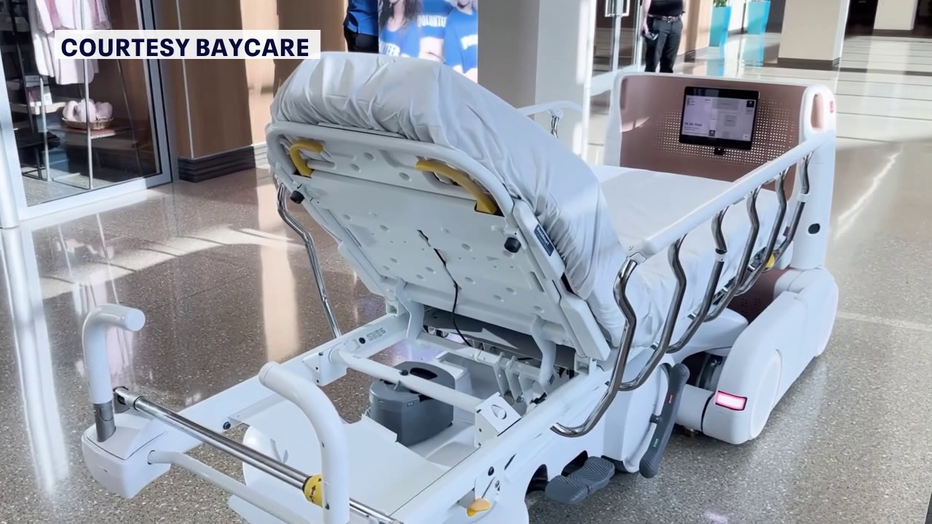
Courtesy: BayCare
"My goal is to get providers, staff members back to the bedside, being able to care with their minds and with their hearts and their hands, rather than just using some of their muscles," Crabb said. "
Anderson said BayCare uses robotics to help with things like running prescriptions, but Rovex is different.
"Rovex targets a certain area of hospital logistics that we haven't seen targeted before, and that is retrieving and moving certain things like stretchers, beds, chairs, linens, and that can really help all 16, soon to be 17 of our hospitals. We do that all day at every hospital, and that's really what you look for," Anderson said.
Phased rollout
The seven-month pilot program that started this month at Morton Plant Hospital in Clearwater began with a comprehensive evaluation of the facility's workflow. The next phase involves introducing the robots to move empty stretchers.
"Patients are a vulnerable population. We need to be very careful when we're rolling that out, and so, our testing and evaluation and development will occur first without patients, and then as we move forward, moving with patients," Crabb said.
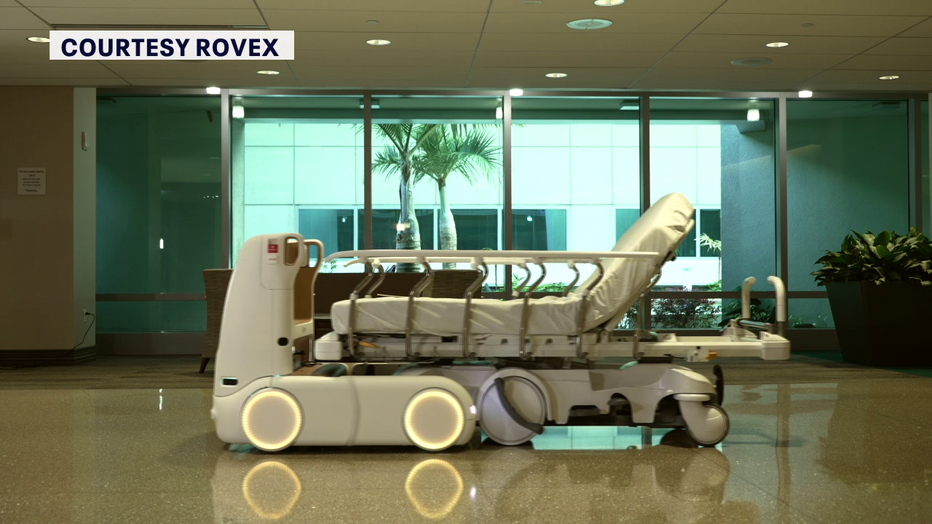
Courtesy: Rovex
The units are highly programmable, capable of navigating turns and backing into elevators. They also feature screens to keep patients informed about their destination.
Rovex, which originated in Gainesville, has expanded its presence in the region with an office in St. Petersburg through the spARK Labs incubator by ARK Invest.
"I love that concept of being able to have impact beyond just the patient in front of you. I love taking care of patients. I still work one, maybe two shifts a month at one of the local hospitals here in Gainesville, but outside of that, I'm focused just on Rovex, and that's my full-time role," Crabb said.
What's next:
Following the conclusion of the pilot program at Morton Plant Hospital, BayCare and Rovex will evaluate the results to determine if the robotic systems will be implemented in other BayCare facilities across Florida.
The Source: Information in this story was gathered from interviews with BayCare’s vice president of innovation, and the founder of Rovex, who is also an emergency room physician.