

Caribbean king crabs take on Florida coral reef restoration: 'It's been a long time coming'
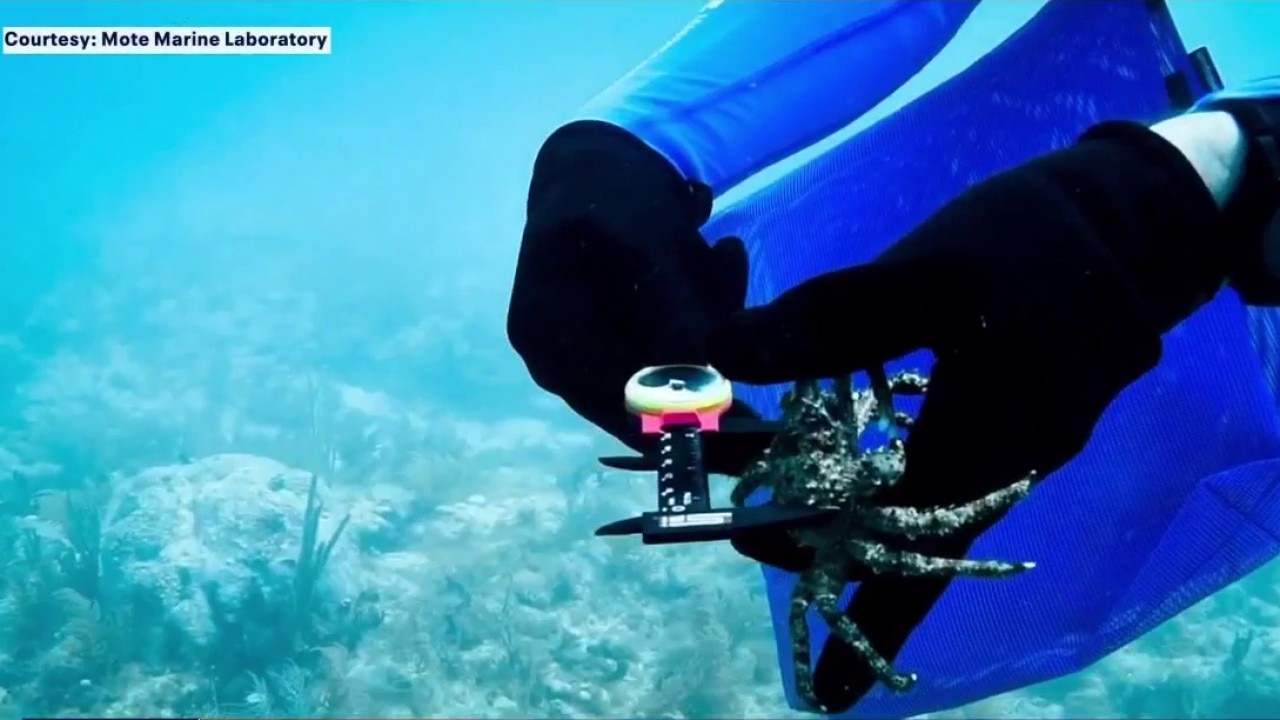
Lab releases king crabs to help restore coral reef
A small-scale release of hatchery-raised Caribbean king crabs happened on Tuesday at a coral restoration site in the lower Florida Keys. FOX 13's Kimberly Kuizon reports.
SARASOTA, Fla. - A small-scale release of hatchery-raised Caribbean king crabs happened on Tuesday at a coral restoration site in the lower Florida Keys.
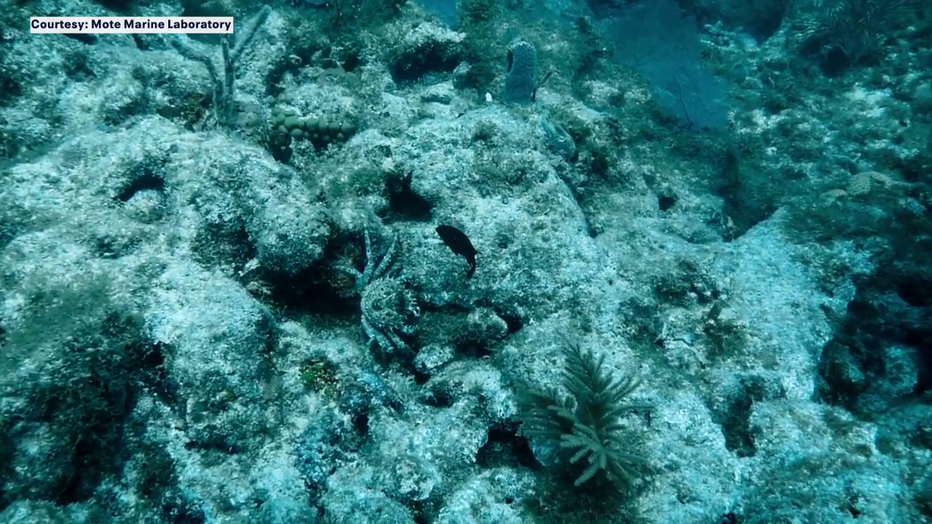
Caribbean king crabs are known as powerful 'grazers' and can consume algae that other species would typically avoid.
Courtesy: Mote Marine Laboratory
"It was wonderful. It’s been a long time coming. A lot of effort has gone into it. The amazing creative, industrious and very productive team that I am lucky to work with have put so much blood, sweat and tears into this that it was an absolute elation in the field to actually release those first crabs onto the reef," Dr. Jason Spadaro, the coral reef restoration program manager for Mote Marine Laboratory, said.
The backstory:
In February 2022, Mote scientists successfully hatched the first clutch of the Caribbean king crabs at their Elizabeth Moore International Center for Coral Reef Research and Restoration on Summerland Key.
Courtesy: Mote Marine Laboratory
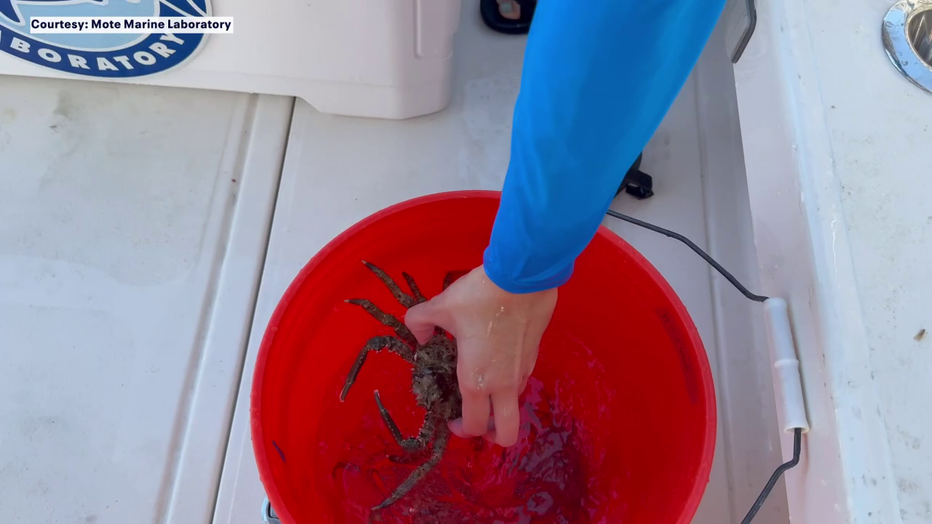
"As we were releasing these crabs onto the reef, what was their behavior immediately post release… and we are very thrilled to report almost every single one of them immediately grabbed a chunk of algae and stuck it in their mouth and then ran for cover," Dr. Spadaro said.
Why you should care:
By reducing algae overgrowth, it can allow for corals to grow and settle.
Mote Marine Laboratory said algae growth is a major driver of coral decline.
"They essentially weed our coral garden and shift the competitive advantage to our corals and then, by removing a lot of that algal biomass, they change the physical and chemical environment on the reef and facilitate more coral babies showing up, so we are not only facilitating the corals that are out on the reef but the recovery of new corals coming in through sexual reproduction," Dr. Spadaro said.
What's next:
Dr. Spadaro said research will continue and is needed to ensure the hatchery-raised Caribbean king crabs are doing their job.
Courtesy: Mote Marine Laboratory
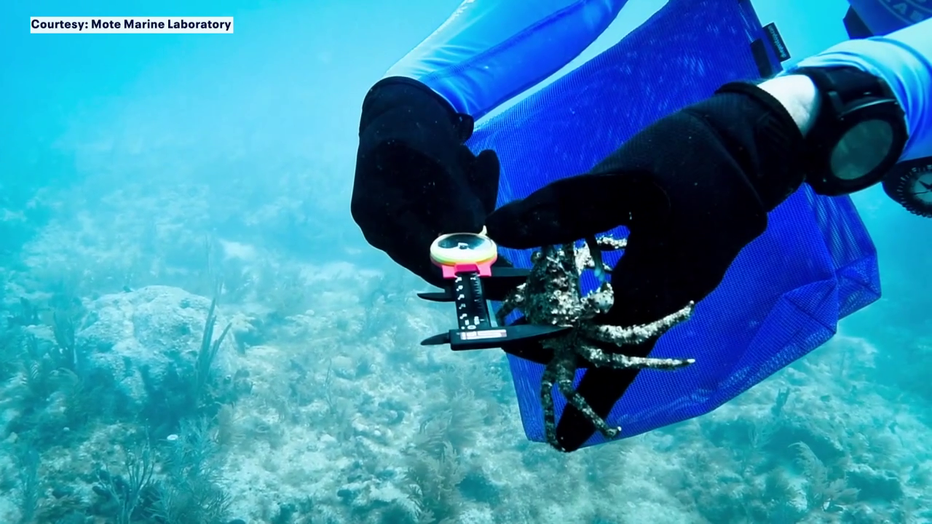
"They’ve never seen a predator before. Will they immediately get knocked off by lobsters, octopus, large fish, things like that… or are they going to have that natural, instinctive, shelter-seeking instinct that keeps them safer? Are they going to consume the same algae? They’ve been in a captive environment their entire lives and have never seen a natural reef," Dr. Spadaro said.
The crabs released came from stock maintained at Mote's Aquaculture Research Park in Sarasota.
By the numbers:
The hatchery houses more than 300 adult crabs and is designed to scale to 700-800 brood stock individuals, with the long-term goal of producing up to 250,000 juvenile crabs annually.
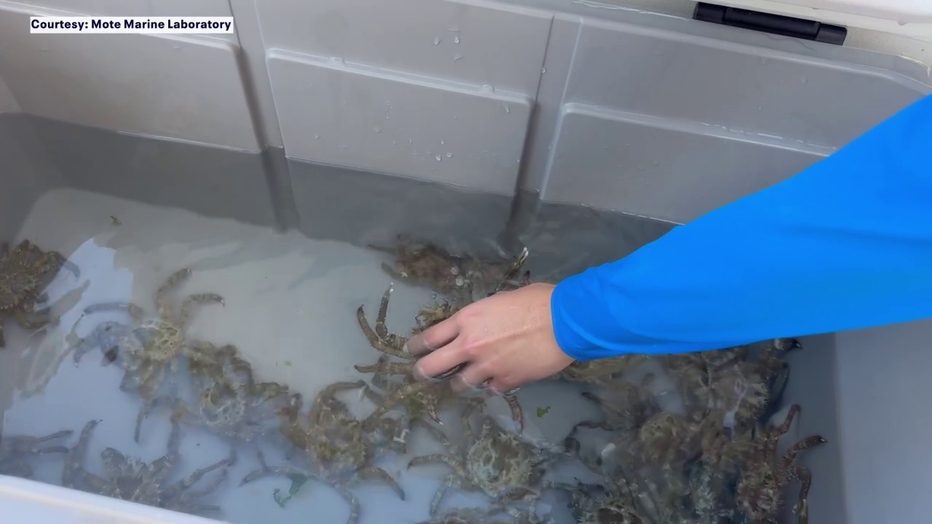
Courtesy: Mote Marine Laboratory
Mote Marine Laboratory's goal is to release 35,000 Caribbean king crab across the Florida Keys Natural Marine Sanctuary from off of Key Largo to West of Key West.
What they're saying:
"We are encouraged, but we need to do quite a bit of study to look at are there any other interventions, do we need to condition them to fear predators? Do we need to condition them to natural chemical environments and things like that before we release them, or is this going to be relatively straightforward," Dr. Spadaro said.
The hatchery and future crab releases are supported by the National Marine Sanctuary Foundation through the Mission: Iconic Reefs Capacity Building Grant program and by the National Oceanic and Atmospheric Administration through the Transformational Habitat Restoration.
The Source: Information was gathered by FOX 13's Kimberly Kuizon through Mote Marine Laboratory and an interview with the coral reef restoration program manager for Mote Marine Laboratory.