

Historic El Niño expected to trigger wet Florida winter
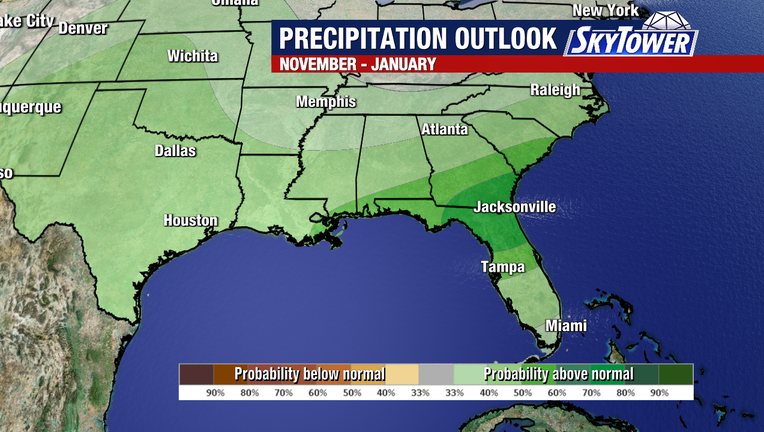
TAMPA, Fla. - A strengthening El Niño in the tropical Pacific Ocean is expected to push stormy, wetter-than-normal weather across the Tampa Bay region this winter.
Tampa winter rain expectations
What we know:
The National Oceanic and Atmospheric Administration gives a 75% chance that the unfolding El Niño will reach historic strength between October and December. There is also a 90% chance that the climate pattern remains very strong throughout the entire winter season.
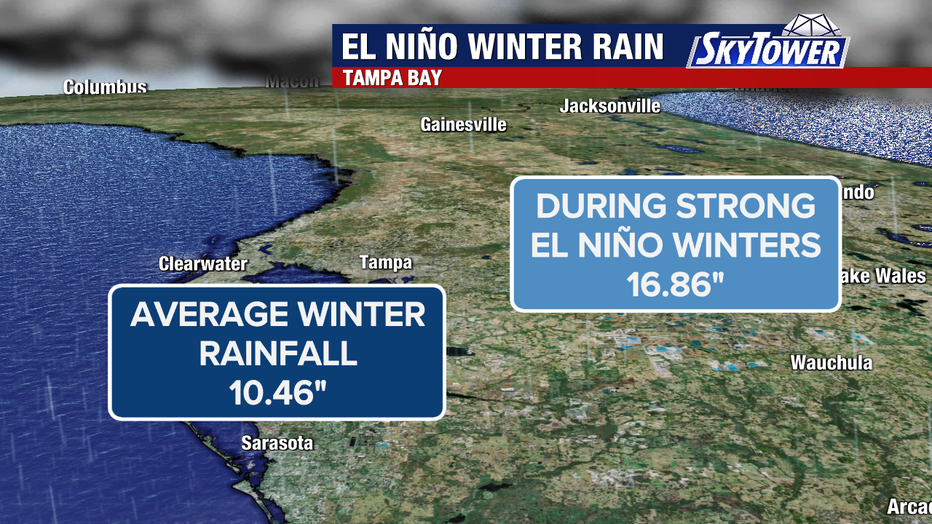
The Bay Area usually experiences a dry period during the winter, averaging just 6.6 inches of rain combined from November through January. However, odds now favor probabilities exceeding 60% for above-normal rainfall across parts of the eastern Gulf Coast and the Southeast.
Unpredictable winter temperatures ahead
What we don't know:
Meteorologists cannot guarantee exact rainfall totals for the Bay Area, though quiet weather is unlikely. It remains unknown precisely how many severe storm systems will directly strike the local region.
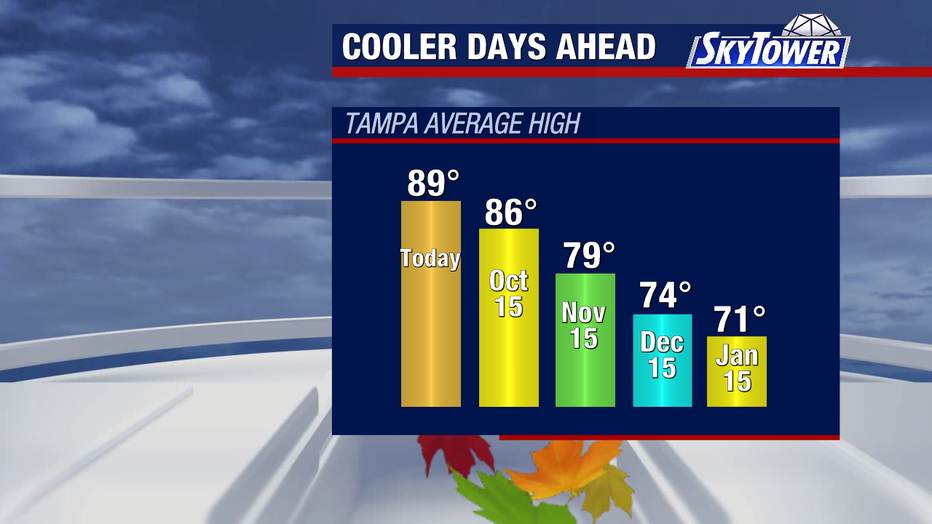
Daytime temperatures are projected to stay cooler, especially in January and February, due to persistent cloud cover and rain. Temperatures will not stay consistently cold or warm, instead swinging between humid warm spells and sharp cold fronts.
Pacific waters driving severe weather
The backstory:
El Niño occurs when tropical Pacific waters warm well above average, with current water temperatures reaching more than 3 degrees Celsius above normal in some areas. This warming shifts the subtropical jet stream farther south, steering frequent storm systems straight across the southern U.S.
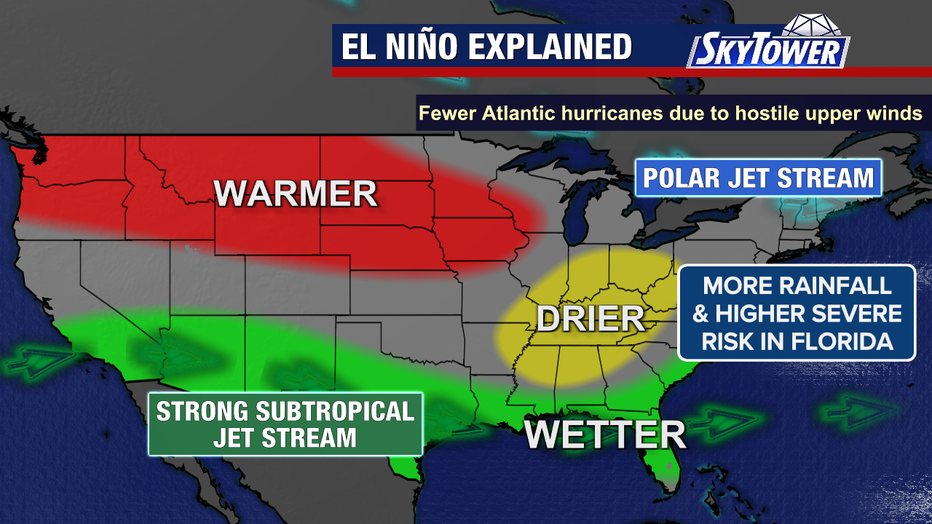
The shifting jet stream increases vertical wind shear over Florida while warm, humid air remains at the surface. When these atmospheric ingredients meet incoming cold fronts, conditions become far more supportive for severe weather and organized thunderstorms.
Defining Florida winter timing
Big picture view:
Meteorological winter officially starts on Dec. 1 and runs through Feb. 28. Astronomical winter begins later on Dec. 21, marking the shortest day of the year.
For Florida residents, the incoming season offers a temporary break from intense heat, bringing cooler mornings alongside periodic cold fronts.
The Source: The information in this story was gathered from NOAA weather forecasts and climate monitoring data on tropical Pacific Ocean patterns.