

Lakeland Electric first utility in country to pilot liquid nitrogen generation facility

Lakeland Electric to open liquid nitrogen generation facility
FOX 13's Carla Bayron explains the unconventional new technology that will help ensure customers will always have power flowing to their homes.
LAKELAND, Fla. - Lakeland's utility company will be the first in the country to pilot a liquid nitrogen generation facility.
It's another way the company is ensuring its customers will always have power flowing to their homes.
Lakeland Electric's Socrum Substation off of US 98 N will soon be the site of a small liquid nitrogen generation facility.
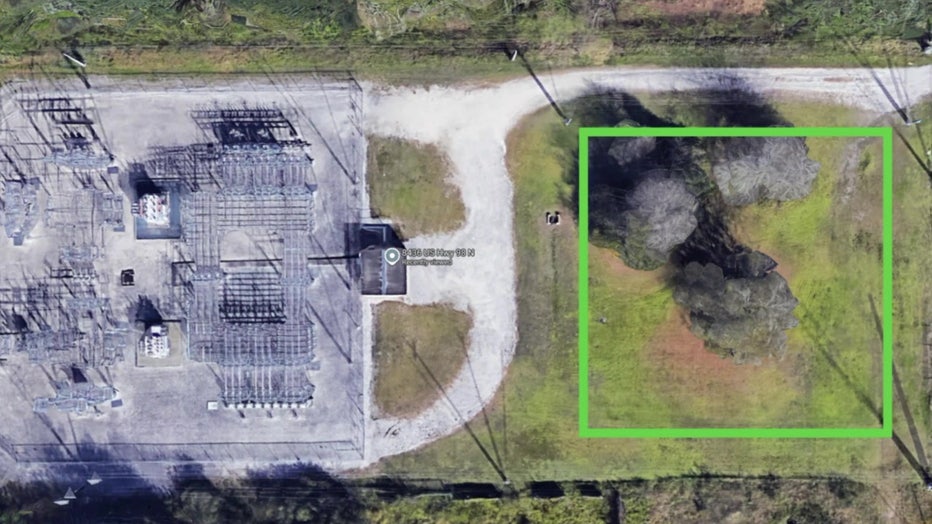
Sitting on half-an-acre, it'll be able to generate 5-megawatts, which provides power to about 5,000 homes.
"To put that into perspective, traditional solar would need roughly 25 acres to make the exact same power build," said Mike Dammer, Emerging Technology Manager at Lakeland Electric.
Through the private provider, American Independent Power, the facility will utilize solar thermal energy and liquid nitrogen to create power 24/7.
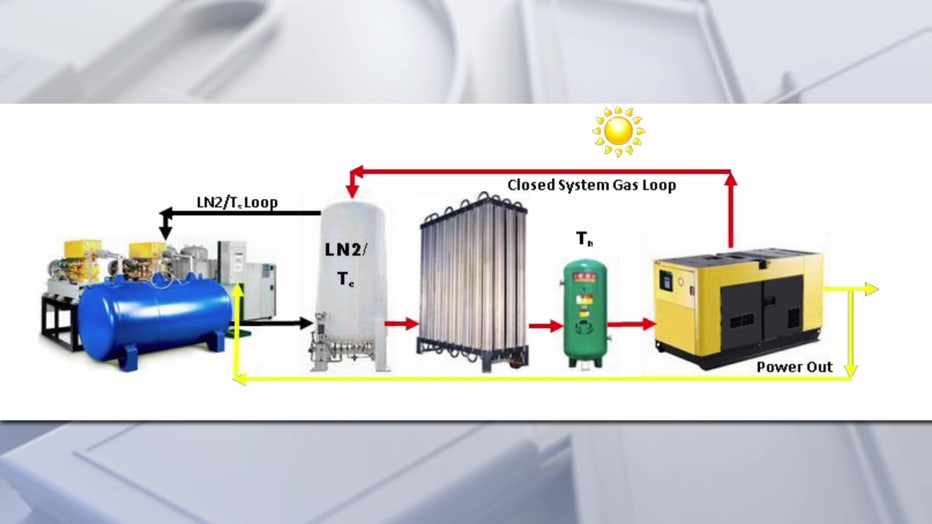
"This is different from traditional solar where the sun has to be out," said Dammer. "In a thermal solar situation, we get sun heat during the day, and that heat stays through a thermal medium overnight so still solar-powered but 24/7 solar power."
The utility company is the first in the country to pilot this project. Dammer says the neat thing about this system is its flexibility, which is why they wanted to try it out.
"This is simply a pilot, but we could take this from a one-megawatt distributed energy system at a neighborhood," said Dammer. "We could make a 100-megawatt centralized system at Macintosh Power Plant, and we can do 100 things in-between."
Big picture view:
Dammer says the goal of the project is not only to see that it works, but also to see how it works within their system.
"The goal here is we can deploy these at substations, if there's a line down between here and Mcintosh," said Dammer. "We can still run power to people's houses from these systems so we want to understand how this system will inject power at a distributed level. That hasn't been done widespread across the industry yet, so we want to study that. Prudent, practical steps."
What's next:
The facility will take around a year to construct, so it's expected to be fully up and running by Labor Day next year.
CLICK HERE:>>> Follow FOX 13 on YouTube
The Source: Information for this story was gathered by FOX 13's Carla Bayron.