

Strawberry seeds from Tampa Bay headed to space in groundbreaking UF experiment

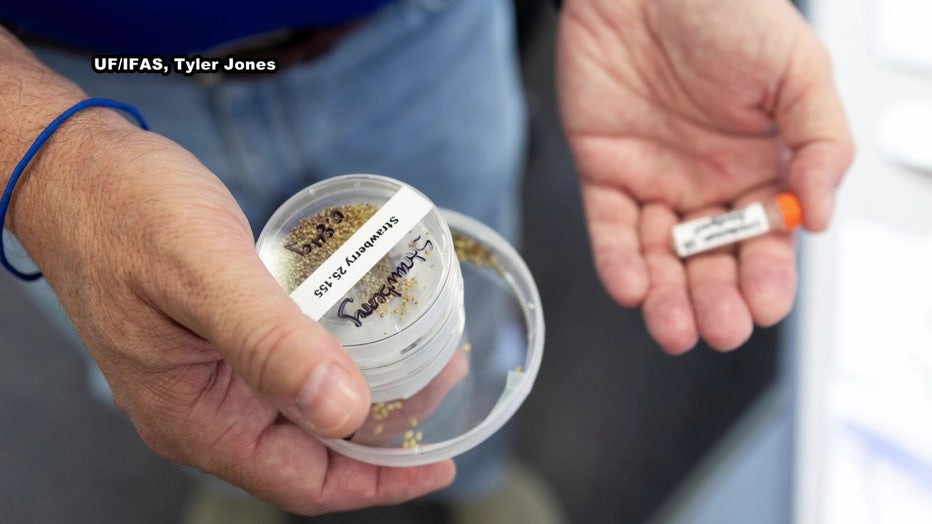
GAINESVILLE, Fla. - On Thursday, researchers from the University of Florida will send thousands of plant seeds, including strawberries grown in Tampa Bay, to space aboard a SpaceX Falcon 9 rocket.
What we know:
Courtesy: UF/IFAS, Tyler Jones
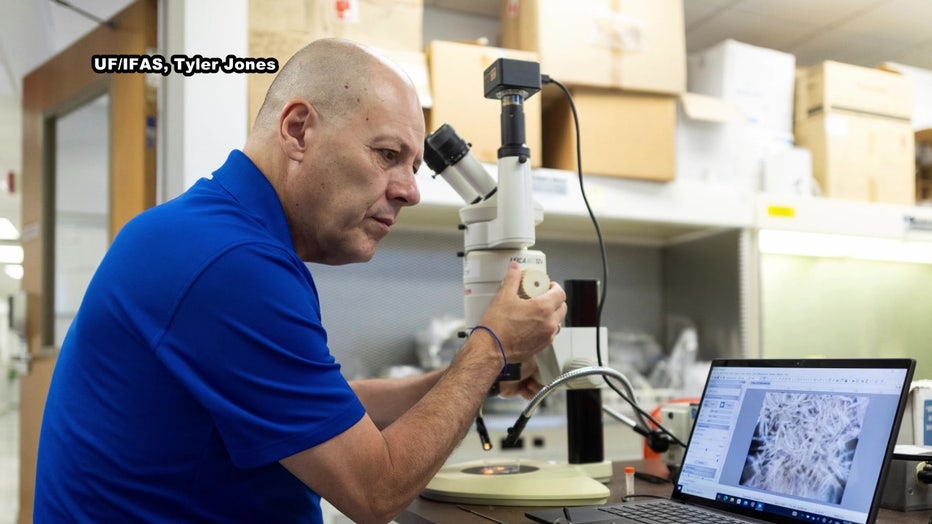
Dr. Wagner Vendrame, an environmental horticulture professor at the University of Florida, is leading the experiment.
The seeds will spend about a week aboard the International Space Station before returning to Earth for analysis.
The goal is to study how the microgravity environment affects seed genetics, specifically how plants adjust to the stress of space travel by turning on certain genes.
Why you should care:
This experiment could pave the way for growing food on future space missions to the Moon or Mars.
But it could also bring benefits closer to home.
If scientists can identify genes that help plants survive harsh conditions, they may one day engineer crops that are more resistant to drought, heat, and other climate-related challenges.
What's next:
After the seeds return from space, Dr. Vendrame and his team will compare them to seeds that remained on Earth.
They'll analyze any genetic changes to determine whether those stress-response genes could be isolated and introduced into other crops.
Courtesy: UF/IFAS, Tyler Jones
What they're saying:
"If you can find out where the genes are being overexpressed, maybe you can isolate those genes, clone them, and insert them in other crops, making them more resilient," said Dr. Wagner Vendrame.
"It's an amazing opportunity... being back here at the Kennedy Space Center is exciting."
The Source: This story is based on an interview conducted by FOX 13’s Jordan Bowen with Dr. Wagner Vendrame. Details were shared ahead of the Thursday launch from Kennedy Space Center.