

NCAA settlement chaos: New legal move could trigger massive increase in NIL spending
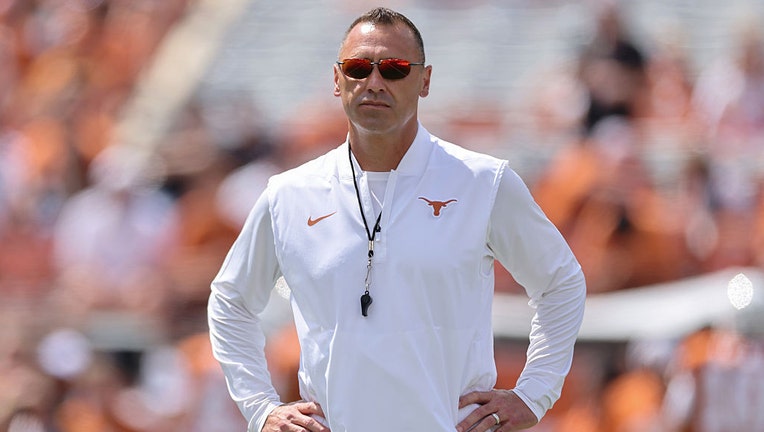
FILE-Head coach Steve Sarkisian of the Texas Longhorns watches players warm up before the game against the UTEP Miners at Darrell K Royal-Texas Memorial Stadium on September 13, 2025 in Austin, Texas. (Photo by Tim Warner/Getty Images)
Nine months after the House settlement was approved pertaining to a lawsuit against the NCAA, there is a massive wrinkle to the case that could potentially lead to further disarray around college athletics.
Last June, after intense negotiations on a financial figure that would suit all parties involved, the NCAA agreed to pay $2.8 billion in back pay to former college athletes that sued because of their name, image and likeness being used by the organization.
But, that was not the biggest piece of the perceived pie when it came to the future of college athletics. In that settlement, schools could begin paying athletes through what was thought of at the time as a salary cap, much like the NFL or NBA, of $20.5 million per academic year.
Meaning, every school underneath the NCAA umbrella could essentially decide how they wanted to split up the $20 some-odd million that they were allowed to use towards paying athletes.
Each member institution had the opportunity to use that much, but plenty of schools decided they could not financially afford an extra $20 million on the books, leading them to spend a lesser amount compared to bigger conferences like the SEC, Big Ten, ACC or Big 12.
Tough decisions on funding a college sports roster
A majority of athletic departments across college sports obviously chose football as the main beneficiary of the new revenue-sharing, while others would give more to basketball.
In the aftermath, we have seen colleges have to make serious decisions about how much money programs like women's basketball would get compared to mens.
In most cases, football drives the revenue stream, so the obvious choice was for the sport to get a lion share of the money available under these new rules.
And while it sounded ‘feasible’ on the surface, none of this was ever going to stay above-board, or at least according to CSC guidelines.
If one school was spending $25 million on their football roster, through the transfer portal and high school recrutiing, another school would see fit to spend $30 million. All of this has been a source of frustration within athletic department buildings across the country.
How in the world were schools going to continue being able to raise this type of money, knowing the ‘rules’ only allowed them to spend $20.5 million per year?
If you ever wondered how programs like Ohio State, LSU, Texas Tech, Oregon and a plethora of others were able to spend upwards of $30–40 million per season on their football roster, look no further than their multimedia rights partners.
Motion seeks to exclude multimedia rights partners from rules
In a way to create more cash flow, schools are trying, and using, their multimedia partners like Learfield Sports or PlayFly, to circumvent their revenue-share cap.
If a starting quarterback were to sign with LSU for $3 million, that would come out of their allowed share, the multimedia rights partner would also hypothetically sign that player to a contract that provides them an extra $2 to $3 million per year.
This has led to the ‘enforcement’ arm of the House settlement, called the College Sports Commission, denying a plethora of deals that were designed to help those schools keep up with their opponents off the field.
In a motion filed on Monday, plaintiffs in the House v. NCAA case asked a judge to declare that multimedia partners are not "Associated Entities or Individuals", and allow them to operate outside the CSC's purview.
This would essentially mean that if the judge grants injunctive relief, there would be an all-out battle between college programs on who could sign the most players to the more lucrative deals with the help of media rights partners.
Also, in their filing, plaintiffs are asking a judge to rule that ‘third-party brand sponsors’ are not associated with the school, so their deals with players would not need to be approved by the College Sports Commission.
See where we are potentially headed here? Sure, schools could still put together their multi-million dollar rosters within the rev-share cap limit, but the outside revenue from either 3rd party deals or agreements through their media rights partner would send the costs of rosters through the perceived roof.
Most people would tell you that there haven't been rules regarding NIL since its inception, and they'd more than likely be right.
Now, within the world of college athletics, if this judge in California grants the injunctive relief, a $40 million roster will be a thing of the past.
We're clearly headed toward lower-tier MLB budgets in the future, and there's not much that can stop it at the moment, which includes an executive order from President Trump.