

NASA's flying 'moving truck' is on display at the Sun 'n Fun Fly-In
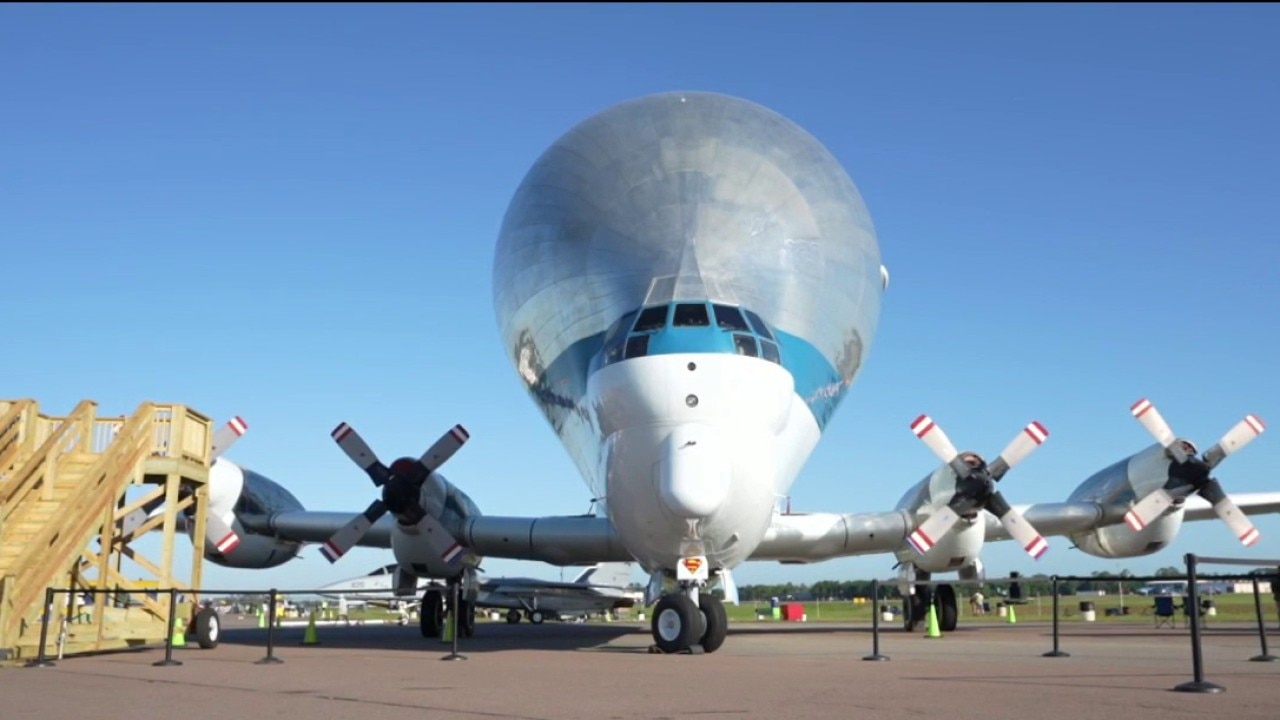
NASA's super-sized airplane takes center stage at Sun 'n Fun Fly-In
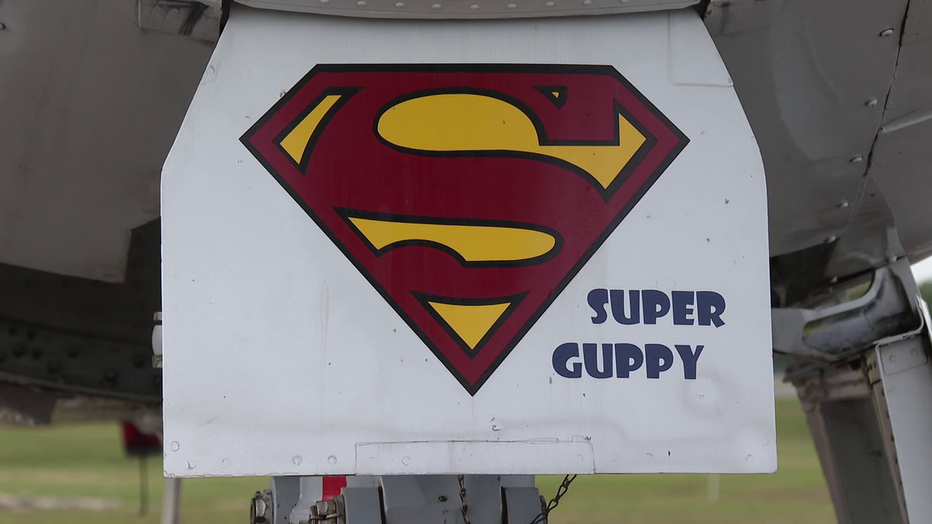
The Super Guppy wows crowds at Sun 'n Fun
LAKELAND, Fla. - It's more than just a fish out of water. It's a whale in the sky.
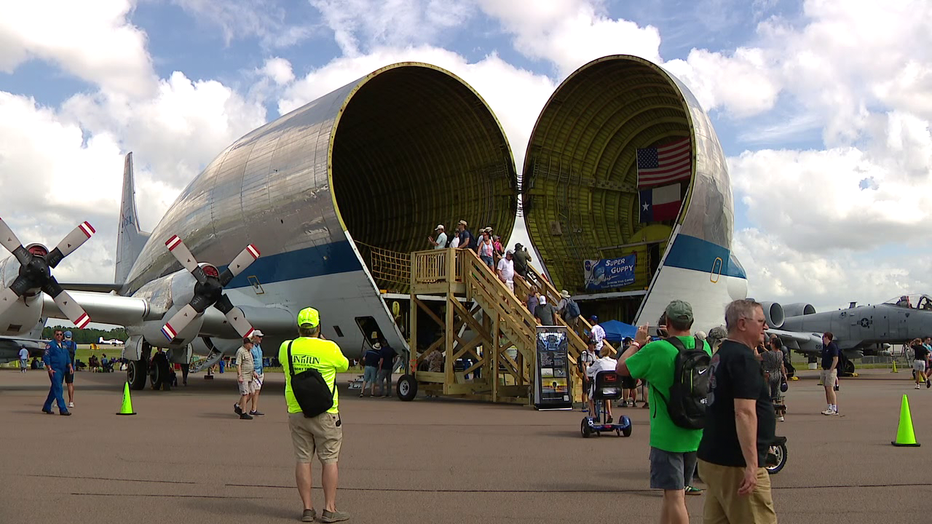
NASA's Super Guppy is normally based in Texas where it can assist Johnson Space Center in Houston, but the Space Agency sent the B-377-SGT to Lakeland to take part in the annual Sun 'n Fun Fly-In.
While most aircraft of this age end up retired or in a museum, this workhorse is still working as NASA's flying delivery vehicle.
The backstory:
The Super Guppy was born out of necessity.
"Well, this is an oversized cargo aircraft originally designed in the early ‘60s to move the stages of the Saturn rocket booster from the West Coast to the East Coast," shared David Elliott, the Lead Flight Engineer for NASA's Guppy program. "So during that time period, of course, we were in a big race with the Russians, and it was taking us about two to three weeks to go through the Panama Canal with those parts. So a gentleman had an idea to create this oversized cargo aircraft that would be big enough to fly the parts that we needed, and that’s how this was originally developed."
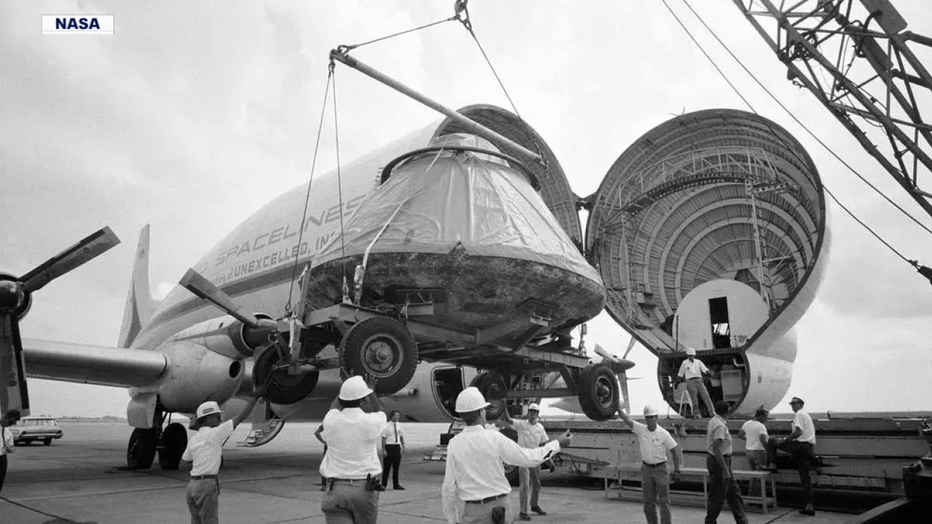
One doesn't just go to Boeing and order a cavernous aircraft with a 25 by 25 foot cargo space. So NASA's engineers "monster-garaged" the Super Guppy.
Elliott explained, "It started life as a KC-97 Stratofreighter, which was the Air Force’s first in-flight refueling capability back at the end of World War II. This particular airplane, the hull, was built in 1953, and it flew about 2,000 hours as a KC-97. It has a 707 landing gear on the front that’s turned 180 degrees out, has parts of a B-29 wing to extend the original wings out for the propellers. Propellers are off a C-130 and the nacelles and engines are off a P-3. So a lot of parts on there from different aircraft for sure. Oh, and the other interesting thing is that the struts that actually hold the airplane up when we open it up are from a dump truck. They got very creative."
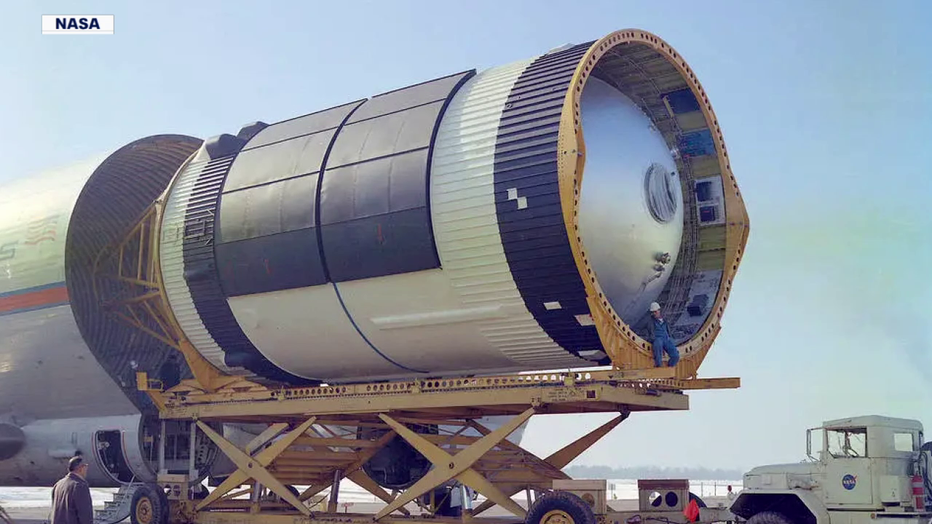
The project worked, allowing NASA to save crucial time in the "Space Race," and the Guppy program was born... well as much of a birth as a Frankenstein plane can claim.
"Since that time, this is actually the third generation of that airplane," said Elliott of the airplane there at Sun 'n Fun. "And a Super Guppy has essentially moved pretty much every program that NASA has had, from Apollo all the way up to Artemis."
HOW BIG IS THE SUPER GUPPY?
Dig deeper:
According to NASA, the Super Guppy is a special "Out Sized" cargo aircraft with a 25-foot diameter, 111-foot-long pressurized cargo bay with a hinged swing-nose that opens 110 degrees for frontal loading of large items.
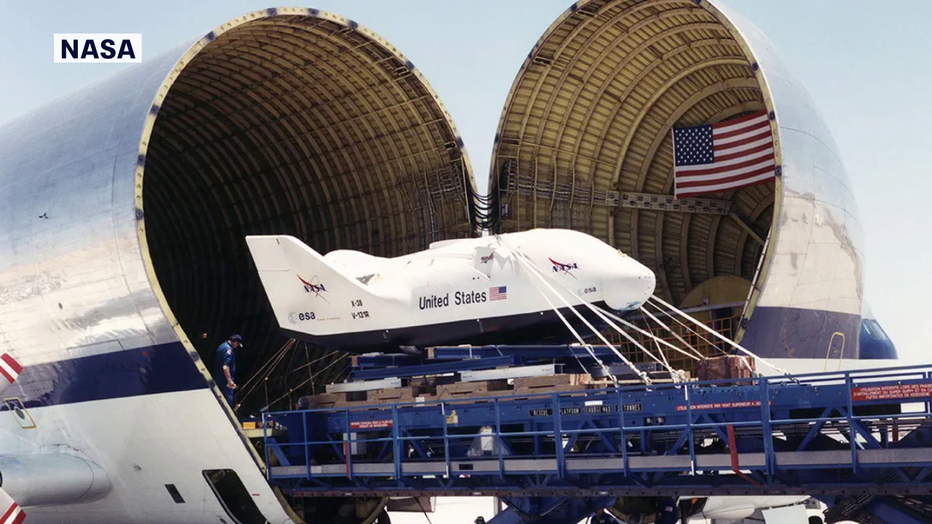
Super Guppy load Courtesy of NASA
"That’s actually the largest cargo bay by diameter in the world," admitted Elliot. "So it’s 25 feet. So we can fit a lot of things that just won’t fit any other way, including C-5s or C-17s."
Elliott's role as the Lead Engineer is to plan for the different missions that require the size of the Guppy.
"I essentially develop the mission plans from start to finish. So I have a big team that works with me," he said. "We have engineers that work on the airworthiness and design the shipping fixtures that things will load into. I have load masters that help me with the chain-down plans and help when we get here and get everything locked down."
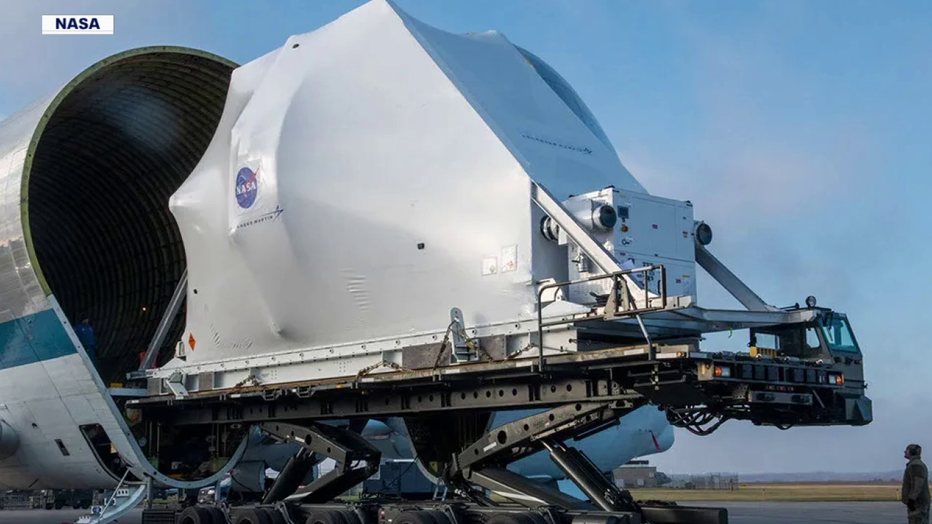
They are responsible for the transport of some of the most sensitive parts of the spacecraft for NASA's missions.
"So we have moved all the heat shields, you know, about five of those, basically from the uncured heat shield that goes to California, and they cure it in an autoclave and then back to be assembled again and then to the launch facility," he said.
That's California to Florida, flying those oversized items in an air frame that is sort of like flying a moving truck in the sky.
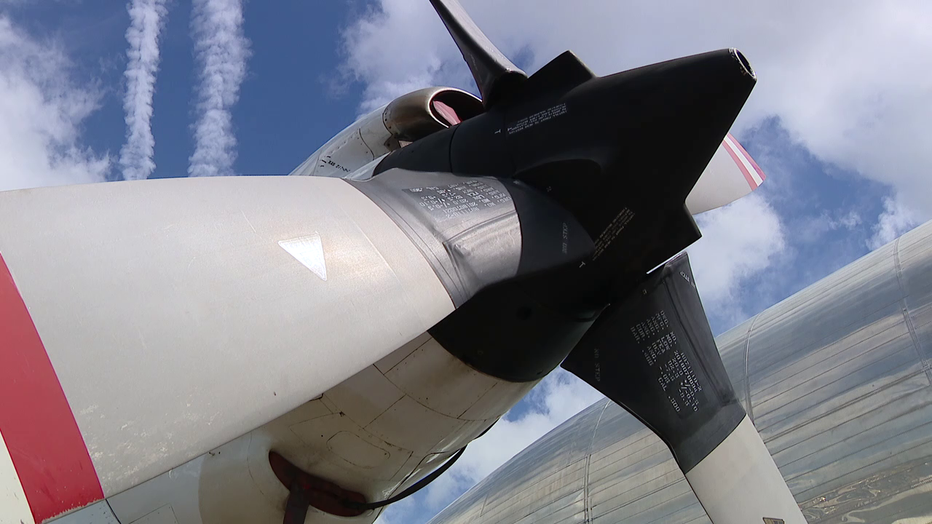
"So, because of the size of the airplane, the shape of the fuselage is actually a lifting body itself. It is very slow to turn. There’s a lot of lag in the input, so you’ll roll it, and then it’ll just slowly kind of roll over. That’s just kind of how it flies. So it is like kind of flying a U-Haul truck in the sky," Elliott shared. "They (pilots) really have to keep both hands on the yoke the whole time through landing, so the flight engineer is actually operating the power levers for them."
NASA’s rare Super Guppy aircraft lands in Lakeland ahead of SUN ’n FUN Aerospace Expo
What's the Flight Crew Like? :
The Guppy is essentially an all-manual machine. The technology is from the World War II era, so the pilots need assistance from the flight engineers to make things work.
There are two pilots and two flight engineers on each mission.
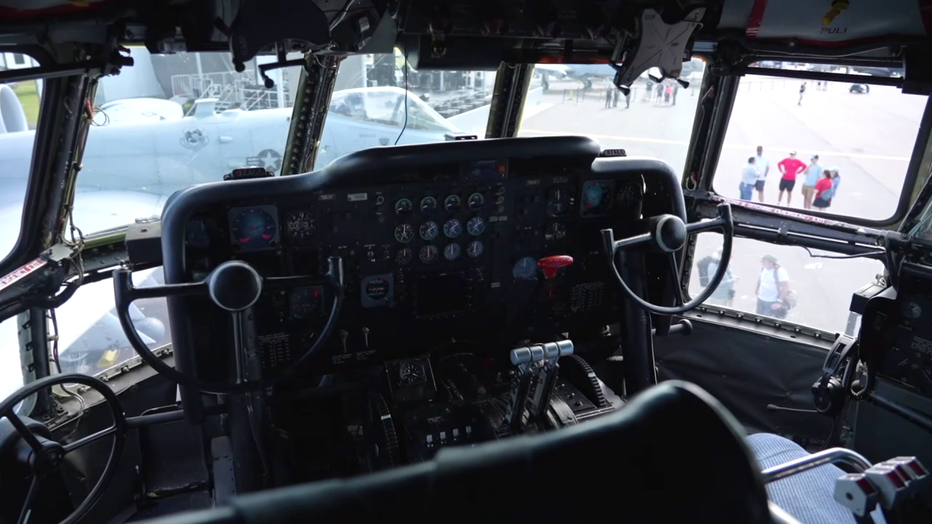
"It’s a really hard-working team," said Elliot. Part of his job is making sure that the pilots taking the controls of the aircraft are comfortable with the manual shared mission.
"You know, I keep the pilots current, all our crew current, get them trained, and basically just develop the mission plans from start to finish, and we take it wherever they want us to go and pick something up," he said.
What you can do:
The Super Guppy is on display through the weekend at the Sun 'n Fun Fly-In in Lakeland. Tickets are required, you can learn more about those on the Sun 'n Fun website.
Ground tours of the Guppy are offered on site.
To see it in flight, David Elliott said that the plan is to fly out from Lakeland Linder Airport on Monday morning between 11 a.m. and Noon.
The Source: This story was written based on in-person interviews with NASA Super Guppy Flight Engineer David Elliott, and the NASA website.