

New federal DOT rule to leave air travelers with fewer compensation options for flight disruptions
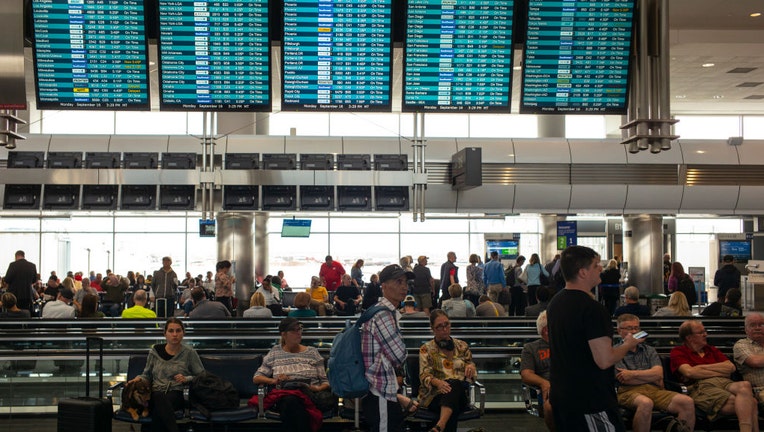
FILE-Passengers wait for their departing United Airlines flights at Denver International Airport. (Photo by Robert Nickelsberg/Getty Images)
A new Department of Transportation (DOT) rule set to start this month could make it harder for some travelers to get compensation for certain flight disruptions.
What we know:
The current DOT policy says air travelers are entitled to compensation if the delay was due to something within the airline's control. Effective Oct. 19, the DOT is removing ten events which cause flight disruptions from being considered "within an airline's control," removing the ability for flyers to get compensated.
The ten specific events excluded from airline-controllable data and placed into the Section 511(b) category are:
- Passenger death: Aircraft cleaning necessitated by the death of a passenger.
- External aircraft damage: Damage caused by extreme weather, foreign object debris (FOD), or sabotage.
- Third-party baggage outages: Baggage or cargo loading delays caused by an outage of a bag system not controlled by the carrier or its contractor.
- Compliant cyberattacks: Cybersecurity attacks, provided the airline was fully compliant with applicable federal cybersecurity regulations.
- Government system failures: Unexpected shutdowns or technical failures of government systems that directly impact safe flight operations.
- Emergency safety restrictions: Overheated brakes resulting from mandatory emergency safety procedures.
- Unscheduled maintenance: Non-deferrable, unscheduled maintenance issues (such as responding to urgent airworthiness directives) that manifest outside a scheduled program.
- Medical emergencies: Passenger or crew medical emergencies not caused by the airline.
- Unruly passengers: Delays resulting from the removal of an unruly passenger.
- Severe localized weather closures: Airport closures caused specifically by volcanic ash, wind, or wind shear.
The backstory:
The changes come in the wake of the FAA Reauthorization act of 2024. The sweeping, bipartisan legislation targets infrastructure modernization, air traffic control staffing shortages, advanced technology integration, and upgraded passenger consumer rights.
The Source: This article includes information from the Department of Transportation (DOT), the Federal Aviation Administration (FAA), and the Federal Registry, and FOX News. This story was reported from Orlando.