

Pregnant workers could lose workplace protections after appeals court strikes down law
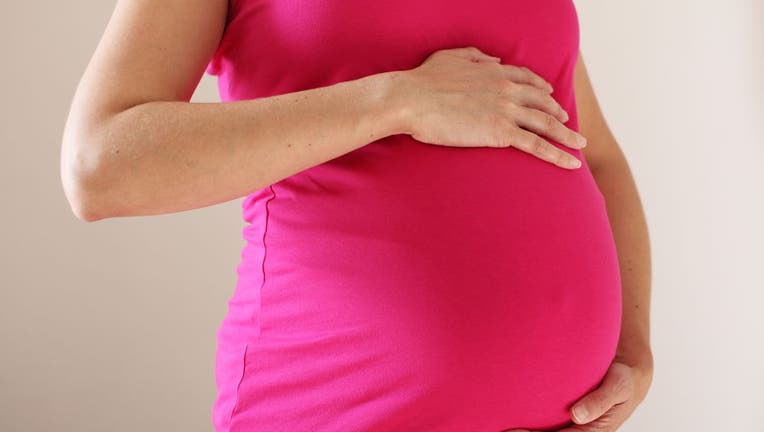
A woman eight months into her pregnancy. (Photo by Katie Collins/PA Images via Getty Images)
An appeals court has overturned a federal law requiring employers to accommodate pregnant workers, ruling that Congress violated the U.S. Constitution when it enacted the measure in 2022.
Dig deeper:
The New Orleans-based 5th Circuit Court of Appeals issued its 9-8 decision on Friday. Advocates of the Pregnant Workers Fairness Act said the decision invalidates the law in Texas, Louisiana and Mississippi, which are covered by the 5th Circuit, and could imperil the law elsewhere.
The appeals court said the act was unconstitutional because a majority of U.S. House members weren’t physically present when it was approved as part of a spending package in December 2022. At the time, the House was operating under COVID-era rules that allowed members to vote by proxy.
RELATED: Warning signs that your adult child may be quietly cutting you off
What they're saying:
"The (Quorum) Clause’s text, context, original understanding and unbroken historical application all indicate that members of Congress must be present for quorum purposes — as the Supreme Court expressly held over 125 years ago and as Congress has done ever since the founding," the court said in its decision. "‘Proxy presence’ does not count."

Woman calls for separate waiting room for those dealing with pregnancy loss
In the viral TikTok video, India Batson opened up after experiencing back-to-back pregnancy losses. (Credit: India Batson/TikTok @indiabatson)
The other side:
A Better Balance, an advocacy group that spearheaded the law's passage, said in a statement Friday that the circuit court ruling would likely be appealed to the U.S. Supreme Court. Inimai Chettiar, the group's president, said the ruling was "legally unsound and short-sighted."
"The 5th Circuit has put the health, livelihoods, and economic security of millions of American women and their families at risk," Chettiar said in a statement.
RELATED: Top baby name trends for 2027 revealed, according to new data
The backstory:
The law, which passed with bipartisan support, strengthens the rights of women to receive workplace accommodations for needs related to pregnancy and childbirth, such as time off for medical appointments and exemptions from heavy lifting.
Texas Attorney General Ken Paxton sued to block the act in 2023 on grounds that it was unconstitutional. In 2024, a federal judge agreed and blocked enforcement of the law for Texas state employees.
But in 2025, a three-judge panel on the 5th Circuit court disagreed, finding that the law was properly passed under Congress’s pandemic-era rules. That decision was appealed to the full 5th Circuit.
In their dissent, the eight judges who would have upheld the law noted that no member of Congress objected that a quorum was lacking when the $1.7 trillion government funding bill was passed.
"The State of Texas, having accepted the vast majority of the funds that Congress appropriated to it, now contends that the portion of the bill providing protections for pregnant women and workers violates the Quorum Clause," they wrote.
While the law was passed during the Biden administration, the Department of Justice under the Trump administration has continued to fight Paxton’s lawsuit, which — if successful — could open the door to legal challenges of other pandemic-era laws passed by proxy.
A message seeking comment on the appeals court decision was left Sunday with the Justice Department.
The Source: The Associated Press contributed to this report. The information came from the 5th U.S. Circuit Court of Appeals’ ruling and dissent, statements from A Better Balance and its president, Inimai Chettiar, and background on Texas Attorney General Ken Paxton’s lawsuit challenging the Pregnant Workers Fairness Act. This story was reported from Los Angeles.