

Disabled first responders denied property tax relief under Amendment 3

TAMPA, Fla. - Several years ago, Florida voters chose to give first responders in the state a property tax break without realizing there was a catch in which many people who need it the most are disqualified.
As a police officer, Jim Bomford saved lives, from rescuing a man from a burning car to pulling a young woman from the side of a bridge.
"It turned out to be a guy who was trying to throw his wife off the bridge and I stopped and managed to subdue him," Bomford explained.
His career ended when a driver pulled in front of his squad car and appeared to pass out. Bomford checked to see if he was sick or injured and walked into an ambush. The driver grabbed him by the shirt, threw the car into drive, and dragged him into the car hit a concrete abutment and crushed his knees, and left him permanently disabled.
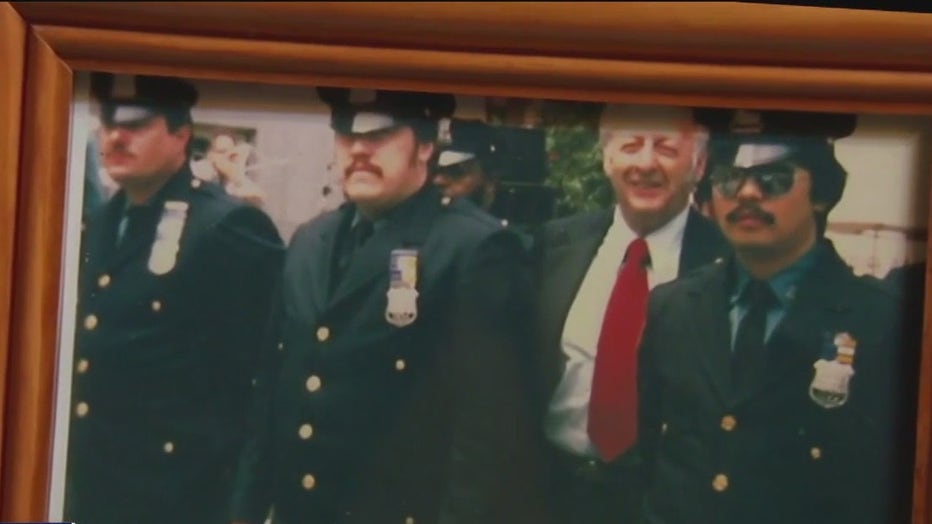
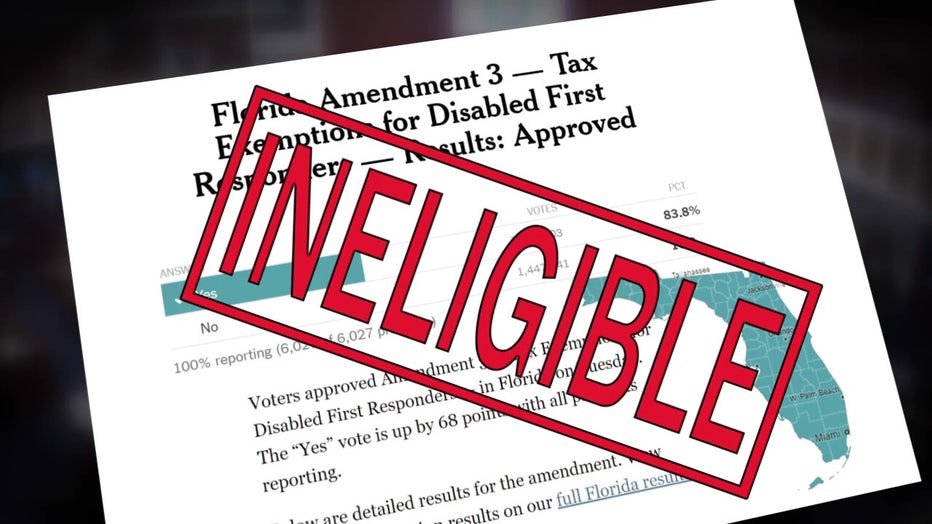
To thank disabled first responders for their sacrifice, in 2016, Florida voters passed Amendment 3. It gives a property tax exemption to totally and permanently disabled first responders living in Florida.
"These are the guys who went into harm’s way and harm got them," Bomford noted.
But, in passing the enabling legislation, the state legislature excluded most totally and permanently disabled first responders living in Florida.
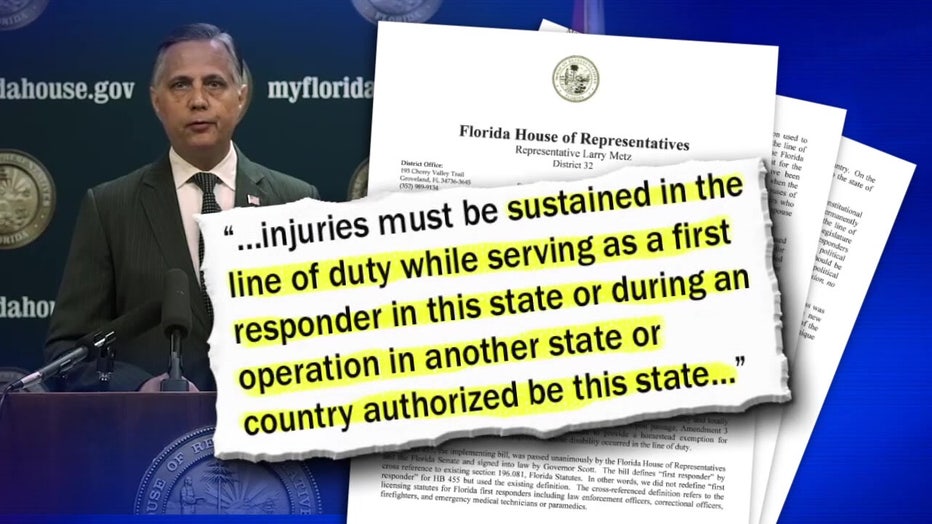
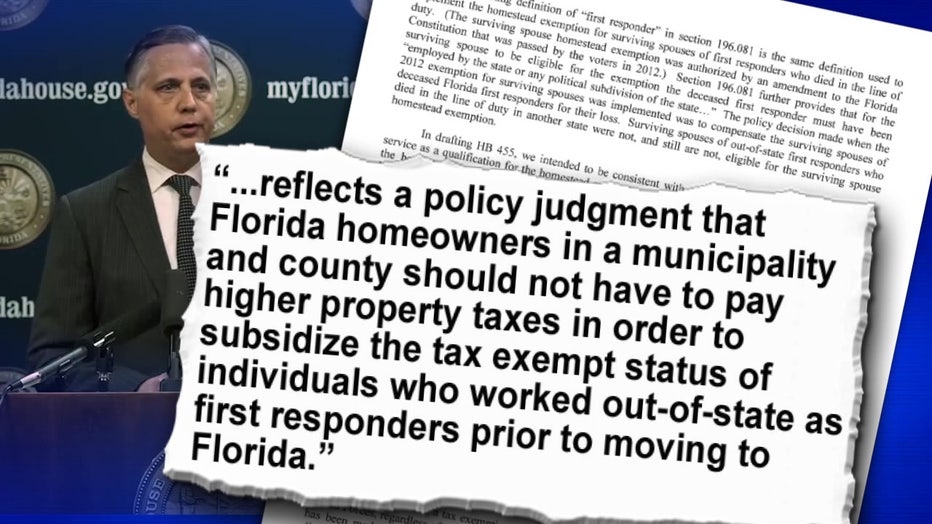
Former Representative Larry Metz added language in the bill stating injuries had to occur while serving in Florida or in an operation authorized by this state. In 2018, Metz sent FOX 13 a letter stating it’s a policy judgment that Florida homeowners should not have to pay higher taxes to subsidize first responders who worked out-of-state before moving to Florida.
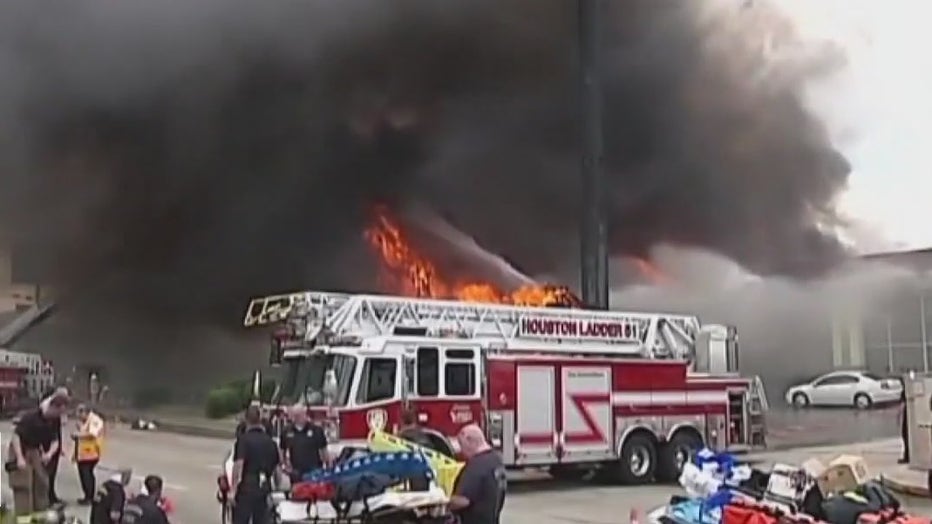
When Fox 13 first investigated in 2018, some lawmakers who voted for this enabling legislation said they were unaware of the language which disqualifies first responders who were disabled while serving in other states. Property appraisers also expressed concerns.
"Myself and the 66 other property appraisers who would have to administer this were shocked," said Seminole Property Appraiser Dave Johnson.
"This was kind of a kick in the teeth," stated Bomford who was injured while serving in New York. "I don’t know how you vote intelligently on something without having at least having the concept."
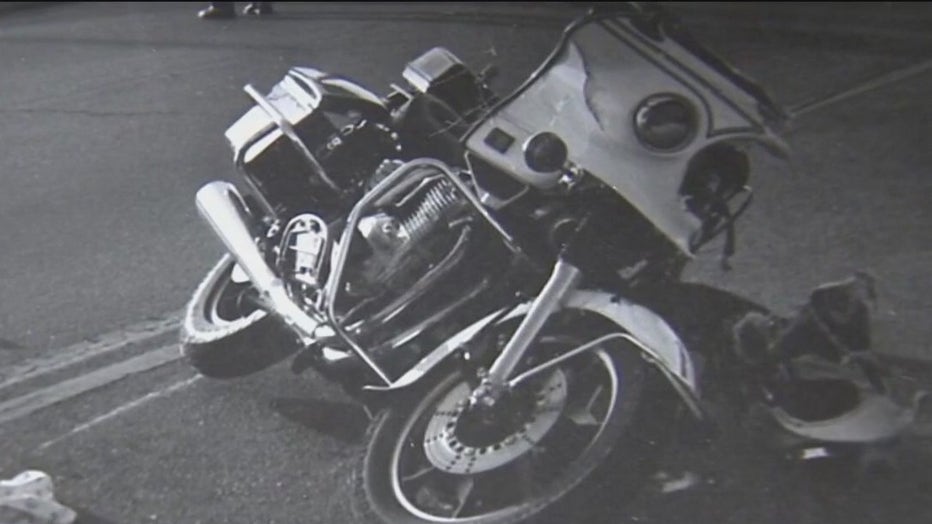
It excludes former police officer Jim Bragg who was in South Carolina when a driver smashed into a police motorcycle.
It also excludes an undercover officer who infiltrated drug cartels and mafia in Florida by posing as a hitman. He does not qualify because he was disabled in service to New York. After September 11, he shoveled debris from the World Trade Center attack into the landfills, and the toxins made him sick.
RELATED: How lawmakers tweaked amendment meant to help disabled first responders
"I have six bypasses and three stents because of that," he said. "It’s like they threw us under the bus. That’s the way I looked at it."
Former Senator David Simmons said he believes Representative Metz acted appropriately and in good faith, and said he looked forward to the opportunity to file legislation to provide coverage to first responders living in Florida who were injured in out-of-state service.
In 2019, Simmons (a Republican) and former State Representative Adam Hattersley (a Democrat) sponsored bi-partisan legislation to lift the exclusion of first responders disabled from service in and to other states.
READ: FOX 13 investigation inspires bill to support disabled first responders
"It really seems like in a state that says it wants to take care of first responders, this should be a no-brainer," said Hattersley.
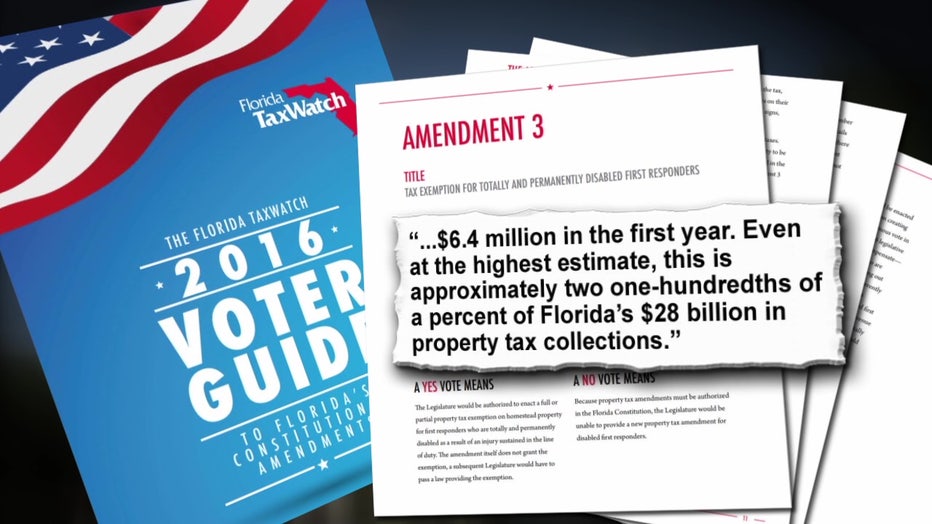
The wording of the 2016 amendment did not exclude first responders disabled while serving out of state. In 2016, Florida Tax Watch cited state data showing it could have cost up to $6.4 million- or up to two-hundredths of one percent of state property tax collections.
Hattersley said another Representative, Bobby Payne stalled in the committee he chaired.
"And he told me that I needed to go through his legislative staff," said Hattersley. "I went down and spent a lot of personal time with the staff director from that committee… His pushback was the representative who filed the enacting legislation however many years ago was a smart guy and I’m sure he did this right. That was it."
After Hattersley and Simmons, other Democrats and Republicans sponsored it again, and it stalled again.
Representative Tommy Gregory co-sponsored it in 2020.
"It was one of those bills we didn't get to that year. And I would be surprised if we don't continue to fight for it," said Gregory.
Last year, Gregory expressed interest in sponsoring or co-sponsoring it again.
"I'll tell you what, I would love to… I think this bill would enjoy a lot of interest, again, from both sides of the aisle," he shared.
But FOX 13 called Gregory and the nine other lawmakers still in office who co-sponsored this in the past—and none said they sponsored or planned to sponsor it in 2023.
State Senator Dennis Baxley said he'd like to sponsor this bill again this year.
But his office said he's President Pro-Tempore of the Senate-- a leadership position that does not sponsor bills.
That’s where the trail appears to have run cold.
Bomford is now facing the challenges of being disabled in service, having advanced Parkinson’s disease, and caring for a wife with Alzheimer’s. He said that a property tax break could have helped him and others who are struggling.
"It kills you. You can’t protect your own family," he said. "I have a wife of 40 years, and she doesn’t know me, and sometimes I felt like I let her down I got in harm’s way."