

Florida DEP, Mosaic meet with neighbors over proposed underground wastewater wells

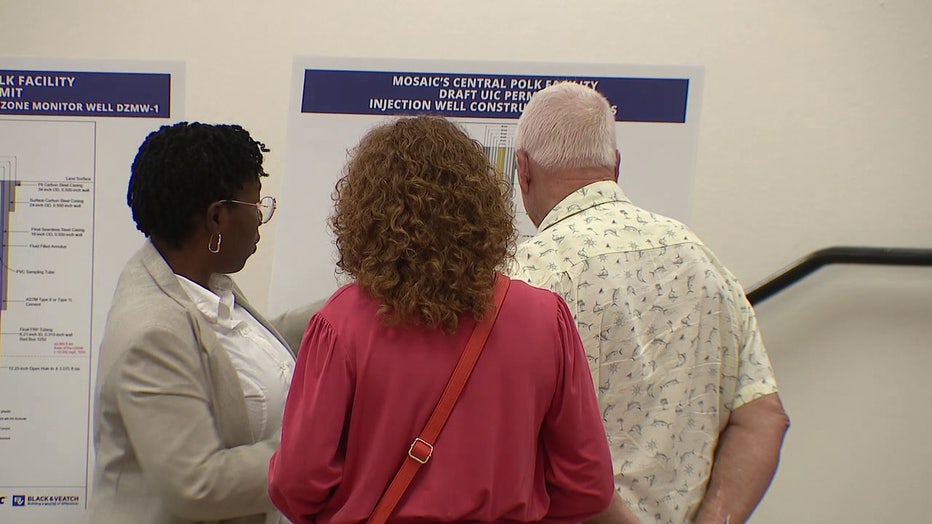
BARTOW, Fla. - At a community meeting Tuesday night, neighbors could learn more about Mosaic’s proposal to drill two test wells that could eventually be used to inject treated wastewater deep underground.
While the phosphate company said the plan is safe and highly regulated, some residents worry it could impact their drinking water.
RELATED: Mosaic, Inc. exploring underground wastewater well, raising concerns amongst environmental group
Big picture view:
The meeting in Bartow was the latest step in what Mosaic and state officials describe as a rigorous and highly regulated, multistep process.
Company representatives and officials with the Florida Department of Environmental Protection (DEP) answered questions about the proposed wells, which would be drilled roughly 8,000 feet below the surface.
"This is just to drill the well, to ensure it’s operational," said Jackie Barron, Mosaic’s public affairs manager. "Then there’s an entirely separate review process before any water can be disposed of."
If approved, the wells would give Mosaic another way to dispose of wastewater generated by phosphate mining operations.
"It doesn't mean we'll start doing it right away or that we would use it on a frequent basis, but to have this opportunity is another tool in the toolbox. In a day and age where water management is a lot more complicated given the changing natural environment around us, it’s imperative," said Barron.
What they're saying:
Some scientists argue that deep injection is a safer alternative than surface discharges, like ponding.
"To safely store it and push it underground thousands of feet below is absolutely safer than discharging on the surface," said David Brown, a national practice lead hydrogeologist, who consults with Mosaic.
MORE: Dozens of scientists cite errors in Energy Department climate change report
Mosaic emphasized that only treated water would be injected, and hazardous or toxic materials are strictly prohibited by law.
"It’s against the law to put any toxic or hazardous materials into the ground," Brown said.
The other side:
Environmental advocates, including ManaSota-88, remain strongly opposed to the wells.
"The problem is that all wells will leak over time," said Glenn Compton, the director of ManaSota-88. "By the time it’s discovered, it’s too late. Once groundwater is contaminated, it’s contaminated forever."
The group argues that even with regulations and monitoring, the risk to Florida’s aquifers is too great.
READ: Baby sea turtles on Anna Maria Island struggling to reach Gulf after hurricane damage
Dig deeper:
The Florida DEP oversees the permitting process and the wells themselves. There are more than 220 UIC wells for industrial wastewater across the state, all of which must be re-permitted every five years and are subject to continuous monitoring.
"We closely review casing plans to make sure they protect underground sources of drinking water, our drinking water aquifers. That’s important to everybody in the state," said John Coates, the director of water resource management for the DEP.
It could take several months for the state to approve a permit for the exploratory test well. After that phase of testing, Mosaic would then need to apply for a permit to actually inject treated wastewater.
What's next:
The state has extended the public comment period through September 16. Residents can submit questions and concerns online before a decision is made.
Another public meeting is scheduled for Wednesday night to discuss the second proposed test well at the New Wales facility in Mulberry. Comments can be emailed to app@floridaDEP.gov
The Source: Sources for this report include interviews with officials from Florida DEP, a geologist, environmental groups, a spokesperson for Mosaic and neighbors who attended the meeting. Additional information comes from past reporting on the subject and the DEP’s website.