

Heat wave sends more Floridians to the ER — especially outdoor workers

TAMPA, Fla. - Doctors at HCA Florida Brandon Hospital said they’ve seen a noticeable uptick in patients coming in with symptoms of heat exhaustion — especially outdoor workers like landscapers and roofers.
What we know:
The extreme Florida heat is taking a toll on people who aren’t able to escape it, and ER physicians are urging the public to take extra precautions.
READ: FDA targets 'legal morphine' kratom compound in push for regulation
Dr. Sergio Martinez, the associate medical director at HCA Brandon, said while heat stroke cases are still rare, heat exhaustion is becoming more common, particularly among workers with limited access to shade.
"People that are working outside in the heat without any ability to get into the shade easily — that is a massive risk," Martinez said.
Why you should care:
Florida’s summer heat can turn dangerous in a matter of minutes, especially for the elderly, children, and anyone unaccustomed to the humidity. With heat indexes soaring, even routine outdoor activities can put your health at risk.
MORE: Tampa Bay area officers tackle mental health crisis among law enforcement peers
Signs of heat exhaustion include sweating, nausea, vomiting, and a racing pulse. Left untreated, it can escalate into heat stroke — a medical emergency that occurs when the body’s temperature exceeds 104°F.
What they're saying:
"If you're outside and start feeling drenched in sweat, nauseous, or your pulse is racing, that's a major warning sign," said Martinez. "You need to get out of the heat right away."
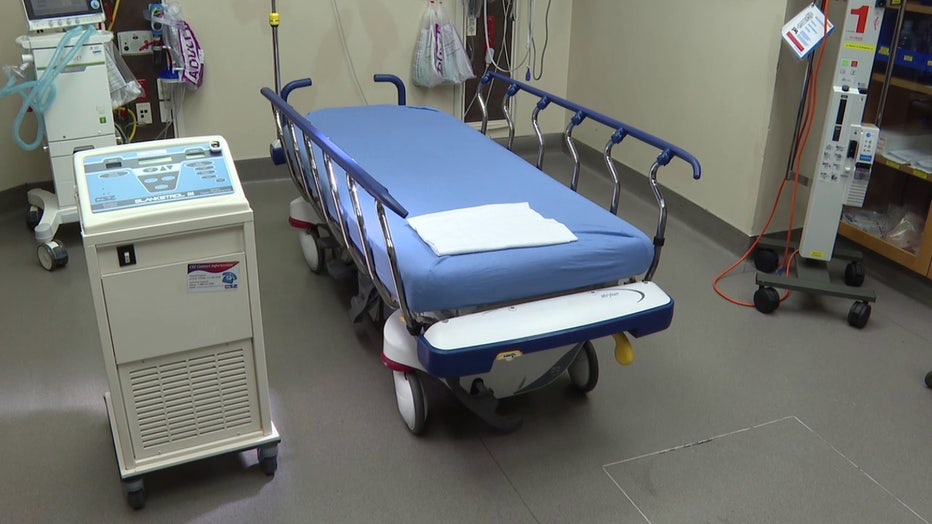
Dr. Melissa Bell, the vice president of emergency services at HCA Florida Brandon, said the hospital has a special heat response kit on standby. It includes cooling vests, ice packs and blankets designed to quickly stabilize patients.
"The patient comes in, they need it right now," she said. "It's about decreasing time to treatment and improving the outcome."
What you can do:
Here's what you can do to prevent heat-related illnesses:
- Drink plenty of water — not just when you feel thirsty
- Take frequent breaks in the shade or indoors if you work outside
- Avoid peak heat hours between 11 a.m. and 4 p.m.
- Watch for early signs of overheating and act quickly
The Source: This article is based on interviews with emergency room physicians at HCA Florida Brandon Hospital, including Dr. Sergio Martinez and Dr. Melissa Bell, conducted by FOX 13 News in Tampa.