

Political texts are surging in 2026: Here’s how to reduce them
Political texts surging ahead of midterms
If your phone seems to be blowing up with political text messages, you are far from alone. The number of political texts has surged into the tens of billions as campaigns increasingly use text messaging as a relatively inexpensive way to reach voters. FOX 13's Aaron Mesmer reports.
TAMPA, Fla. - If your phone seems to be blowing up with political text messages, you are far from alone. The number of political texts has surged into the tens of billions as campaigns increasingly use text messaging as a relatively inexpensive way to reach voters.
Political text message surge
By the numbers:
The call-and-text blocking app RoboKiller counted about 15 billion political texts in 2022. Political texting company RumbleUp predicted that number would reach 25 billion in 2024.
Adding estimates from 2020 through 2024 puts the potential total at more than 60 billion political text messages.
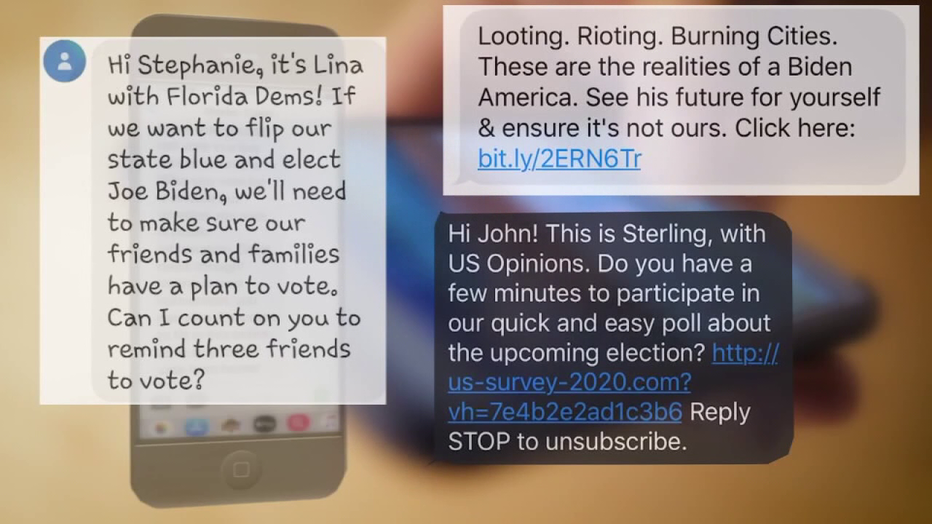
The earliest figures available show about 350 million political texts were sent in 2018. That means the number of political texts potentially increased by roughly 7,000% in just a few election cycles.
How campaigns find voter numbers
What they're saying:
Political campaigns have several ways to get access to voters' phone numbers.
UCF political science professor Aubrey Jewett says many campaigns obtain phone numbers through voter registration information. Campaigns can also hire companies to data mine information about potential voters.
Artificial intelligence is making it easier for campaigns to target specific groups of voters with tailored messages.
"Probably one other reason that you see a lot of these texts is with the rise of, of course, AI," Jewett said.
Jewett explained that campaigns can match phone numbers with information about voters, including the party they registered with, whether they typically vote and whether they have signed petitions or expressed interest in specific issues.
"So, you can actually, with AI, still tailor these messages, but still do it relatively cheaply," Jewett said.
Do Not Call Registry exemption
What we know:
The problem for voters is that political text messages are exempt from the National Do Not Call Registry. That means adding your phone number to the registry will not stop political campaigns from contacting you by text.
Political messaging can be an inexpensive way for campaigns and political organizations to advertise, which helps explain why the practice has become increasingly common during election cycles.
Steps to stop campaign texts
What you can do:
There is no fool-proof way to stop all political text messages, but there are several steps you can take to reduce them.
Jewett said you can:
- Reply "STOP" to individual political texts to unsubscribe.
- Block individual phone numbers on your phone.
- Change your phone's settings to block messages from unknown numbers.
If you vote early, that could also reduce the number of messages you receive. Campaigns can see that you have already voted and may be less likely to continue targeting you with additional messages.
Total text messages sent in 2026
What we don't know:
It is difficult to determine exactly how many political texts are sent each election cycle, and an estimate for this year is not yet available.
The Source: Information for this story came from data collected and published by RoboKiller and RumbleUp, along with an interview with UCF political science professor Aubrey Jewett.