

UF plant pathologists study nearly 30 species of palm trees to analyze their risk for trunk rot

Palm tree truck rot study
Plant pathologists at the University of Florida Institute of Food and Agricultural Sciences (UF/IFAS) studied nearly 30 palm species to analyze their risk for Thielaviopsis trunk rot. FOX 13's Ariel Plasencia reports.
TAMPA, Fla. - Plant pathologists at the University of Florida Institute of Food and Agricultural Sciences (UF/IFAS) studied nearly 30 palm species to analyze their risk for Thielaviopsis trunk rot.
What we know:
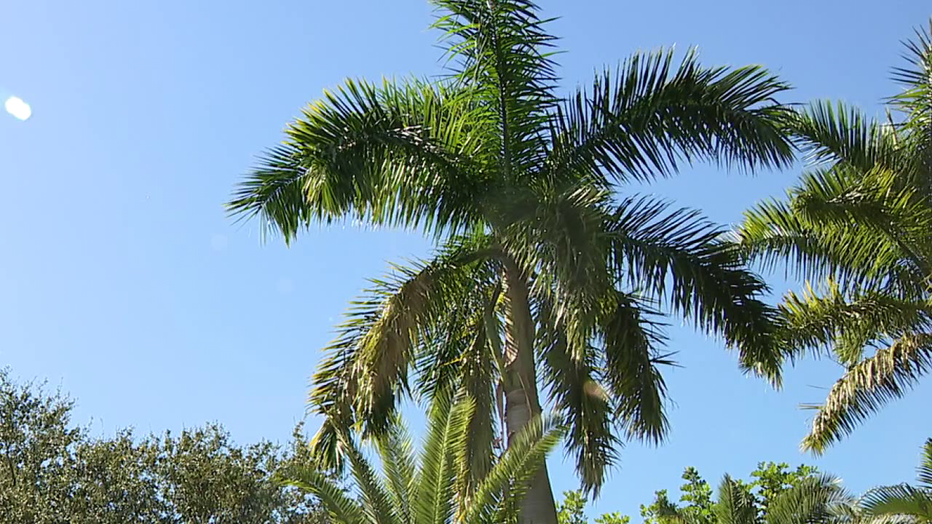
Thielaviopsis trunk rot is caused by a lethal fungus that can infect almost every part of a palm. As a result, this disease can cause palms to suddenly buckle and fall over.
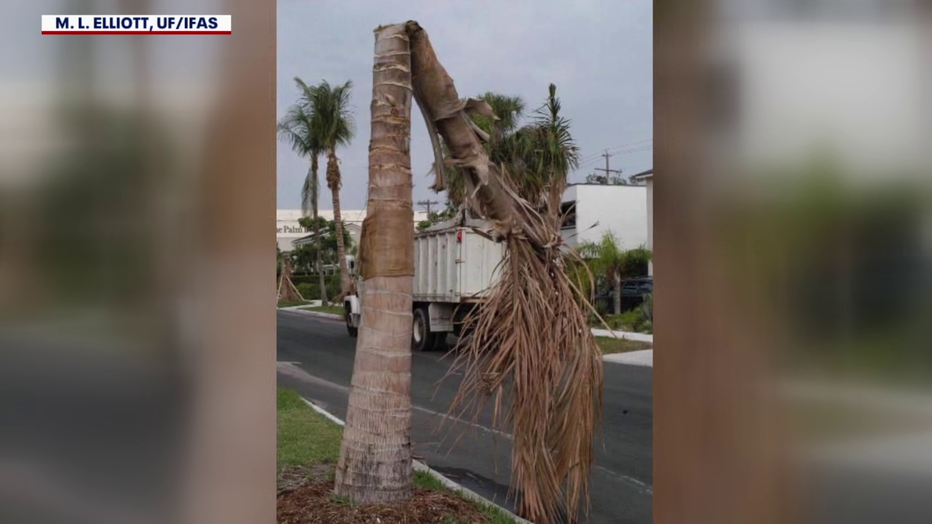
Courtesy: M.L. Elliott, UF/IFAS
"Usually, it is a really hidden disease," Dr. Braham Dhillon, plant pathologist at the UF/IFAS Fort Lauderdale Research and Education Center, told FOX 13. "There are no outward symptoms, and you only see — or only know — once the palm trunk has collapsed. So, it is hard to detect in the landscape."
The backstory:
UF/IFAS researchers tested the leaves of nearly 30 palm species in their lab. The plant pathologists told FOX 13 their new methodology yielded results significantly faster than other tests, which usually require using the entire plant.
"We can take individual leaflets, cut them, put them in a petri dish. Once we wound them, we can put an inoculum on it — or the fungus on it — and see if it'll cause disease or not," Dhillon said. "The lesion development happens on the leaflets. It's quick. Less than a week later, we have the results."
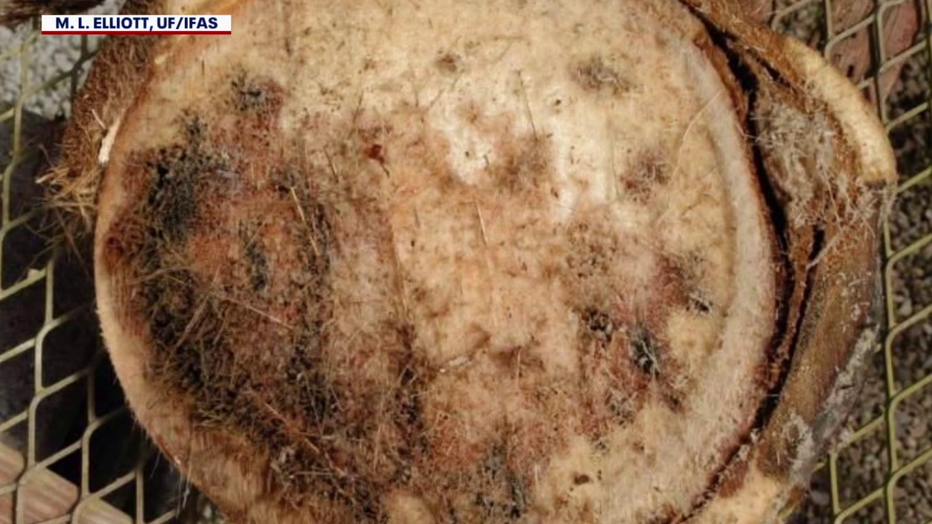
Courtesy: M.L. Elliott, UF/IFAS
They found Buccaneer, Foxtail, and some varieties of Coconut palms were susceptible to Thielaviopsis trunk rot.
Meanwhile, these palms were resistant:
- Everglades
- Cabbage/Sabal
- Florida Thatch
- Saw Palmetto
- Bismarck
- Roebelenii/Pygmy Date
Dhillon and his team’s findings were recently published.
Dig deeper:
"In our testing, we have shown that if there is no wound, no matter how much pathogen you add, there is no disease," Dhillon said. "So, it only causes disease if there's an open wound."
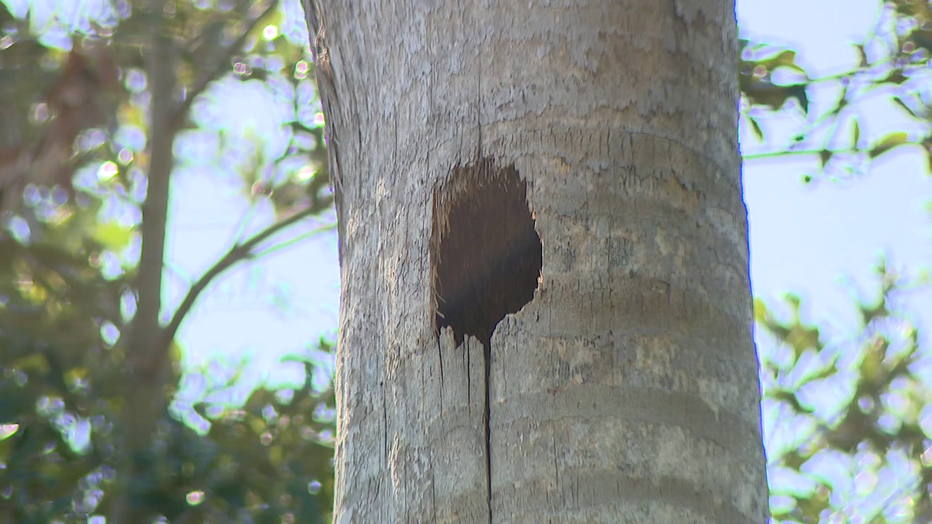
And how can palms get wounds?
"Wounds can be caused by pruning. It could be caused by boring insects. Could be caused by birds. It could be caused by, when you're putting up lights, you're hammering in nails," Dhillon said. "There are a lot of ways to cause wounds."
The team hopes their research will help better educate Bay Area homeowners.
"So, they can make an informed decision when somebody is getting new palms or replacing those palms in order to stay away from this disease or losses from this disease," Dhillon added.
MORE: Florida man accused of killing adoptive parents could face life in prison as trial comes to an end
What's next:
Dhillon told FOX 13 they plan to expand their study to include other palm species, including Royal, Date, Canary Island Date, Queen, and Christmas.
The Source: The information for this story was provided by Plant pathologists at the University of Florida Institute of Food and Agricultural Sciences.