

Florida candy shop crafts handmade candy canes for Christmas around the world

TALLAHASSEE, Fla. - Lofty Pursuits in Tallahassee is one of the few candy shops in the U.S. that still makes candy canes by hand.
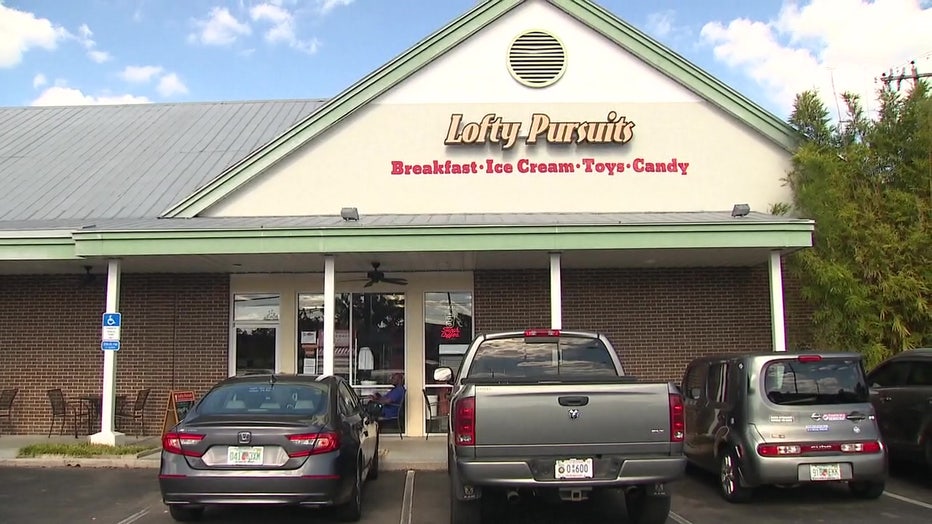
Owners Greg Cohen and Uri Gottschalk use century-old techniques and equipment to produce seasonal batches, each totaling around 300 canes at a time.
What we know:
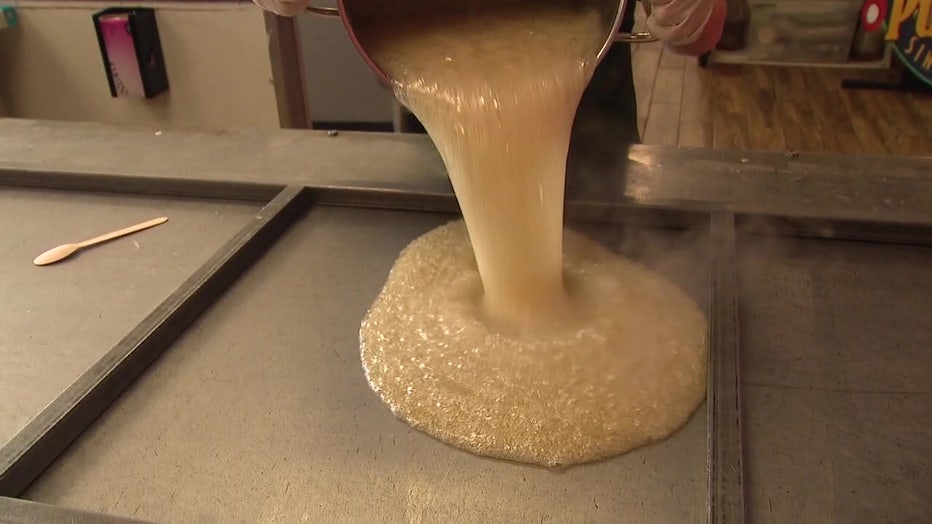
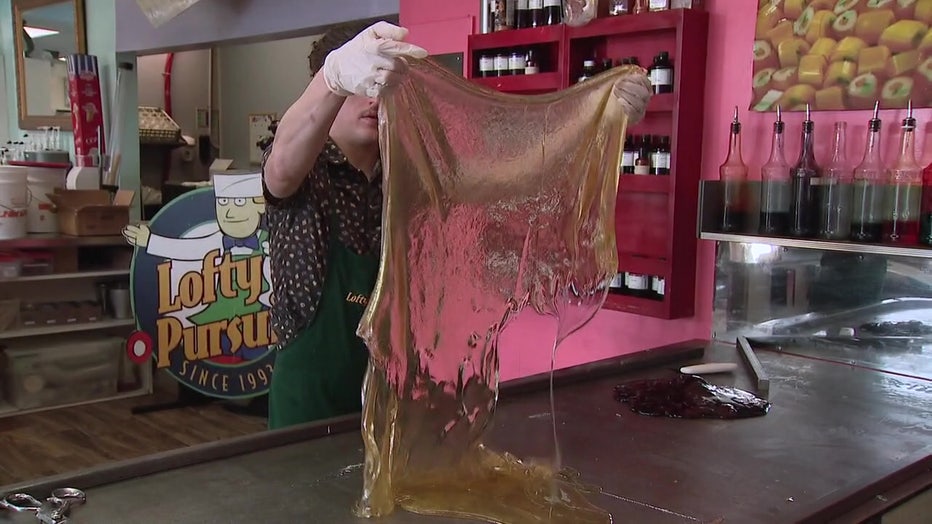
The process begins with peppermint oil mixed into boiling sugar until the water evaporates. The candy is then poured onto an antique cooling table. Red food coloring is carefully added to one side, and a drop of another color for effect.
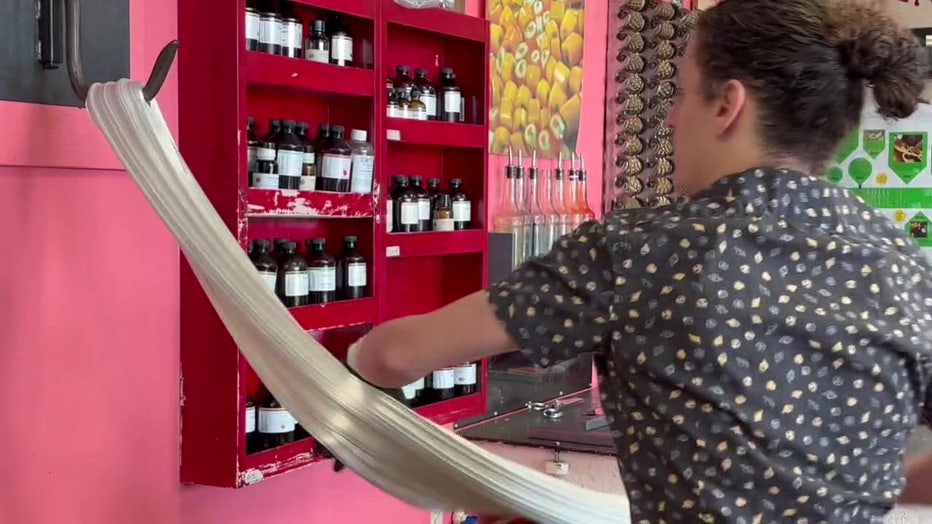
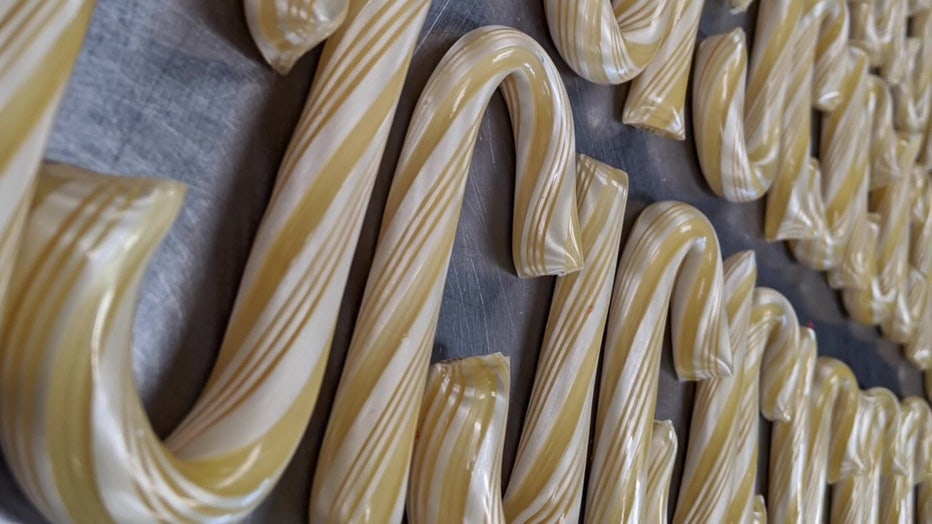
The sugar is folded repeatedly — about 70 times — trapping air bubbles that create the iconic white stripes naturally.
Greg Cohen explains, "Every time we fold it, air bubbles get trapped… each of those little air bubbles are round and they each reflect light. So, our sugar is amber, but when the light hits it, it reflects white. And you end up with this beautiful white candy, and there’s no food coloring in it."
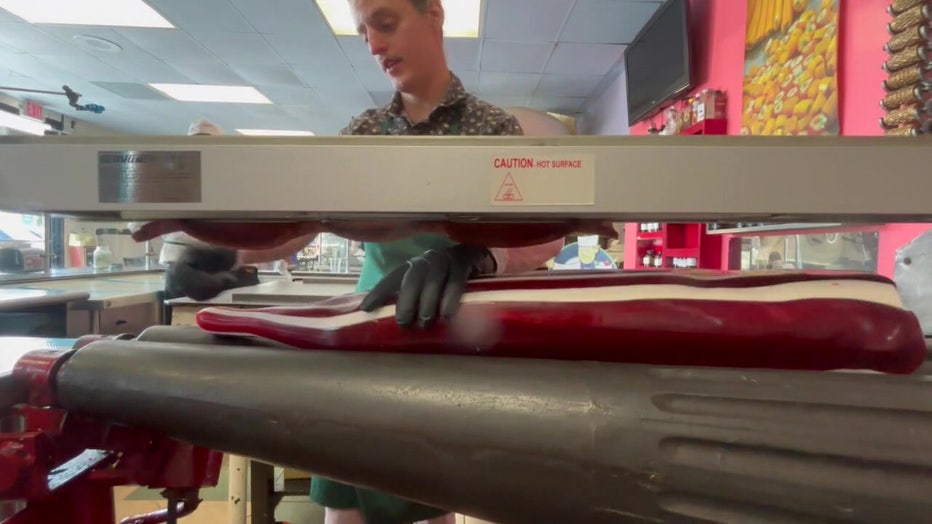
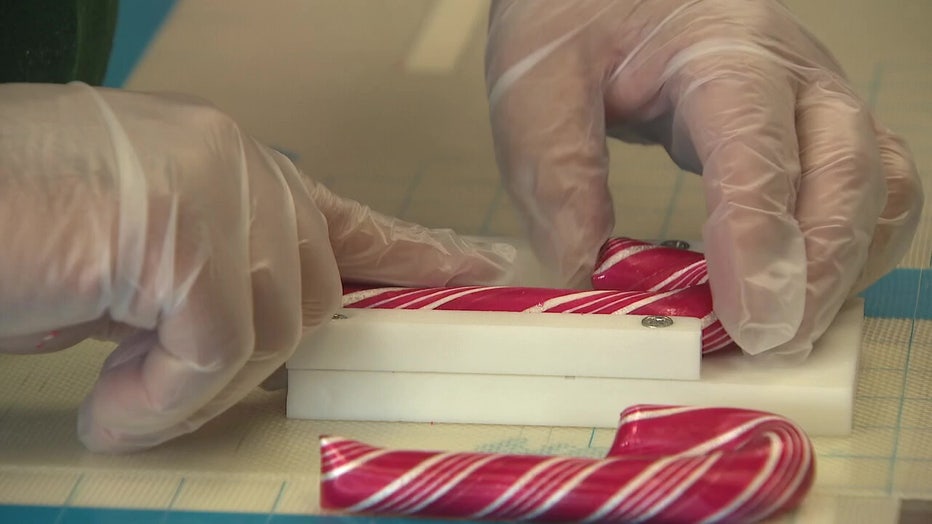
After folding, the candy is cut, shaped into logs, spun in a cast-iron machine from 1910, twisted, and finally bent into the classic cane shape. Cohen notes their candy is thicker and more flavorful than mass-produced varieties:
"They don’t use pure peppermint oils. Our candy cane flavors are much more intense. And they make them much thinner because they need the candy to cool faster."
The backstory:
Candy canes have roots dating back to 1670, when a German choirmaster created white cane-shaped candies to keep children quiet during church services. Red stripes were added in the early 1900s, inspired by Christmas traditions and artistic influences.
Cohen added, "The stripes didn’t come till 1904; they had just become popular in Sweden at that time. And they thought it was like two dancers dancing around. That’s what the stripes are representing, or they felt it moved like that."
Lofty Pursuits carries on that tradition, combining history, art, and flavor to preserve a centuries-old Christmas treat.
How They Make Them:
Each batch contains roughly 300 canes, and the shop produces more than 10,000 each Christmas season. Dozens of flavors are offered, though peppermint remains the most popular.
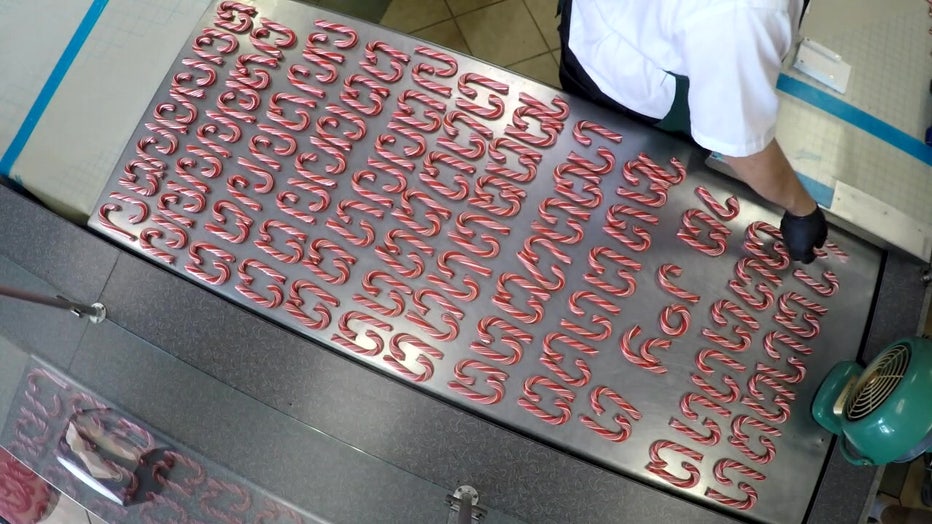
The candy-making process at Lofty Pursuits blends manual skill and vintage machinery:
- Sugar and peppermint oil are boiled until evaporated.
- Candy is poured onto the antique cooling table.
- Color is added and carefully blended.
- Sugar is folded 70 times to create air bubbles for white stripes.
- Candy is cut, shaped, and spun in a 1910 cast-iron spinner.
- Canes are twisted, bent, and allowed to cool.
What they're saying:
Greg Cohen said, "We sell wonder. We sell joy. We sell happiness… Christmas is fun. Christmas is always fun."
Meanwhile, Uri Gottschalk, the candy cane maker, added, "We’re left with basically liquid sugar. From that point, we pour it out on our antique cooling table… just the tiniest drop of purple to make it pop."
Cohen explained, "We ship the candy canes worldwide. We’re part of Christmas and Christmas traditions everywhere."
Why you should care:
Lofty Pursuits demonstrates how small businesses can preserve cultural traditions while innovating.
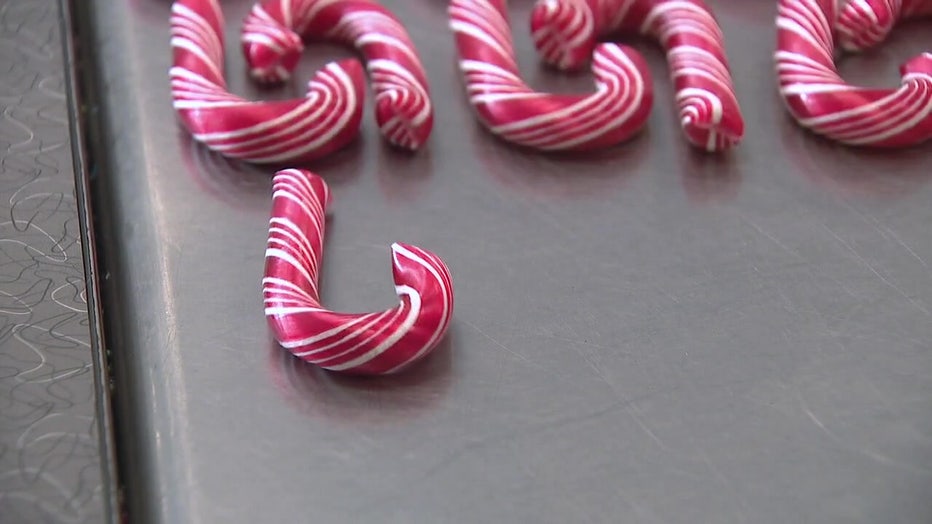
Their candy canes are not only a treat, they’re a tangible connection to centuries of holiday history, made with craftsmanship rarely seen today.
The Source: Reporting and interviews by FOX 13's Craig Patrick.