

New Florida law requires heart screenings for high school athletes. Here's what to know

TALLAHASSEE, Fla. - A new Florida law dubbed the "Second Chance Act" is aimed at helping keep all high school student athletes safe before they start competing.
Second Chance Act
Big picture view:
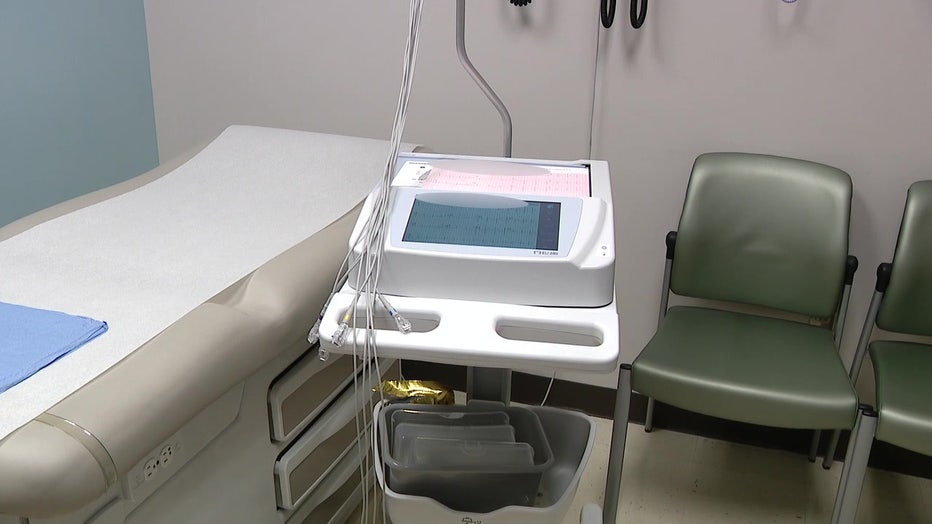
Beginning with the 2026-27 school year, Florida will become the first state in the nation to require an electrocardiogram (EKG) for all high school athletes. Students in grades 9-12 will need an EKG screening the first time they participate in an athletic competition.
The screenings must follow standards set by the state's Sports Medicine Advisory Committee, and any EKG done within two years prior to the start of the 2026-27 school year will count.
PREVIOUS: Florida bill requiring heart screenings for student athletes heads to governor's desk
If an EKG reveals an abnormality, student athletes will be held out of play until medically cleared.
The Second Chance Act also requires schools to seek public-private partnerships to keep EKG costs low.
The backstory:
The move follows growing awareness of hidden heart conditions in teens — some of which can be deadly without warning signs.
The law, signed by Gov. Ron DeSantis, is named in honor of Chance Gainer, a Florida Panhandle high school football player who died in 2024 after collapsing during a game.
The push for the legislation came after 16-year-old Lexi Sima collapsed while jogging on a treadmill during a workout. Her father, Shawn Sima, said bystanders at the gym performed CPR and used a defibrillator to revive her. She had suffered sudden cardiac arrest due to an undiagnosed heart condition.
"This group of non-medical bystanders saved my kid’s life," said Shawn Sima, now the impact director for the non-profit ‘Who We Play For.’ "It took 15 minutes for the ambulance to get there. She would have died."
Sima said if his daughter had received an EKG beforehand, her condition could have been detected.
"When an EKG is done correctly… you will pick up anywhere from 70-95% of these heart conditions that kill our children," he said.
Dig deeper:
Sudden cardiac arrest is one of the leading causes of death among student athletes. Experts said it often stems from undiagnosed heart conditions that can be detected with a simple, inexpensive EKG.
Cardiologists support the new law, saying it's a big step toward identifying hidden heart conditions that can lead to sudden cardiac arrest.
The Second Chance Act officially took effect July 1.
What's next:
In addition to mandatory EKGs for student athletes, the law also requires every Florida elementary, middle and high school to have at least one automated external defibrillator (AED) on campus. The requirements will go into effect at the beginning of the 2026-2027 school year.
The Source: Information for this story was gathered by FOX 13's Regina Gonzalez and Jordan Bowen.