

Dept. of Education reaches deal to end SAVE plan: What this means for student loan borrowers

Curtains for the Department of Education?
After decades of threats from Republicans, President Trump appears poised to move ahead with a plan to gut the Department of Education. Mandla Deskins from EdTrust makes his case for keeping the DOE on "The Final 5 with Jim Lokay."
WASHINGTON - On Tuesday, the Dept. of Education announced that it had reached a proposed settlement agreement that, if given court approval, will end the Saving on a Valuable Education (SAVE) student loan repayment plan.
Over 7 million borrowers affected
What we know:
The announcement comes following a lawsuit brought by Republican state attorneys general against the Biden administration over the plan.
Assuming the agreement is approved in court, the Dept. of Education will not enroll any more borrowers in the plan, deny all pending applications for the plan and will move the over seven million borrowers who are currently enrolled to other repayment plans.
In the DMV, over 318,000 borrowers are enrolled in the SAVE Plan, according to Investopedia.
What they're saying:
"The law is clear: if you take out a loan, you must pay it back," Under Secretary of Education Nicholas Kent said in a statement. "Thanks to the State of Missouri and other states fighting against this egregious federal overreach, American taxpayers can now rest assured they will no longer be forced to serve as collateral for illegal and irresponsible student loan policies."
In a statement, Protect Borrowers Deputy Executive Director and Managing Counsel Persis Yu called the settlement "pure capitulation."
"While millions of student loan borrowers struggle amidst the worsening affordability crisis…billionaire Education Secretary, Linda McMahon, chose to strike a back-room deal with a right-wing state Attorney General and strip borrowers of the most affordable repayment plan that would help millions to stay on track with their loans while keeping a roof over their head," Yu said.
"The real story here is the unrelenting, right-wing push to jack up costs on working people with student debt," she added.
The backstory:
The SAVE plan is arguably the most forgiving of the income-driven repayment (IDR) plans available to student loan borrowers, an argument that the plaintiffs used in court, according to The Hill.
Under the plan, low-income borrowers were able to cut their monthly payments, in some cases to as low as $0. Loan forgiveness was available in some cases as well.
While the legalities were being worked out in court, borrowers enrolled in the SAVE Plan were not required to make payments. Interest began accruing on these loans again in August following the president's signing of the One Big Beautiful Bill Act, however.
What borrowers can do (for now)
What you can do:
The Dept. of Education said in its announcement Tuesday that borrowers impacted by these changes will be contacted about next steps "in the coming weeks" by the Office of Federal Student Aid (FSA).
The department also said in a press release that borrowers would have "a limited time to select a new, legal repayment plan." They'll have to choose between a fixed payment plan or a plan based on their income level.
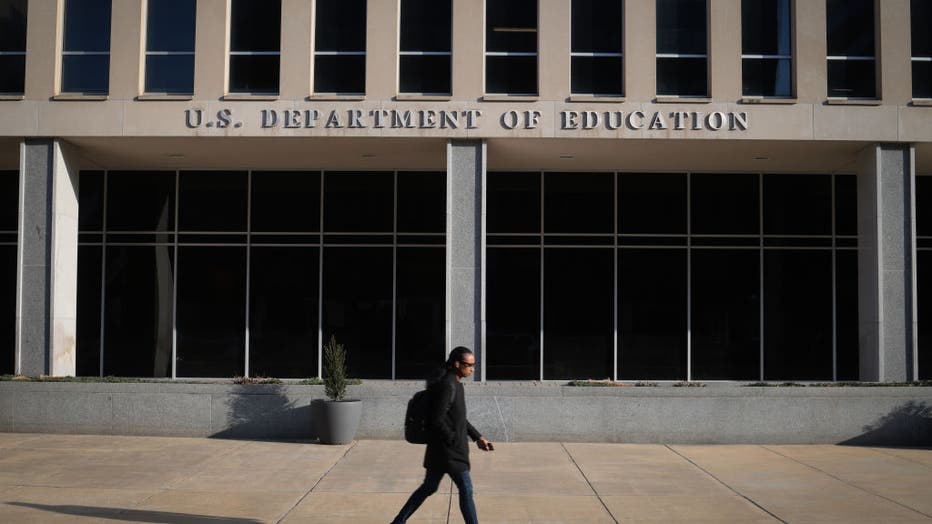
WASHINGTON, DC - MARCH 12: The headquarters of the Department of Education are shown March 12, 2025 in Washington, DC. The Department of Education announced yesterday that it will reduce its staff by nearly 50 percent, leaving the department with 2,1
The FSA suggests using its Loan Simulator to explore repayment plans. This tool allows borrowers to estimate their monthly payments, determine their eligibility for specific repayment plans and decide which plan is best for their specific situations.
As of Tuesday, however, the department has not yet implemented the changes that would make all SAVE borrowers eligible for income-based repayment plans, even though Congress requires this action, according to the National Consumer Law Center (NCLC).
The department also hasn't finalized the new Repayment Assistance Plan (RAP) program established over the summer.
What's next:
Following court approval, the Education Department will be tasked with conducting a negotiated rulemaking process in order to implement the settlement reached Tuesday, NCLC also notes. That process will likely include a repeal of the SAVE Plan Final Rule altogether.
What we don't know:
The department has not shared what will happen to SAVE borrowers who do not apply for a new repayment plan.
The Source: Information above was sourced from the Department of Education, Missouri's Attorney General Catherine L. Hanaway's press office, Investopedia, Protect Borrowers, The Hill, NPR, the Office of Federal Student Aid and the National Consumer Law Center.