

Manatee Rehabilitation Center reopens at CMA more than a year after Hurricanes Helene, Milton

CLEARWATER, Fla. - The Clearwater Marine Aquarium just marked a major milestone by reopening its Manatee Rehabilitation Center.
The backstory:
It had been closed for more than a year after Hurricanes Helene and Milton’s damage. The storms caused $2.5 million in damage aquarium-wide, and about $104,000 in the center alone.
READ: Orphaned manatee calf rescued from House Spring in Crystal River: FWC
"I think it took a toll on everybody," Tanya Ward, CMA’s Manatee Rehabilitation manager, said. "It makes me emotional. Everybody here loves the animals that they work with. It's a great facility. So, to see something that's never happened here, you know, this facility's been here for a long time, residents in Pinellas County, I don't think, really understood what was going to happen. But knowing all the animals were safe and that we had no animal loss, that is the most important."
The two manatees that were there during Helene were okay and were moved to ZooTampa right after Helene.
"Thankfully, the manatees were fine. They were in the pool probably having no idea what was occurring. However, a lot of our fencing came down behind me. We had a number of different signs back here behind me as well that were washed away. We also had some interactive like kiosks that we had for the public and those did not fare through the storm either," Ward said.
MORE: New seagrass project aims to feed manatees in Apollo Beach
More than four feet of storm surge wiped out the manatee’s life support system that acts as a filtration system. The center had just opened about a month before the storms. It acts as a second stage care facility.
Dig deeper:
"We take manatees that are no longer deemed critical, but they have not met certain milestones to be released. And in doing so, by taking these three females to the right of me, we empty up space in the critical care facilities," Ward said.
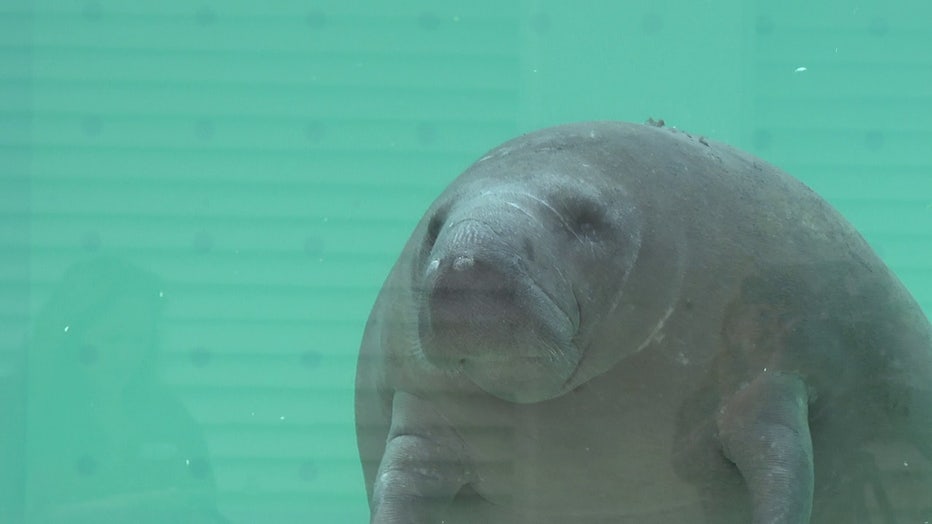
The center has three new patients — Sabal, Orchid and Vora. They moved from the Cincinnati Zoo and Botanical Garden and the Columbus Zoo and Aquarium, where they were previously being rehabilitated. Those two facilities are part of the Manatee Rescue and Rehabilitation Partnership (MRP), along with CMA.
"It took over a year," Ward said about working to reopen the Rehab Center. "So, a lot of what we had to focus on was our resident animals that were here. We had a safe place to send Yeti and Zamboni [the other two manatees], so a lot of time was spent getting the aquarium back up and running, the filters for the dolphins, for the otters, for the sea turtles. And then we were doing the work on rebuilding the life support here. So, it just took that amount of time to get everything ready. And then, before the animals arrived, we want to do a full water quality test. So that's over two weeks in itself. So, we could not bring them in until we were completely prepared, and then we had to work with MRP to get the animals from Ohio."
CMA dedicated the manatee rehab facility to Dr. James "Buddy" Powell, who they called a visionary leader whose passion and perseverance transformed the field of marine conservation.
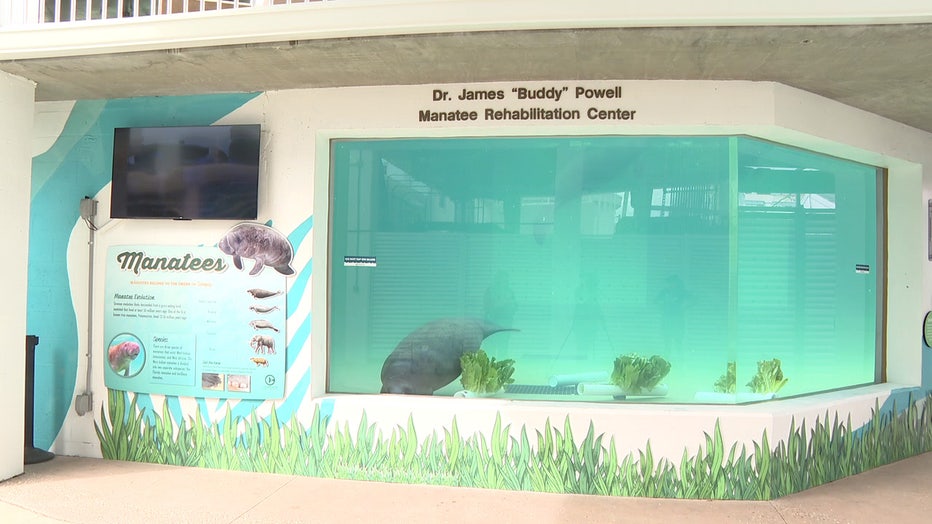
He was CMA’s former chief zoological officer and executive director of the Clearwater Marine Aquarium Research Institute (CMARI) and dedicated more than five decades to the study and protection of manatees worldwide.
What's next:
Ward said they hope to release the three manatees there now in February. She said a lot of manatees will be moving to warm waters soon.
"They have no natural predators. We are it, and then what happens in Mother Nature. So, quite often they're hit by boats. They become entangled in crab trap lines, fishing lines, red tide is an issue, algae blooms, the loss of seagrass beds, which they need to feed on. I call manatees the lawnmowers of the waterways, which is very important. It's important for the ecosystem," she said.
"What I tell people, especially this time of year, is just polarized sunglasses are great to help you see manatees. Manatees make what we call a tail print. So, it's like almost like three or four circles in the water. They come up to the surface to take a breath, so they can be difficult to see, but if you obey all the rules in the waterways, the no-wake zones, throw away all your trash … If you do see a manatee, just be respectful. Keep their distance and let them go where they want to go. Right now, a lot of manatees, with it becoming winter, are moving into our warm water sites, which is our natural springs and our power plants. And you don't want to hinder them from going to those sites. Like I mentioned before, it's very detrimental if they were not to make it to that warm water site," Ward said.
Manatees are federally protected, so it’s against the law to touch a manatee.
The Source: This article was written with information provided by Clearwater Marine Aquarium.