

New report on student AI use finds more risks than benefits, schools work on best practices

Report: AI undermines development in school
AI is everywhere, and a new report by the Brookings Institution found it's likely doing more harm than good for students. FOX 13's Briona Arradondo reports.
TAMPA, Fla. - AI is likely to do more harm than good for students, according to researchers with the Brookings Institution.
They grilled hundreds of students, teachers, and parents across the world and found the current track of generative AI undermines development.
What we know:
It’s only been three years since ChatGPT debuted, and since November 2022, generative AI slipped into everything.
"I would say from what we hear is that kids are using it for all their homework and assignments, and that's a real concern that teachers have," said Rob Kriete, the president of the Hillsborough Classroom Teachers Association.
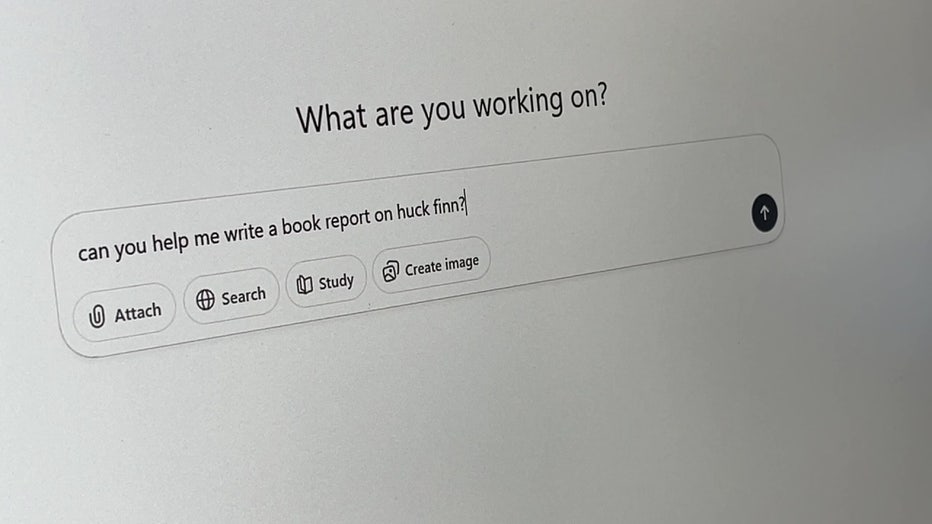
Kriete said there’s no clear district policy on how to implement AI right now, but it’s in the works. Hillsborough County Schools said the district adopted a board policy on AI and emerging tech last year, but school administrators are still working on an implementation guide. Once that’s ready, a spokesperson said it will launch for students and their families.
"What we know about AI is that it's consistently evolving, and it's evolving at a rate that we're not really keeping up with," said Kriete. "Right now, we're looking for different products out there that we think are the best. I would say it's the Wild West. Everybody's using whatever they might have on their phone, or it comes with their internet package."
That fast pace is what prompted the think tank Brookings Institution to spend last year talking to hundreds of students, parents and teachers about AI.
What they're saying:
The Brookings Institution released a new education report Wednesday, detailing the pros and cons of generative AI for students, finding the risks outweigh the benefits.
"Yeah, well, our technology outstripped our biology like ages ago, and we, just as the human species, have not kind of made that evolutionary jump to kind of catch up to that. So there's tons of stuff that we use that is just inappropriate for brain development," said Jessica Waters, a fourth-grade teacher at Ozona Elementary School in Pinellas County. "You kind of have to work with the system that you have."
The key is figuring out best practices.

According to the report, how students use AI right now erodes critical thinking, crumbles emotional skills and their trust in teachers and classmates.
But, it can help tailor a student’s learning and free up time for teachers.
"There are a lot of teachers out there that are overworked with things like creating individualized education plans, IEPs. Well, this could help lighten that load so that they can actually interact more with students," said Lee Bryant, the president of the Pinellas Classroom Teachers Association.
What's next:
The report also lists 12 solutions to help prevent the risks of AI use for students. It includes AI literacy, providing a clear vision for ethical use and preparing teachers to teach with and through AI.
The Pinellas Classroom Teachers Association said they are working on that.
"Our office has gotten a grant from the American Federation of Teachers for AI research. The American Federation of Teachers and the NEA are all really in on making sure that we use quality programs and that we're doing it in the proper way," said Bryant, the teachers union president.
While teachers get up to speed, students may continue using AI for school when they’re not there.
So, another tip from the report includes supporting families to manage AI use at home.
"We have programs where they learn how to be good digital citizens, and this would just kind of fall under that umbrella," said Waters.
The Source: The information in this story came from the Brookings Institution and the Hillsborough County and Pinellas County classroom teachers associations. It was gathered by FOX 13’s Briona Arradondo.