

Mote Marine researchers study electronic pulse device aimed at deterring sharks from fishing lines
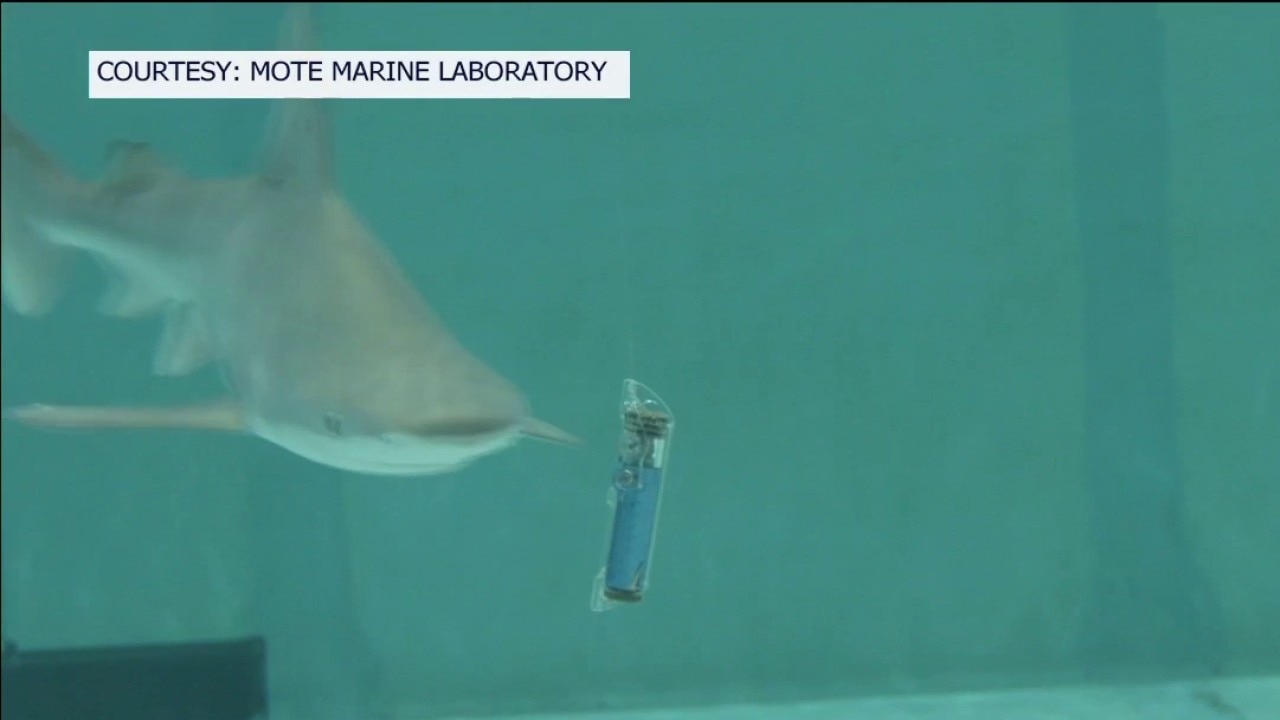
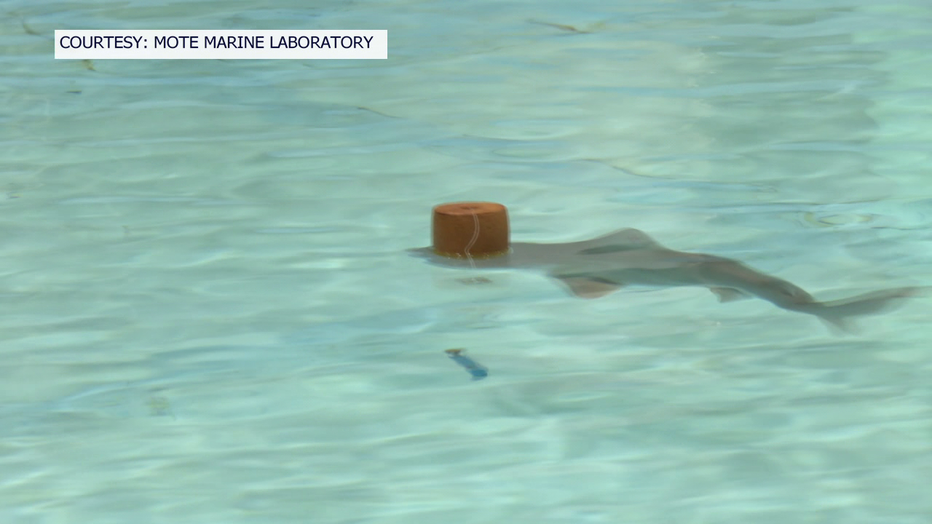
SARASOTA, Fla. - Scientists at Mote Marine Laboratory are studying a device that could help fishermen. They just published research about an electronic pulse device aimed at deterring sharks from fishing lines.
Big picture view:
Researchers at Mote Marine have been studying the Shark Guard, which is manufactured by FiskTek.
READ: Sandbar Shark found tangled in crab trap off Bradenton Beach by Manatee County marine deputies
"We have the two electrode ends here, and it obviously just gives off a quick pulse static shock, okay, or electronic pulse, right?" Mote Marine Laboratory Senior Biologist Jack Morris said. "It's equivalent to dragging your feet on the floor and then touching your friend and giving them a quick little jolt."
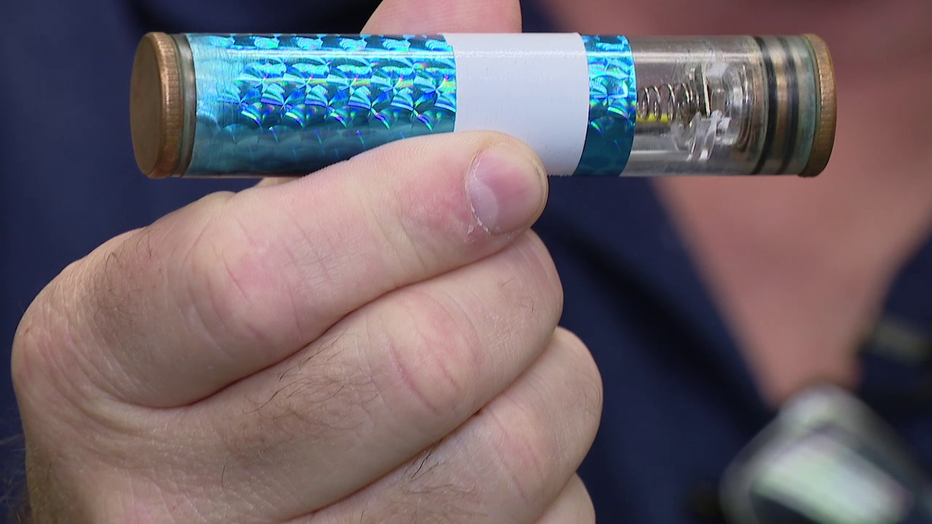
Morris says the device doesn't hurt the sharks, but rather, the device locks into a small plastic case that's attached onto a reel, then activates once it's in the water.
"Pops in, locks in, and then we tie the bait about 25 centimeters above this device," Morris said.
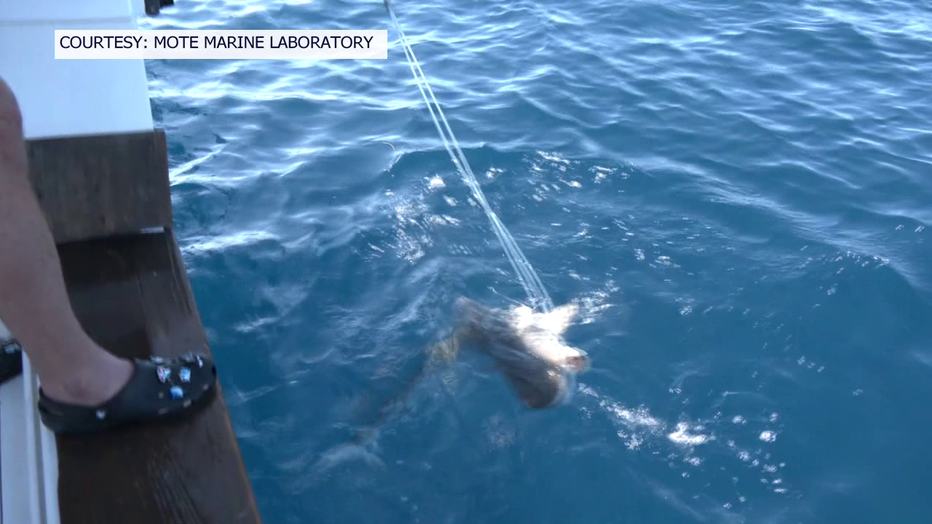
Morris says they did trials with sharks in captivity and open water with an active device and an inactive device.
"For the inactive device, over 90% of the time, the shark will come in and actually take the food item or the bait," he said. "But when we activate this device, we see 46% of the time, the sharks actually take the bait, and of that, we see an extended period of time when it takes the individual shark to actually acquire the bait."
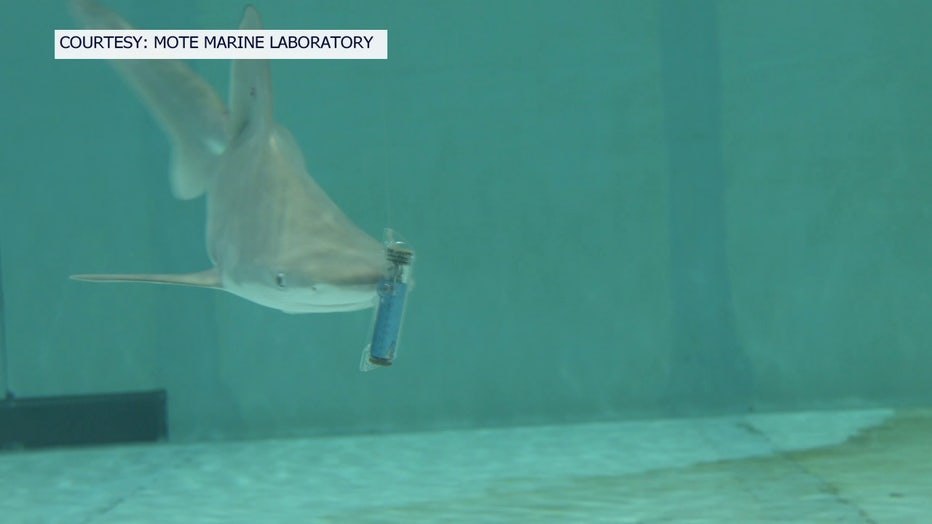
Morris says different types of sharks react differently to the device.
"We know some animals will react when they get very close to it," he said. "I've seen animals react when they get up to three to four feet from the device."
Based on studying the way sharks interacted with the device, researchers determined the device fires a static shock pulse every two seconds. They recommended that the device fire every second, because they say the sharks were learning how to move around the shocks.
Dig deeper:
Morris says this research is aimed at finding ways for fishermen and sharks to coexist in the waters.
Courtesy: Mote Marine Laboratory
"What we are hearing from the commercial and recreational guys is that there are too many sharks," he said. "'We have too many sharks now.' However, if you look at our historical data, we are still greatly reduced, compared to what we used to be."
Morris says this is driving more competition between fishermen and sharks in the water.
READ: Great white shark surfaces off Venice coast near charter captain's boat: ‘Just crazy’
"So, we have more fishermen, slightly more sharks, but then we also have a reduced fish population, which is creating a little bit of tension between the fishermen and the sharks," he said.
Researchers at Mote say the device could be more effective if it was stronger.
"I would like to see maybe a little bit of a stronger device, but power has limitations," Morris said. "And once you start getting larger power, you start getting the larger cost, but also more importantly, larger weight."
Courtesy: Mote Marine Laboratory
Researchers plan to continue expanding their trials and studying ways for humans and sharks to coexist.
"At least locally, in the public shark populations in the U.S., it is that our conservation efforts have actually increased, right, and they've been more effective, and we're starting to see some species actually build back up from where they were basically almost on the verge of extinction before," Morris said.
The Source: Information was gathered from interviews from Mote Marine and the study its researchers published.