

Zephyrhills man reflects on survival story after strangers save him from cardiac arrest
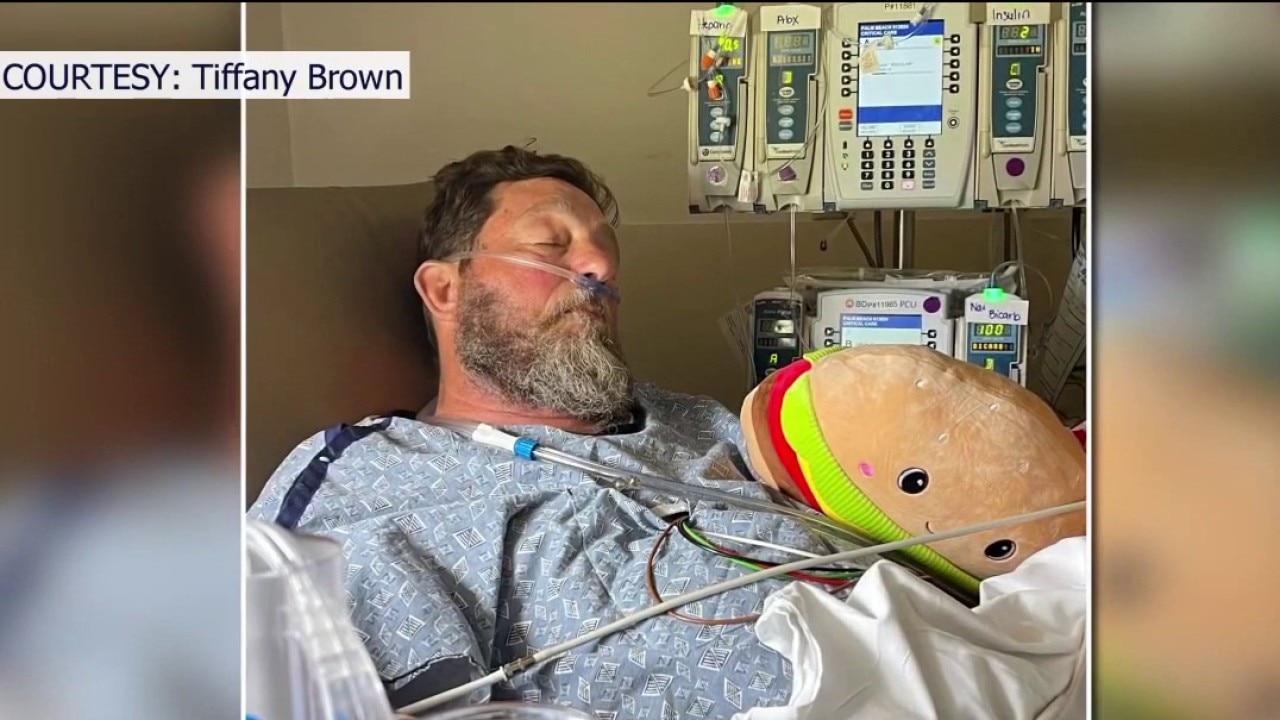
Man shares cardiac arrest survival story
A Zephyrhills man is honoring American Heart Month by celebrating what he calls his "second life" after surviving a near-fatal cardiac arrest during a beach vacation last summer. FOX 13's Aaron Mesmer reports.
ZEPHYRHILLS, Fla. - A Zephyrhills man is honoring American Heart Month by celebrating what he calls his "second life" after surviving a near-fatal cardiac arrest during a beach vacation last summer.
The backstory:
On June 25, Bruce Brown and his wife traveled from their home in Zephyrhills to Palm Beach County for a getaway.
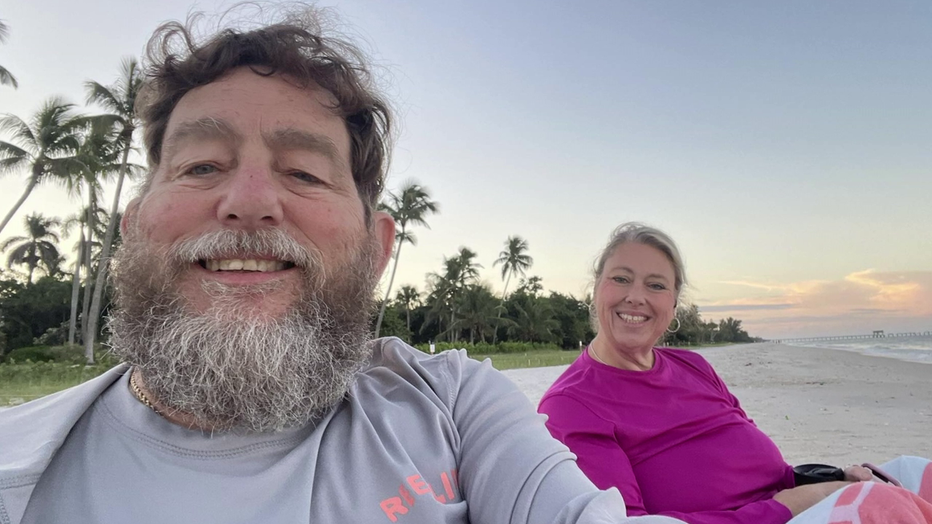
"We snorkeled, we took a long walk around the island," Brown said.
READ: Lakewood Ranch mother kills 2 children before taking her own life in ‘violent scene’: MCSO
Moments after snapping a few photos of the beach, Brown suddenly went into cardiac arrest. An accidental photo from his phone shows him lying unresponsive in the sand.
Three strangers — a nurse, a doctor and a Navy veteran — rushed to help. Brown says they performed CPR for 45 minutes as his heart stopped four times.
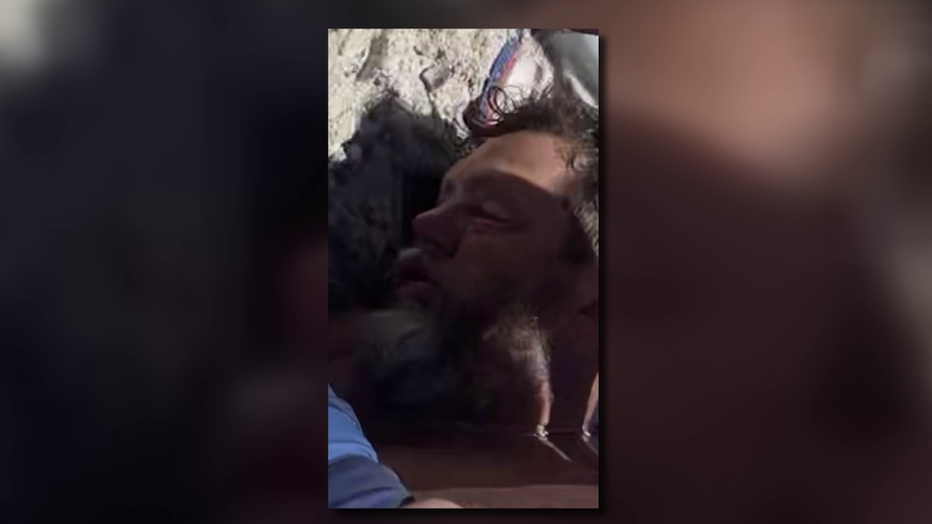
"They ended up shocking me three times," Brown said. "They gave me 24 hours of life, probably less than a 10% chance."
Against the odds, Brown survived.
"Everybody was pulling together to save me. Why me? Only one person really knows, why me," he said.
Now eight months into recovery, Brown has a defibrillator implanted in his chest.
"I’ve got a new lease on life now. At least a 10-to-14-year battery, depending on who you talk to," Brown said with a smile.
Big picture view:
Brown is sharing his experience in honor of American Heart Month, highlighting the importance of CPR training and access to automated external defibrillators, or AEDs.
Dr. Amber Stephens with Optum-Pinehurst says CPR and immediate defibrillation can mean the difference between life and death.
"You need the shock, and the sooner you can shock the person back into an appropriate rhythm, the faster that heart starts to beat the way it's supposed to," Stephens said.
According to the American Heart Association, heart disease remains the leading cause of death worldwide and accounts for about one-third of all deaths in the United States.
By the numbers:
The organization projects that by 2050, rates of hypertension among U.S. adults could rise from 51.2% to 61%, diabetes from 16.3% to 26.8%, and obesity from 43.1% to 60.6%. While smoking rates are expected to decline, inadequate sleep is projected to increase.
Stephens says February is a good time for people to evaluate their risk factors, including diet and family history.
"Nutrition’s number one. Limit excess sugar, try and avoid processed foods because they tend to have a lot of added salts," Stephens said. "Even people who have good functional capacity, who are exercising regularly, eating well — genetics can kind of make it more difficult."
What they're saying:
Brown credits the strangers on the beach with saving his life.
"They’re our heroes. Knowing CPR, good CPR, and the AED saved my life," Brown said.
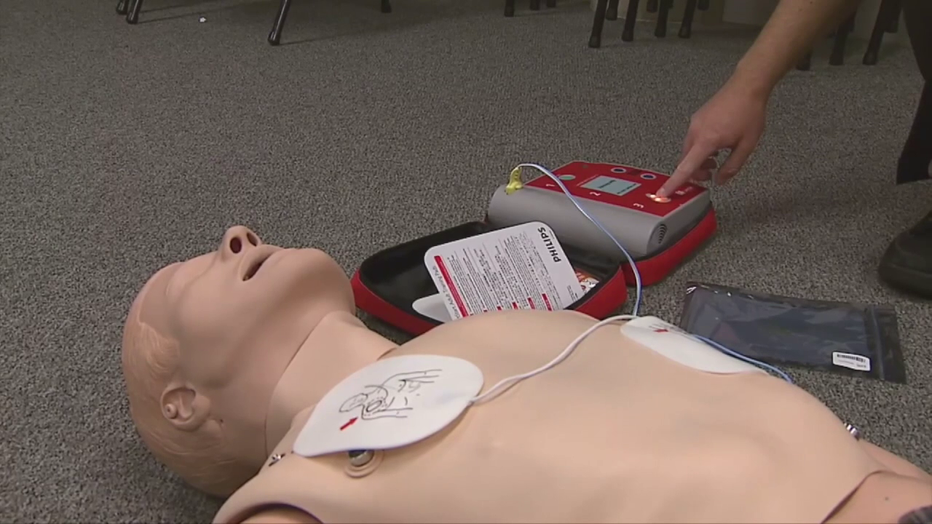
Brown hopes others will learn CPR and pay closer attention to their heart health.
What's next:
Since his recovery, Brown has spent the past seven months launching the "Legal Immigration Volunteer Empowerment" program, aimed at pairing legal immigrants with families who can help them assimilate into the community.
He recently shared his story during American Heart Month to encourage others to learn CPR and take preventive steps for heart health.
The Source: Information for this story came from interviews with Bruce Brown and Dr. Amber Stephens of Optum-Pinehurst, as well as statistics released by the American Heart Association.