

City of St. Pete overspent nearly $50M in new financial audit, CFO says
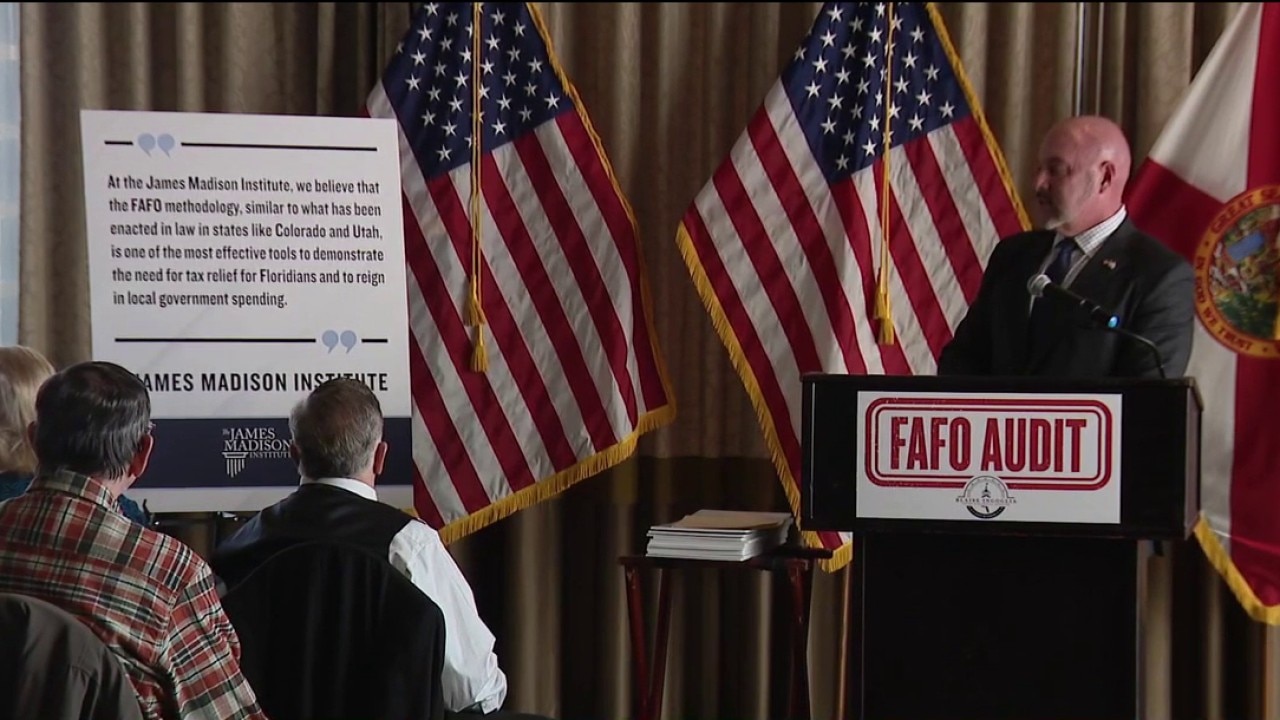
ST. PETERSBURG, Fla. - Florida Chief Financial Officer Blaise Ingoglia discussed findings of excessive government spending in cities and counties across the state — including St. Petersburg and Hillsborough County — following a series of financial audits.
What we know:
Ingoglia says his office conducted Florida Agency for Fiscal Oversight (FAFO) audits on local governments to measure budget growth against inflation and population increases. He says the audits found $1.92 billion in wasteful or excessive spending statewide in 2025 alone.
Local perspective:
According to the CFO’s findings, the city of St. Pete overspent by approximately $49.4 million last year. During that time, Ingoglia says the city’s budget grew by more than $132.9 million, a nearly 48% increase, while population growth was about 11,500 residents.
READ MORE: Florida CFO proposes legislative reforms to curb local government overspending
The CFO says that added up to more than $11,500 in additional budget spending per new resident, and more than $46,000 for a new family of four. Ingoglia said the city added 371 full-time equivalent employees, including just 65 first responders.
In total, Ingoglia believes St. Pete residents were overtaxed by $1.34 million.
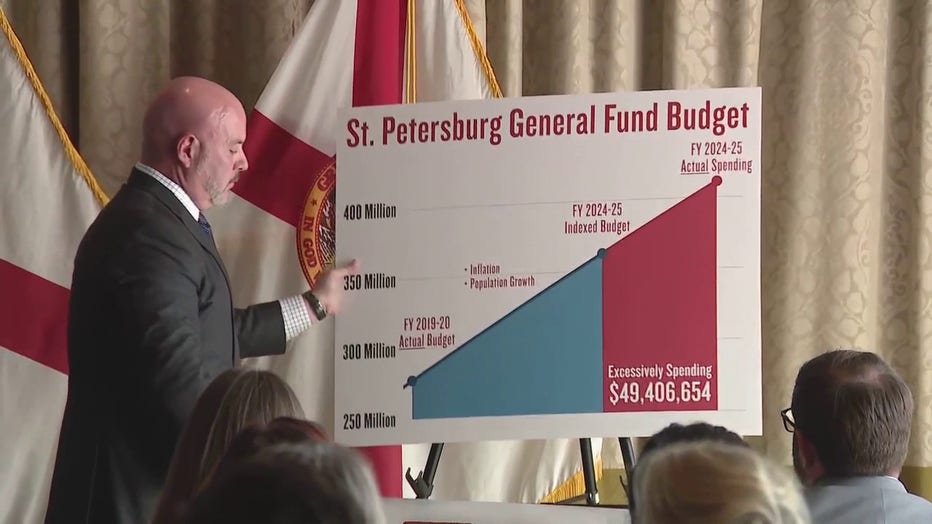
Ingoglia says St. Pete could have offered more property tax relief and used some of the government funds toward improving local water infrastructure.
"We believe that the City of St. Pete overtaxed you guys by the tune of 1.34 mills," Ingoglia said. "This is money that they could have easily cut, in our estimation, your millage rate by and offered property tax relief last year. They just chose not to. They chose to take the extra money and expand government."
PREVIOUS STORY: Survey launched for St. Pete's District 2; residents push for green space, infrastructure, flood protections
He estimates St. Pete homeowners could have saved:
- About $535 per year on a $400,000 home
- Around $669 per year on a $500,000 home
- Roughly $802 per year on a $600,000 home
By the numbers:
The CFO’s office says audits found excessive spending in at least 12 local governments, including:
- Miami-Dade County: $302 million
- Palm Beach County: $344 million
- Hillsborough County: $278 million
- Jacksonville: $199 million
- Manatee County: $112 million
- Nassau County: $53 million
Ingoglia said some cities, such as Orlando, showed relatively low growth, at about $22 million.
What's next:
Ingoglia argues that rising property values and government budgets have fueled higher tax bills for homeowners and says Florida’s current homestead exemption structure no longer offers the same level of protection as it once did in the mid-2000s.
MORE NEWS: Will it snow in Tampa? Rare 'Gulf-effect' setup could bring flakes this weekend
Ingoglia says Florida collects more than $55 billion annually in property taxes and hopes voters will see a proposal on the November ballot aimed at reforming the system.
"There will be property tax relief on the ballot in November 26," Ingoglia said. "It is my hope that the legislature comes up with something big, bold, and aggressive that we can put on the ballot and fix the property tax system here in the State of Florida for decades to come. Band-aids will not suffice anymore. We need something bold."
The other side:
Some leaders in St. Pete defended the city's management of money, criticizing the calculation of the reported overspending.
"My first reaction to that is, it's very easy to come up with a math equation when you already know the answer and so, you back in what you want the math to be," St. Pete City Councilman Copley Gerdes said.
Gerdes defended the city's management of money, saying there's never going to be enough money to accomplish everything that needs to be done.
"If you were to go right now into Snell Isle and Venetian Isles and Yacht Club Estates and Causeway Isles and Jungle Prada and you ask them, 'Are the positions that you wanted added to the city, bureaucratic?' quote, unquote, or first responders?" Gerdes said. "My guess would be both, because they're waiting for permits, they're waiting for inspections, they're waiting for engineers. Those are positions we have to have in a coastal community. And those are the ones that you've seen be added. And so, we're trying to get better every day in those areas."
Gerdes says they're continuing to work to add more first responders. He also addressed the concern of property taxes, referencing last year's fiscal budget.
"The millage stayed the same and, yes, ad valorem tax went up, but not nearly enough to keep pace with pay increases both for normal employees and our first responders, cost of goods," Gerdes said. "And so, you know, it's only one portion of it. And so, obviously most the thing that resonates with the people the most is the ad valorem where the ad valorum, millage rate sits, and so, that's why it's used the most, but it's only one of the prongs."
St. Pete Mayor Ken Welch also released a statement Wednesday evening after Ingoglia's news conference, saying the CFO's claims are "unsubstantiated" and targeted to justify property tax changes. Read the full statement below:
The mayor is encouraging St. Pete residents to see the city's property tax page on how the money is allocated in the city's budget.
The Source: Information for this story was provided by Florida Chief Financial Officer Blaise Ingoglia during a news conference on Wednesday. It also includes statements made by St. Pete City Councilman Copley Gerdes.