

Tampa Police Department rolls out virtual reality training pods to practice de-escalation techniques

Tampa police showcase technology upgrades
To begin in 2026, the Tampa Police Department continues to roll out new technology, including new virtual reality pods, so officers can practice de-escalation techniques. FOX 13's Ariel Plasencia reports.
TAMPA, Fla. - To begin in 2026, the Tampa Police Department continues to roll out new technology, including new virtual reality pods, so officers can practice de-escalation techniques.
RELATED: Tampa Police Department rolls out AI technology to help officers and dispatchers
The backstory:
Inside the virtual reality immersive training pods, officers wear virtual reality (VR) headsets and navigate high-stress video simulations that mimic real-life calls for service. They interact with characters – created by artificial intelligence – and work on giving commands in different high-pressure scenarios.
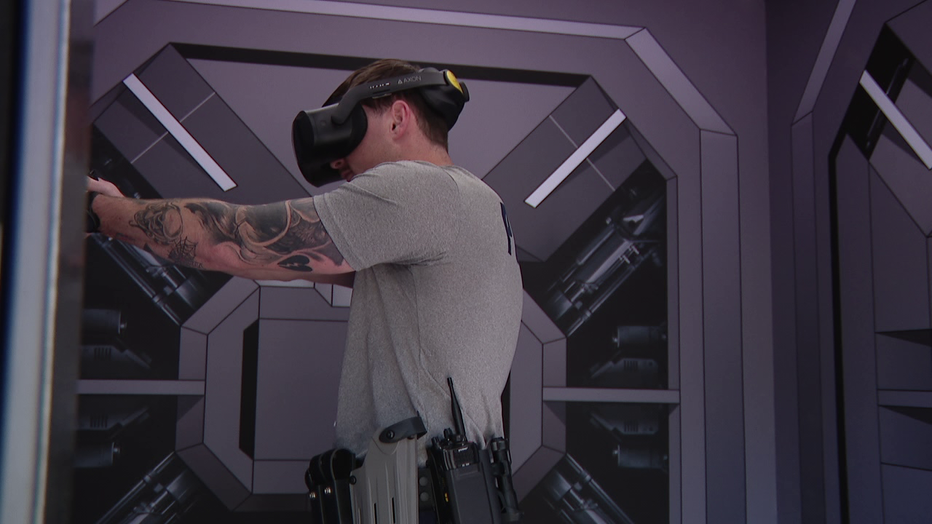
Some simulations allow officers to practice decision-making, including when to use their tasers.
"They actually have training weapons that are integrated into the virtual reality in shoot or don't shoot scenarios," Tampa Police Chief Lee Bercaw said.
There are a total of 10 pods: Eight student pods and two control room pods, where instructors can watch the training and give feedback. The VR pods were paid for through a federal grant TPD received for de-escalation.
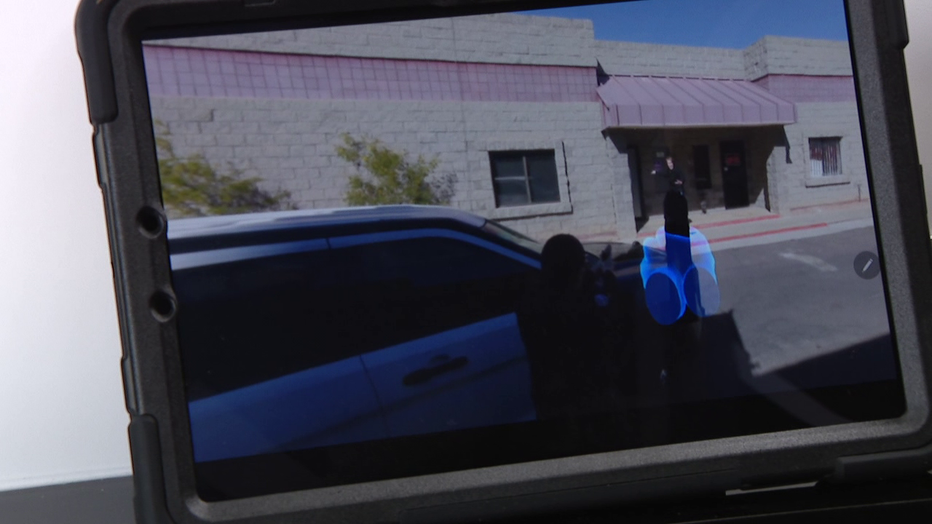
"Inside the control room for the pods, we actually have cameras set up inside there, so we can actually see what the recruits are doing," TPD VR pods training officer Richard Fujimoto said. "We have an intercom system, so we can hear what it is they're saying, and then we have a tablet that actually sees what they're seeing inside their headsets."
"It's a way for us to do more training, more efficiently, and more effectively," Bercaw added.
RELATED: Tampa police incorporate virtual reality into de-escalation training
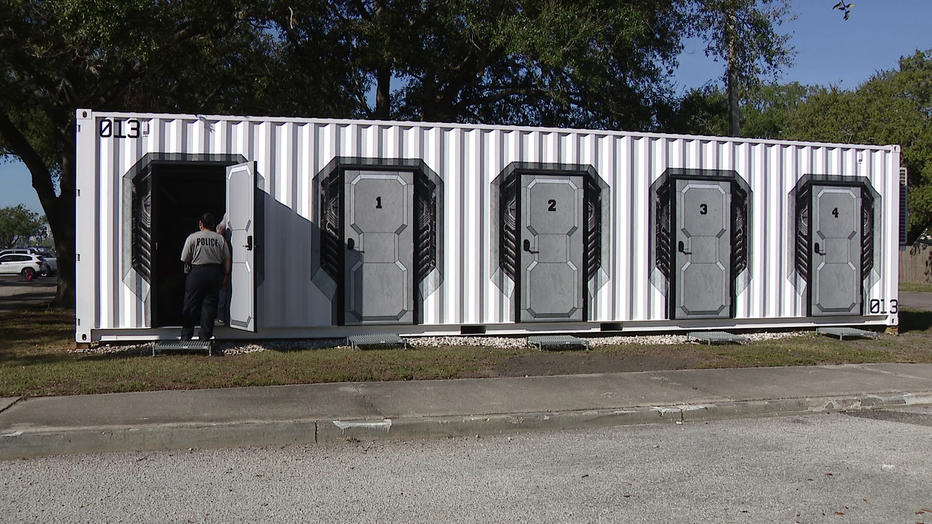
Last summer, TPD debuted its new VR headsets, which are used in these new VR pods.
The department still conducts in-person de-escalation training, but it can be expensive and can require several instructors, role-players and a large space, TPD said. Meanwhile, the virtual reality headsets represent a more cost-effective option that allows officers to get in multiple reps.
What they're saying:
The Tampa Police Department also got six high-tech drones, which can launch the instant a 911 call is received. They are part of the Drone as First Responder (DFR) program.
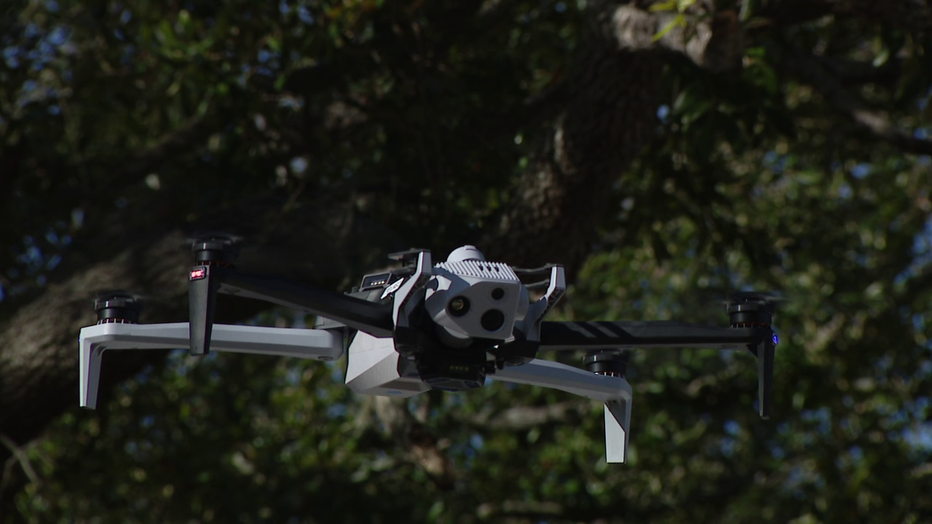
"These drones will be utilized to respond to calls before officers get there, giving officers a better understanding of what they're dealing with before arriving on scene," TPD Lt. Demetrius German said.
For now, the department will be testing these drones for emergency calls in downtown and Ybor City. TPD isn’t sure how long the testing phase will last. However, German said the drones can last about 30 minutes at a time in the air, and they will not be able to see inside structures.
"When the drone flies, it's only looking at the horizon. It's not looking anywhere else. And it's zoomed out," Bercaw said. "And when it gets to the emergency call for service, that's when it's actually looking at what's there."
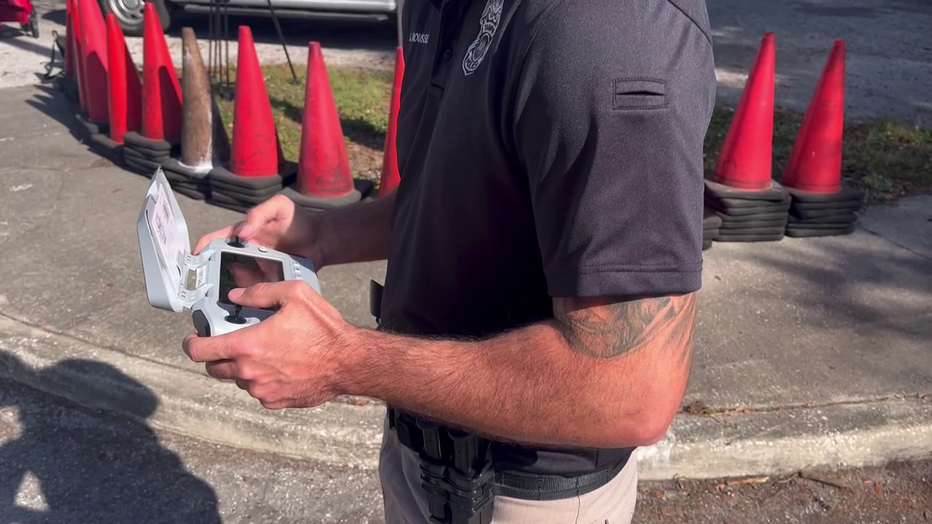
"If [the incident] is happening inside, we'll be able to let the officers know that [the drone] responded, that [the incident] is inside. The drone will not be able to, of course, see inside a house," German added.
Big picture view:
TPD hopes this new tech will allow the department to stay one step ahead while taking advantage of everything today’s technology has to offer.
"We're looking for different skill sets than we did in the past. So somebody that's good at drone pilots could apply to be a police officer," Bercaw added. "And that is a skill set that, 10 years ago or five years ago, [is] something that we didn't imagine we would need."
The Source: Information from this story was gathered by FOX 13's Ariel Plasencia through interviews with the Tampa Police Department.