

Toxic algae threat in Florida and the Lake Okeechobee connection

OKEECHOBEE, Fla. - Toxic blue-green algae, which can sicken humans and kill animals, has been surfacing in lakes and ponds throughout Florida.
What we know:
While these blooms can appear almost anywhere in the state, scientists trace a large portion of the problem to discharges from Lake Okeechobee, one of the largest freshwater lakes in the U.S.
RELATED: Toxic algae in Florida: Scientists warn of hidden dangers
Decades of pollution from fertilizer runoff, cattle farms, leaking septic tanks and lawn chemicals have turned the lake into a nutrient-rich breeding ground for harmful algal blooms. When these blooms spread, they release toxins like microcystin, which can affect the liver and nervous system.
During major outbreaks like the one in 2018, toxic blooms reached both coasts, killed pets and disrupted tourism and fishing industries.
The backstory:
Originally, water from Central Florida naturally flowed south into the Everglades, where wetlands filtered and cleaned it. But over a century ago, government-led drainage projects altered this natural system by surrounding Lake Okeechobee with dikes and redirecting water east and west through canals to prevent flooding to the south and enable development.
READ: Experts warn saltmarsh mosquitoes are bearing down on Tampa Bay area
The invention of air conditioning and the construction of interstate highways triggered rapid population growth in Florida. As urban areas expanded — particularly around Orlando and the Tampa Bay area — runoff and wastewater carried even more pollutants into the lake.
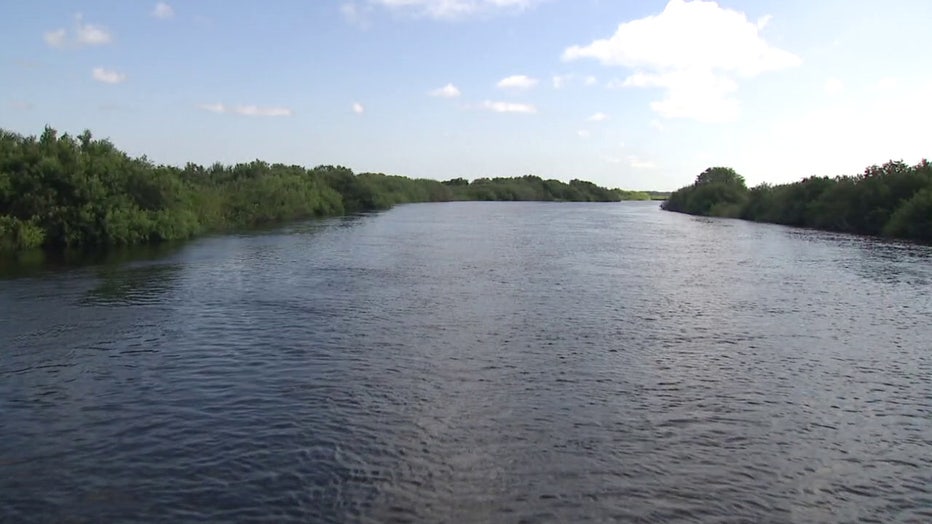
In 1986, Florida Gulf Coast University Professor Dr. Barry Rosen said scientists recorded a bloom covering 42% of the lake’s 730 square miles — a staggering development that marked the beginning of a statewide environmental crisis.
What they're saying:
"When you put ditching in draining, you start moving that water faster. It doesn't get cleansed," Dr. Rosen, an FGCU ecology professor, said.
"When the water looked like split pea soup guacamole, I still saw people pulling fish out and eating them," said Reinaldo Diaz, Lake Worth Waterkeeper.
MORE: Florida redfish could soon be more widely available thanks to Sarasota company
Timeline:
Early 1900s: U.S. government builds dikes and canals around Lake Okeechobee, cutting off flow to the Everglades.
1950s-1980s: Suburban sprawl and fertilizer runoff increase nutrient pollution.
1986: Toxic algae covers 42% of the lake.
1990s: Voters approve a "polluter pays" amendment, but the legislature fails to enforce it.
2000: President Clinton and Gov. Jeb Bush reach a deal to restore the Everglades; federal follow-through falters.
2008: Gov. Charlie Crist proposes $1.75B buyout of sugar farms to restore flow; later canceled.
2018: Massive toxic bloom leads to a state of emergency.
2020s: Gov. Ron DeSantis advances water reservoir projects to filter and divert water south.
Why you should care:
Toxic algae not only disrupt ecosystems but also threaten human health, tourism, fishing and real estate throughout Florida. These blooms have been linked to liver damage and potential neurological effects. Despite repeated warnings and proposals, long-term solutions have been delayed by politics and funding issues.
What's next:
Thanks to increased pressure and scientific advances, Florida is making progress on restoration and filtration projects, including the construction of a deep-water reservoir south of Lake Okeechobee. Scientists are also working on new technologies to detect and neutralize toxic algae more efficiently. But whether these efforts are enough to prevent another crisis like 2018 remains to be seen.
The next installment in our Breakthroughs in Science series will explore promising new strategies to prevent and fight algae blooms — starting with one major change in Central Florida — the partial restoration of the Kissimmee River.
The Source: This report is based on original investigative journalism by FOX 13’s Craig Patrick, with field interviews featuring Dr. Barry Rosen (FGCU) and Reinaldo Diaz (Lake Worth Waterkeeper). It includes footage from Fox 13’s video archives.