

Florida Aquarium sends 9,000 ‘coral babies’ that will be planted into Florida’s Coral Reef

Lab-grown coral reef transferred for planting
Researchers at The Florida Aquarium's Coral Conservation and Research Center say thousands of these coral babies have been growing at their facility over the last seven months. FOX 13's Kylie Jones reports.
APOLLO BEACH, Fla - The Florida Aquarium is part of a statewide initiative to restore 25% of Florida's Coral Reef.
The aquarium's Coral Conservation and Research Center in Apollo Beach has grown about 9,000 coral babies that will eventually be planted onto the reefs along the East Coast.
READ: Florida scientists make major advances in medicine, environment and public health
What we know:
Researchers at The Florida Aquarium's Coral Conservation and Research Center say thousands of these coral babies have been growing at their facility over the last seven months.
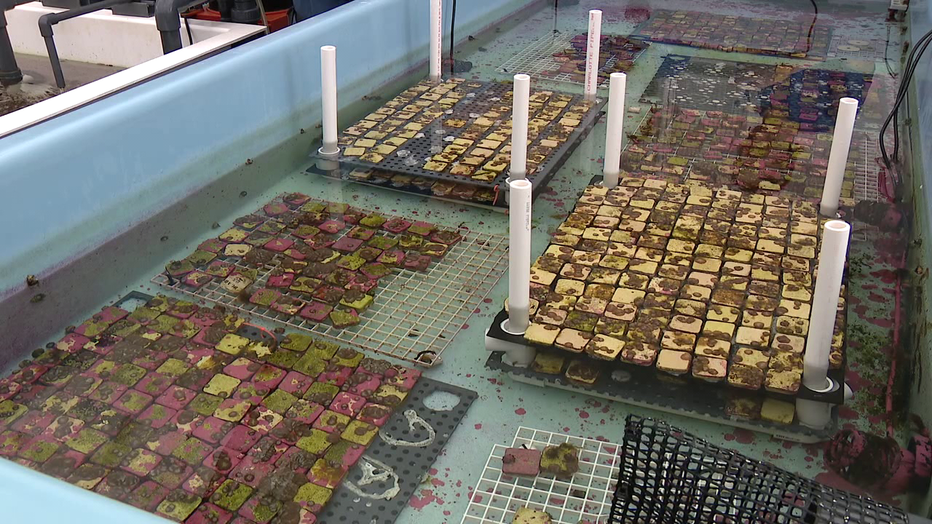
They were grown to help restore about a quarter of Florida's Coral Reef, which has been largely destroyed over the years.
"Florida's Coral Reef is an $8.5 billion asset to our economy in the state," Keri O'Neil, the director of the Coral Conservation Program with The Florida Aquarium, said. "People don't realize that reefs are critical to protect our coastlines, to support our fisheries and to support our tourism."
MORE: Phillippi Creek dredging underway to help bring flooding relief to residents
On Wednesday, thousands of coral babies were plucked from the waters at the Apollo Beach site and packed up to be transported to two facilities.
"What we call them is plugs of corals, so it's a small circle with a stem on the bottom, and these are attached to transport racks and these racks stack in a cooler," O'Neil said.
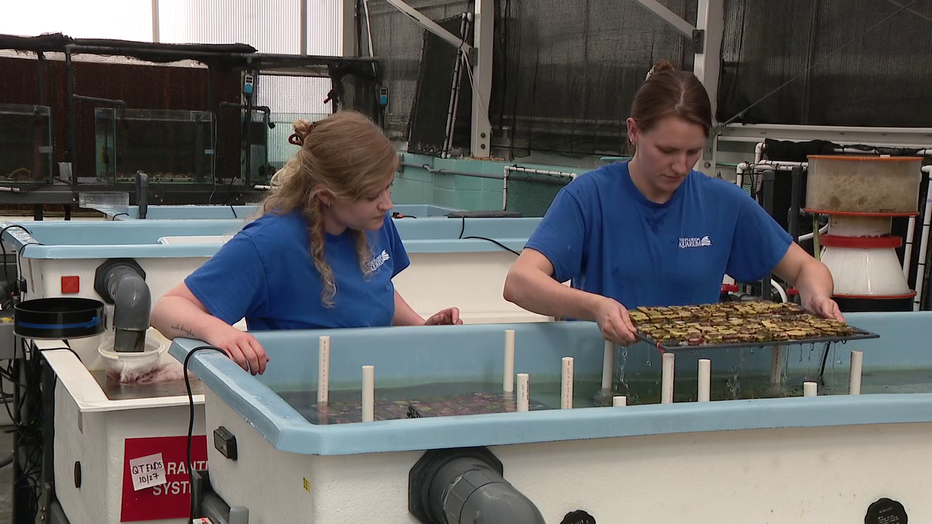
The 9,000 coral babies will be split between Reef Renewal USA in Ruskin and The Reef Institute in West Palm Beach, where they will be monitored while they continue to grow.
"We want to make sure from day one, that they are corals that are going to be resilient and survive the process," Martha Campbell, the operations manager with Reef Renewal USA, said.
READ: Global carbon emissions hit record high, scientists warn of worsening climate disasters
Researchers say the corals will be planted onto reefs from Palm Beach to the Florida Keys later this year.
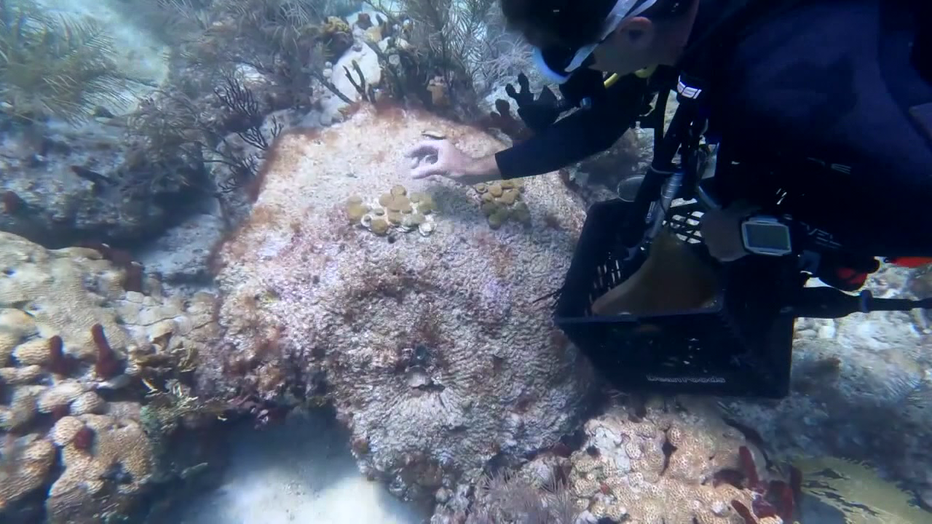
"Once the coils are large enough to be out-planted, we're going to do some different experiments and look at resilience, as far as heat tolerance, disease tolerance, and to establish which are the winners that will survive out on the coral reef," Campbell said. "We don't want to put in production an animal that is not going to survive in the natural environment."
There's no guarantee every coral baby will survive, but researchers hope they will be stronger and more heat-resistant.
Dig deeper:
Researchers say 90% of Florida's Coral Reef is gone, largely due to a historic heat wave in 2023, which caused mass coral bleaching.
"Without some input into restoring those reefs, then we're going to lose those species over time," Campbell said.
MORE: Florida’s oyster industry plans comeback after years of decline
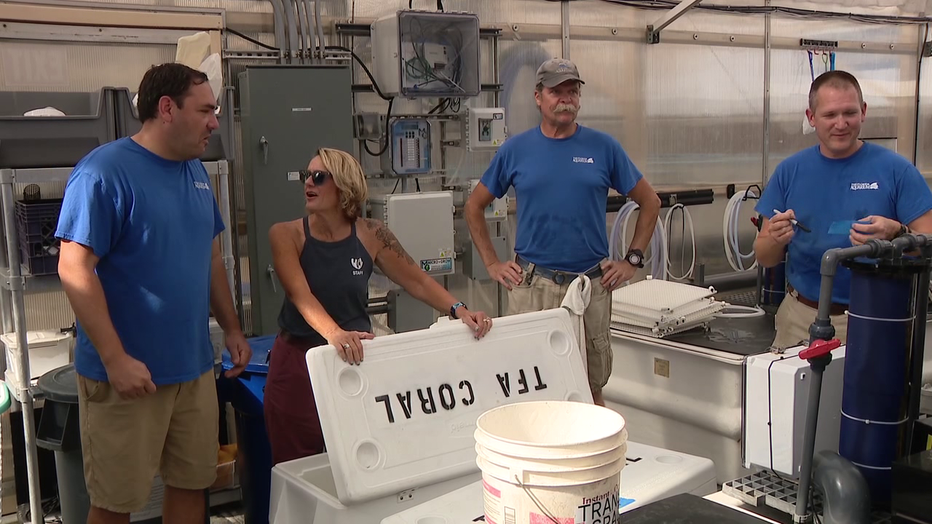
The Florida Aquarium and its partners are joined by other facilities around the state that are part of this statewide initiative.
The long-term, multi-million dollar project is funded by the Florida's Coral Reef Restoration and Recovery Initiative, which is led by the Florida Department of Environmental Protection.
Big picture view:
Researchers say this is a long-term effort, but the goal is to restore 25% of Florida's Coral Reef by 2050.
"There's a lot of restoration that needs to be done, and we also need to figure out how we're going to plant corals in a smart way that they are able to survive into the future," O'Neil said.
The Source: Information for this story was gathered from interviews with Florida Aquarium staff done by FOX 13's Kylie Jones.