

Schools of Hope: What Gov. DeSantis says about controversial law expanding rights of charter schools

Gov. DeSantis discusses 'Schools of Hope' expansion
Governor Ron DeSantis is weighing in on growing concerns over a new law that expands the rights of Schools of Hope charter schools, as district leaders across Florida warn the policy could strain public school resources. FOX 13's Aaron Mesmer reports.
TALLAHASSEE, Fla. - Governor Ron DeSantis is weighing in on growing concerns over a new law that expands the rights of Schools of Hope charter schools, as district leaders across Florida warn the policy could strain public school resources.
The law, approved by lawmakers as part of last year’s budget, after it failed as a stand-alone bill, allows Schools of Hope operators to claim unused classroom space inside public school campuses and move in without paying rent. The process, known as co-location, requires districts to cover costs such as transportation, custodial services and food service.
PREVIOUS: Florida now allows charter schools to move into underused public school facilities
Since the law took effect, school districts and parents across the state have been asking education leaders and the governor for guidance, saying the rules are unclear and potentially costly.
What we know:
During a recent news conference, DeSantis attempted to ease concerns and suggested the implementation of the law could be handled more carefully.
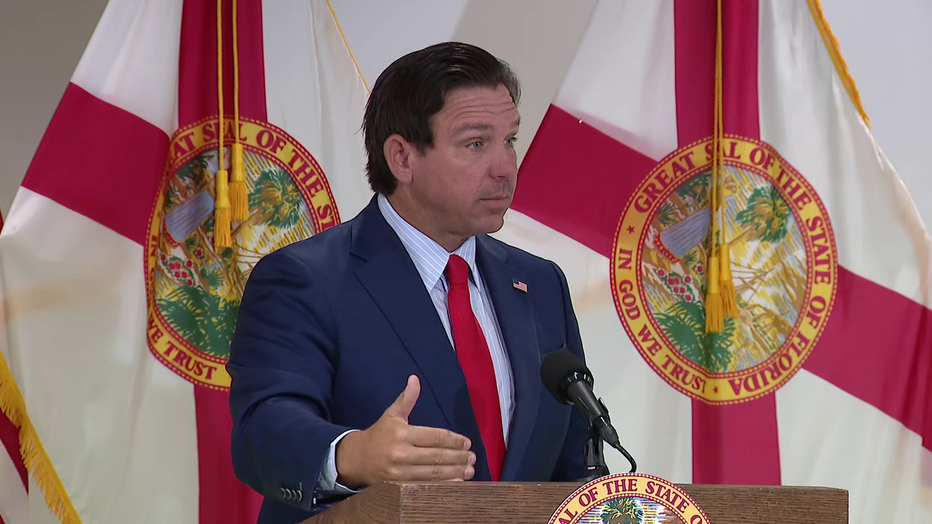
"It'll be done, I think, rationally," DeSantis said.
For the first time, the governor also indicated he would be open to asking charter operators to contribute financially for some services.
"In terms of some of the services, I'm open to whether they have janitorial and that's an extra 10% for them to do. I know the legislature is discussing that. I think that's totally fair," DeSantis said.
MORE: Charter school operators prepare to potentially move on public school campuses under new state rule
Local school board members say the potential financial impact remains a major concern. Heather Felton, a Manatee County School Board member, said her district has already reviewed the numbers.
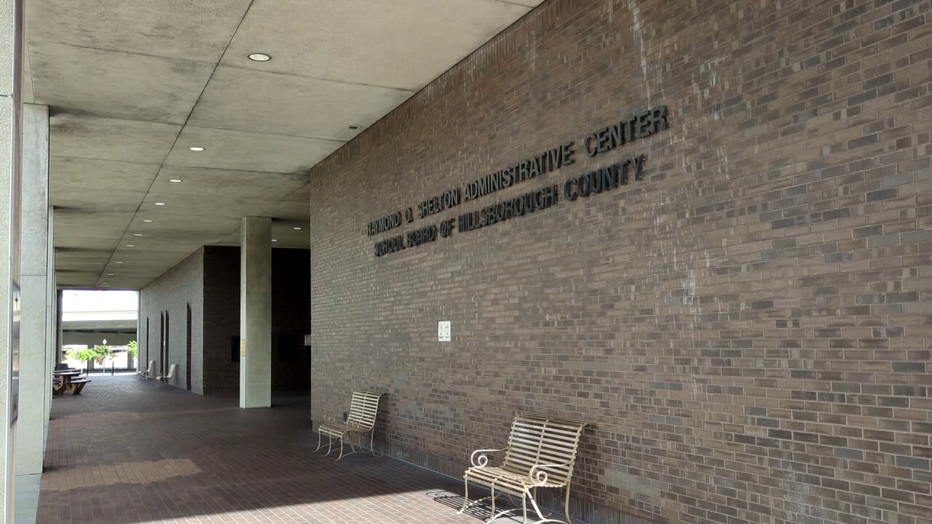
"Our own district has done a review, and it's over $2,000 per student extra that we would have to pay per child for a School of Hope school," Felton said.
Felton said districts are already stretched thin and worry they are being asked to subsidize for-profit charter operators at the expense of traditional public school students.
The backstory:
Beyond costs, district leaders say the law does not clearly define what qualifies as an underutilized school or classroom.
"There are no guardrails on it at all, so, basically, the way it's written, if you have one empty seat they can move in," Felton said.
Critics believe some charter companies are attempting to take advantage of that language, sending out roughly 600 notices of intent to co-locate statewide. Districts throughout the Tampa Bay region received those notices.
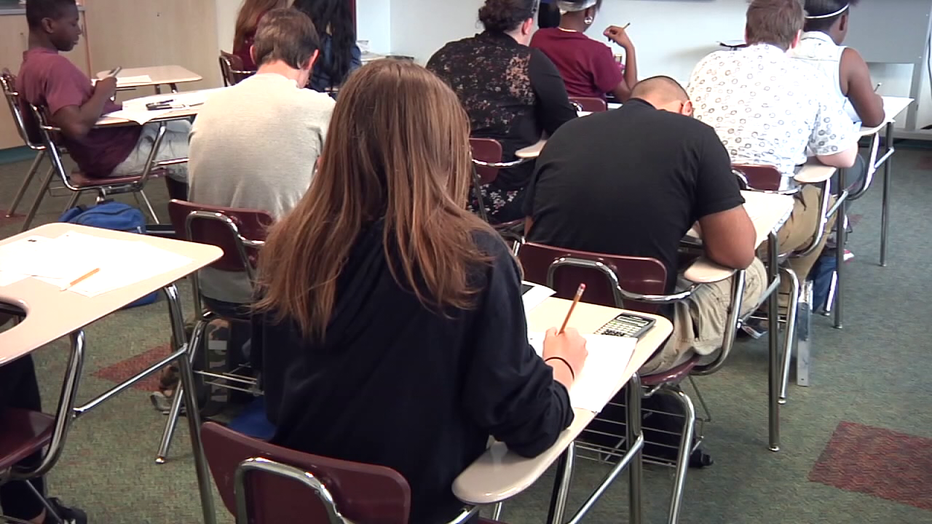
Felton said some classrooms labeled as available by the state are actually full once student needs are taken into account.
"When you have a class full of students who are in very large wheelchairs, they have personal aides, nurses there," Felton said, providing an example, "you cannot fit 30 kids in a classroom. You can get five or six, but the room is at full capacity and the [state] report does not take those things into account."
The other side:
Despite the concerns, DeSantis remains a strong supporter of Schools of Hope and says the intent is to expand options for families in struggling schools, not disrupt well-enrolled campuses.
"[Co-locating in] the space available makes sense. No one's school is going to be taking over [certain schools], particularly in some of the…affluent areas, where you hear people say, ‘I do not want a School of Hope here.’ Well, no, there's not going to be a School of Hope there," DeSantis said.
State education leaders have echoed that position, saying the program is meant to target low-enrolled schools in specific areas.
What's next:
Two Democratic lawmakers in Tallahassee have filed bills that would repeal the law allowing co-location altogether. At the same time, the Florida Board of Education is expected to discuss possible changes or clarifications to Schools of Hope rules later this month.
Those discussions could determine whether the law is rolled back, amended or left largely intact.
The Source: Information in this article comes from remarks made by Governor Ron DeSantis, local school board members, state education officials, and previous reporting on the Schools of Hope co-location law.